Jun 21, 2012

Malaysia: Tier 2 Watch List for Human Trafficking, Again

Malaysia: Tier 2 Watch List for Human Trafficking, Again: Writeup on Malaysia from the Trafficking in Persons Report 2012.

Umno in disarray, top leaders scared stiff of losing power after 55-yrs of hegemony

Umno in disarray, top leaders scared stiff of losing power after 55-yrs of hegemony:

Umno in disarray, top leaders scared stiff of losing power after 55-yrs of hegemony
In this day and age every President or Prime Minister lives under a never-ending barrage of scrutiny. He won’t engage in any form of activity without the public knowing all of the most intimate details. After all, his schedule has been planned for the whole year in advance.
But sometimes the details made public are only what the press has been instructed to report - in other words, what the public should be told and not what the public should know.
And this is the basis for why an alternative media has sprung, telling a different version of the same event, and allowing the public to use its own common sense to make its own judgment and conclusion.
Despite controlling the media, Najib failed to convince the people
So far, there have been news reports and snap shots of the various political events in the mainstream media, which is all government-controlled - the chief reason why Malaysia has been accused of not having a free press. And by and large, it is in the alternative press that the moves made and the scenarios involving all parties, including the Opposition and the NGOs, have been well publicized rather than in the MSM.
Currently, with the 13th general election looming, the greatest coverage has been on UMNO and Prime Minister Najib Razak. And from the myriads of information, it can be gleaned that the overall picture in Malaysia is not very encouraging and the future is uncertain, despite the ton of overly rosy reports churned out by the mainstream press. Why is it so that despite controlling an awesome channel of newspapers, tabloids, TV and radio stations, Najib and UMNO are seen as corrupt and ineffective?
Indeed, it cannot be denied that Malaysia's alternative media and pro-opposition websites have been extremely effective. The better-funded ones tend to veer towards the UMNO-BN but still give Opposition Leader Anwar Ibrahim and his Pakatan Rakyat opposition due space. The pro-opposition ones work on shoe-string budgets that are often best described as non-existent. Nevertheless, these have been very effective due to individual talent and the ability to pick issues that knock the breath out of Najib and BN, wiping out their credibility.
The combined pressure of the alternative and pro-opposition press has often forced Najib into a corner - in fact, on almost all the issues that have cropped up since he took over as PM in April 2009. The glare has made the public conscious that not everything the PM and his ruling UMNO party proposes are good for the country.
Already worse than Badawi
Najib has now flipped-flopped on so many occasions that pundits say he makes Abdullah Badawi look like a person with firm convictions! Badawi is of course his predecessor who has been nicknamed Malaysia's Sleeping Beauty PM for a tenure marked by mediocrity, which Najib may have already surpassed and many predict will end up with an even more hollow legacy than Badawi.
Nothing that Najib has planned and implemented has been on track or have not stalled half way. After taking over from Badawi, the social, political, economic situations plus the law and order in the country have worsened. For this, Najib has to take the blame as he crystallized the public's doubt over the integrity of judiciary with the Perak power grab.
At this late stage, for a first-term PM not to have already called for a general election really speaks volumes about the support he enjoys. Despite surveys that paint him as the only popular spot in BN, walk into a coffee shop and ask around. Most people will shake their heads and acknowledge that Najib is not the one to lead Malaysia out of the woods.
Within Umno, the bickering, infighting, backstabbing and sabotaging is worsening especially now that Najib appears to have decided to hold GE-13 only after the UMNO internal election. UMNO is in disarray and it has reached the stage where it cannot be covered up anymore.
Every prominent UMNO leader has come to make statements that contradict each other in a bid to steal the limelight. Of this group, none has been more conspicuous as former premier Mahathir Mohamad, who is now regarded as Malaysia's de-facto prime minister. Without Mahathir's support in UMNO, Najib will be out of a job before the year is over.
UMNO leaders striking out for themselves
Even Deputy Prime Minister Muhyiddin Yasin has contradicted Najib on several issues, like being a Malay first and Malaysian second. UMNO Youth Chief Khairy Jamaluddin has no qualms making Najib look like a coward for not taking up a challenge to a public debate with Opposition Leader Anwar Ibrahim.
On his own initiative, Khairy has been debating with PKR director for strategy Rafizi Ramli. He has done it twice - the first in London and the second in KL on PTPTN. These debates which allow the public to evaluate the leadership quantum and quality of the contestants has inadvertently diverted all eyes to Najib and why he keeps saying 'no' to Anwar.
Rais Yatim, in trying to down play the huge gathering at BERSIH 3.0 rally for clean elections, made a fool of himself when he announced that based on the techniques used by the BBC, the number of demonstrators was only 22,741 when the actual was around 250,000.
And someone in UMNO must have instructed the pro-government media to state a crowd of 100,000 attendees to UMNO's 66th anniversary when the actual was less than 50,000.
The video clip shown on the government TV channel portraying BERSIH 3.0 participants as being violent has become such an object of ridicule it has been ignored by the public who prefer to watch 'un-doctored' footage easily available on Youtube, which reveals shocking widespread police brutality against the civilian protesters.
Even UMNO's famed RM300,000 per month cyber troopers have gone quiet. The UMNO ulamas (religious scholars) are also playing dumb, weighed by the burden of trying to make UMNO seem Islamic when the sex and corruption scandals of its leaders are so rampant. Shafie Apdal won't be able to convince many people he did not splurge millions of ringgit on starlet Zahida Rafik.
Najib not only has to live down the scandal of his future in law, Maira Nazarbayev, who purportedly 'stole' a US$20mil super luxury condo from her ex-husband, the spectre of being dragged to testify in the French courts for allegedly having taken a 114mil euros or RM570mil bribe to agree buy 2 Scorpene submarines from DCNS must be ever present in Najib's mind.
Across the nation and in the states too
Ahmad Shabery, who organized the Million Youth Gathering in Putrajaya recently, wasting at least RM20 mil of the tax payers money to create a false impression of UMNO's popularity, is not doing so well either.
Instead of being hailed, Shabery was slammed by incredulous Malaysians who want to know how he could be so irresponsible as to spend RM2 mil to bring in a K-pop group (Korean band) just to ensure that youths did attend the event. When a car drag race was marred by an accident killing 17 onlookers, Shabery did what the ostriches do best - bury his head in the sand!
Meanwhile, FT minister Raja Nong Chik is still at logger heads with fallen Women's minister Shahrizat Jalil. UMNO stalwart Rafidah Aziz is still looking for political opportunities and poking fire although she is now in her early 70s. Rafidah tried to take advantage of Shahrizat's disgrace of the RM250mil NFC corruption debacle by asking her to resign as the Wanita UMNO chief, but Shahrizat managed to persuade Najib to support her.
This has prompted speculation Shahrizat has a 'hold' on Najib and it was most likely to do with a RM1.7mil apartment bought in Kazakhstan allegedly as a wedding gift for Najib's daughter and Maira's son.
Idris Jusoh the ex-Menteri Besar of Terengganu is still busy sabotaging Ahmad Said the current chief minister whenever there is half a chance to do so. In Selangor, UMNO has no suitable candidate for the Menteri Besar position with Mohd Zin the BN election director rejected by Selangor UMNO members, along with the likes of other wannabes such as Noh Omar and Ezam Mohd Noor.
Najib's own cousin and Home Minister Hishamuddin Hussein is not even confident of contesting in Semberong, where chances are high he will be defeated.
Ghani Othman the Johore Menteri Besar has been holding the post for far too long and several UMNO leaders are now squabbling to topple him, hence the heightened party infighting in the state.
In Perak, the unpopular Zambri Kadir has not been able to give any assurances that the state will remain under BN after GE-13. If he did, he would only incur sarcasm and rude sniggers.
Sarawak is under the full control of Chief Minister Taib Mahmud and Najib can’t do anything to control him at all. On the contrary, it is Najib who is at Taib’s mercy. While in Sabah, Pakatan Rakyat has been making inroads that they are keeping under wraps until GE-13 is announced on fears that the BN will use money to dismantle their alliances with the local politicians.
Mahathir building a case for violence?
Mahathir has also been actively pointing fingers. He has said that BN is weak now because of Badawi, but that may be because he is prejudiced against Badawi while protective of Najib, whom he feels will serve his vested interests better.
Based on the above scenarios and many more that would take up too much space and time to mention, the chances for BN to win in the GE-13 are drastically reduced even though pro-UMNO analysts insist that the ruling coalition will easily retain the 137 parliamentary seats it holds.
The fact is becoming more apparent UMNO-BN could even be defeated. Disgraced ex-Selangor MB Khir Toyo is confident Selangor, Penang, Kelantan, Kedah and Perak will once again fall to the Pakatan and does not discount the possibility that more states would also be won by Pakatam.
Mahathir is only half-right when he said BN lost five states and saw its majority reduced, NOT because the Opposition is strong but because BN is weak. But affter four years, the public can see for themselves that the Opposition has grown much stronger while UMNO-BN much weaker.
Hence the recent threats by both Mahathir and Najib that there might be violence if there was a regime change. Basically, UMNO has no real plan of its own to stay in power.
So far, it has placed all its eggs with the Election Commission and the police to force a favorable electoral outcome but given the huge response to the Bersih rallies by the Malaysian people and international community, civil servants including the cops are no longer that keen to cheat for the sake of keeping UMNO and BN in power. Nobody wants to be blamed or be caught for cheating when the impending disaster for UMNO is becoming nlearer by the day.
Of course UMNO will still cheat and make the GE-13 the most dirty general election ever. But that can no longer guarantee UMNO-BN victory, hence Najib's flip-flopping over the timing of the GE-13.
Coming to grips with the possibility of losing and making exit plans
So it is that UMNO has to face the prospect of losing. It was an extra 'burden' for UMNO's ruling elite to plan an exit strategy, but they have done so. The first thing they have grabbed is, of course, the CASH. Pundits point to the slew of deals hammered out to Syed Mokhtar, the billionaire crony whom it is believed UMNO is privatizing national assets at a sharp discount, allegedly so that he can keep the money for them!
Since UMNO has the experience of instigating the May 13, 1969 racial riots, it is not impossible it will try to use the same tactic again to stay in power. But the people are by now savvy enough to read UMNO's outdated racial games.
Make no mistake. May 13 is a huge risk for Najib. Mahathir may encourage it but it is Najib who as PM will have to take responsibility if the riots go out of control. For sure, he will destroy his own legacy and family name if he tries to use force as in the Perak crisis.
Malaysian people have shown through Bersih 2.0 and 3.0 they are not to be toyed with, and will stand up to the BN regime if it tries to be extreme.
Eventually, it is the people who will gently force UMNO-BN to leave Putrajaya. The signs are already clear and UMNO is learning the hard way that this is a decision they have to respect. Most Malaysian have already made up their minds to go for change and will vote for the Pakatan.
In the end, Najib and UMNO have only themselves to blame. It is in their hand to decide the sort of action they wish to take, but chances are they will come to their senses, dump Mahathir who appears intent on violence to protect himself and his family's huge wealth, and pass over the reins in a peaceful manner.
Malaysia Chronicle

Wither English, wither the nation

Wither English, wither the nation: — Thomas Fann The Malaysian Insider Jun 21, 2012 JUNE 21 — The title of this article is inspired by a presentation I heard at an English language conference I attended recently. It was a gathering of educators involved in the teaching of English in schools and people who are committed to raising the standard [...]

Chan

Chan:
By: Thomas Weber Carlsen

Thomas Weber Carlsen is a Danish architect who has been living in Cambodia with his Cambodian wife and their two children for over 10 years now. Apart from designing and building his own house, he has been working with humanitarian projects, worked as a tour leader and made video documentaries about the Khmer Rouge and indigenous people under the influence of globalization.

His first literary work Third World Man (Out of Denmark) is the personal account of his journey from Denmark to Cambodia and the various impacts it has had on his life. It is also a critical comment to the divided and unsustainable world we live in today. Thomas is now looking to have Third World Man (Out of Denmark) published in hard form and/or as an e-book. This article, “Chan”, is based on the second chapter of the book and is the first in a series of three articles, all taken from chapters in the book, to be presented on Latitudes.nu in the near future. “Chan” relates the story of how Thomas met his wife, how their fates intertwined, and what happened then.
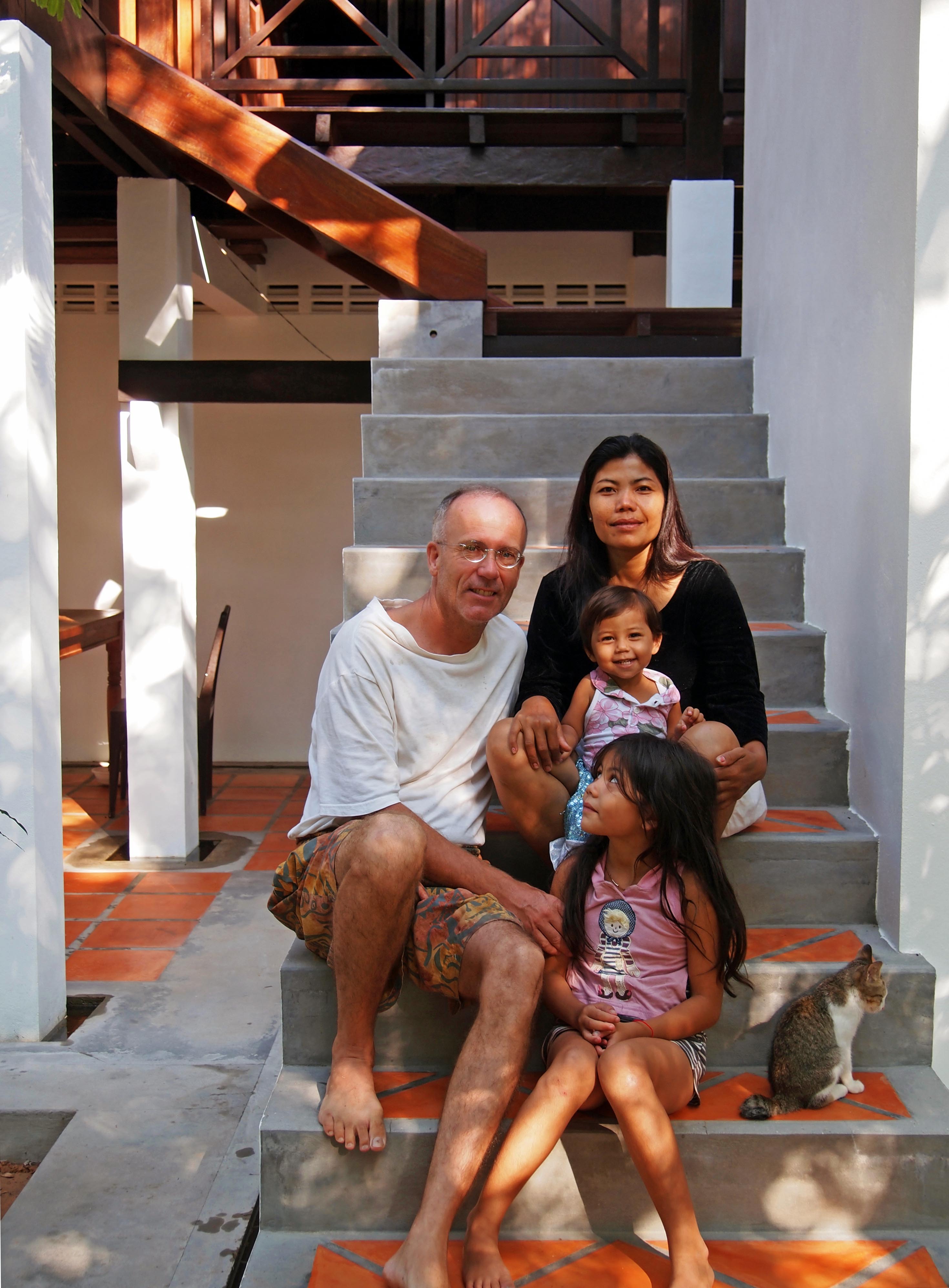
Family photo in Siem Reap

My marriage with Chan is a typical third world affair. She wanted something and I wanted something and so we struck a deal. That is not to say that we don’t like each other and these days we are even attempting to love each other.

She comes out of a family with eleven children, born on the threshold to the national holocaust, the disastrous rule of the Khmer Rouge. Through the following decades of war and turmoil she and her family survived by sticking together and making ends meet one way or another and, with the combined effort of everyone at hand, they succeeded in that.

This is how I see her in my mind:  a young girl with a large tray on her head from which she sells fruit and things on the street while smiling all the while. A busy bee, in many ways the pride and certainly the main asset of her family, and in that sense it is no coincidence that it was her I met at the market in Battambang those many years ago when I walked in there with my trousers torn looking for somewhere to fix them. She was there in her family’s flower shop and characteristically the only one around who spoke any English, which is why she could guide me to the nearest seamstress, and while the job was being done we – me with a scarf wrapped around me – started getting to know each other. I guess it is fair to say that we are still in that process.

Chan has told me that she once saw a young Cambodian thief being burned alive by the Thais just across the border in the aftermath of the Khmer Rouge regime. They stuck him inside a car tire filled with gasoline and let him burn to death in front of a large crowd of Cambodians, to teach them all a lesson not to steal. She still remembers his screams. I sometimes wonder what it does to people to be exposed to violence of that severity.

I had hoped that she would be sweeter and softer than she is – I like girls to be very sweet and very soft – but I guess that is part of the deal, because I also need her to be a hard working housewife, a good mother, a tough negotiator when we have to confront the local authorities, and someone I can rely on in general. She is all of that.

Chan wanted a way out of poverty and a ticket out of Cambodia. Like so many other third world people she firmly believed that the United States and Europe were where the rainbow ended and everything turned into solid gold. She could have chosen between any of a number of western men who came to work in Battambang in the nineties to lead her there, she was exposed to a lot of them as the caretaker of a child of an Italian/Belgian couple, both of whom were working as administrative personnel during the United Nation’s peace keeping mission to Cambodia.

But she chose me and I could not have been a less suitable candidate.  For one thing I have never really cared – or been able – to make a large sum of money, and secondly I also wanted a way out of my troubled past and had decided to try my luck in Cambodia. Clearly Chan must have brought this irony of fate down upon her by some serious wrongdoing in an earlier incarnation. Our mismatch has created monumental clashes and disillusionments over the years, but for better or for worse we are still together and still in Cambodia.
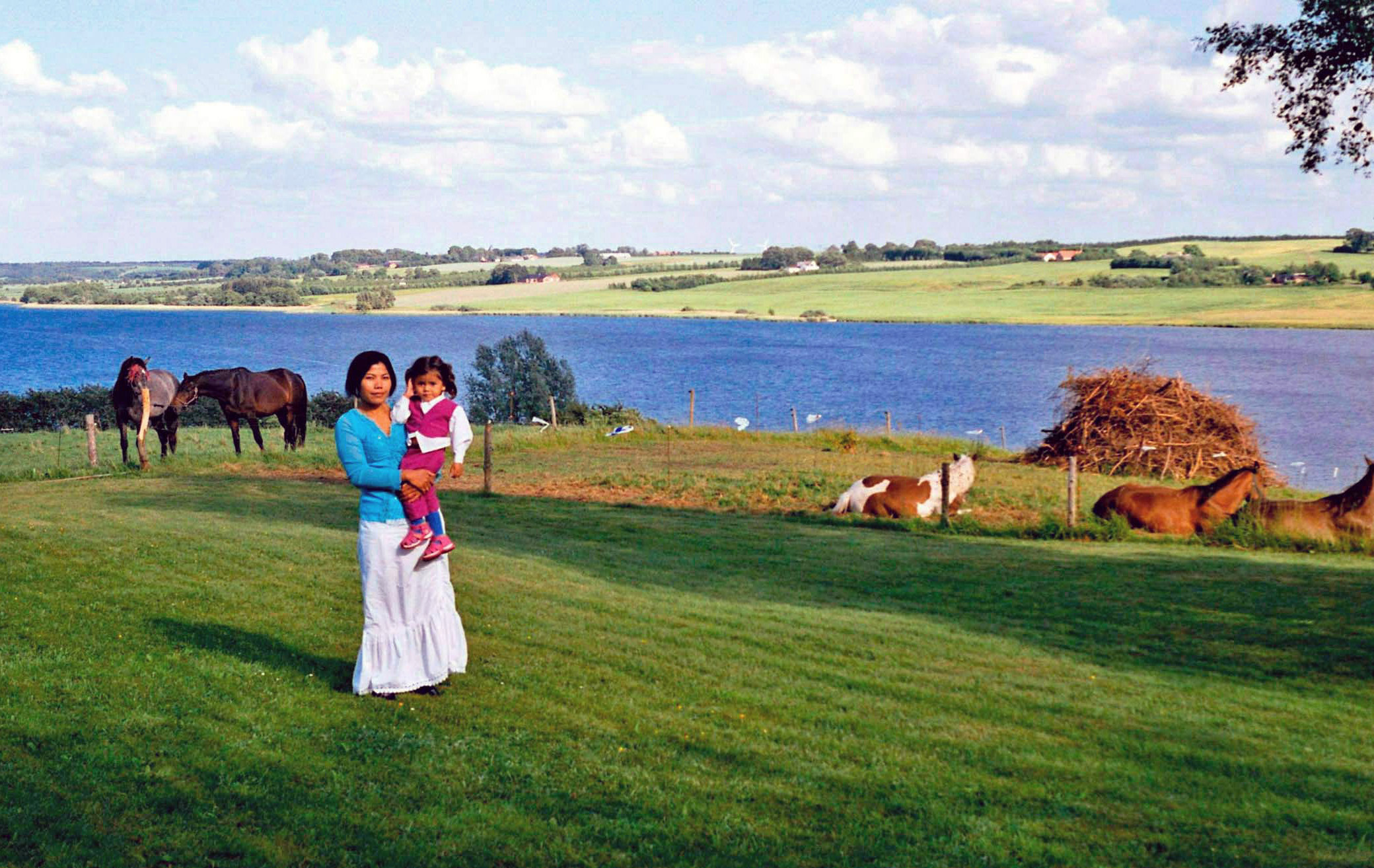
In Denmark on Midsummer's Eve in 2006

My relationships with Danish girls never worked. I knew plenty of girls once I had overcome my initial shyness of women but never anyone steady enough to be called a girlfriend. There was a good reason for that. I was always looking for an opportunity to leave Denmark, so whenever a girl came too close I backed out. There was no way I wanted to get trapped there. But I had been searching for a Cambodian wife for quite a while when I met Chan.

Was it just luck that led me to her house that late evening after having hitchhiked all afternoon on a petrol truck along the bumpy road to Battambang for a quick goodbye before setting off in the early morning to shoot my first video documentary in the remote province of Ratanakiri? I had been to the house of her family before, but only during the daytime and I did not remember the exact way through the maze of little paths of this typical Cambodian village, having gradually been absorbed into the urban structure of the country’s second largest city. At any rate, there I stood outside the big iron-gate where she came up to meet me in her pajamas surrounded by a pack of fiercely barking dogs. And it is a fact that we left together the following day against her father’s will, after she had asked me if I needed someone to cook and clean and assist with the translations and everything once I got to my destination. I thought it was a brilliant idea.

In Ratanakiri we became lovers from the very outset. It was such a sweet time. We were surrounded by the remains of one of the greatest rainforests in Cambodia and a lot of miserable looking ethnic minorities, the so called hill tribes, whom I had come up there to record on video before their ancient culture completely disintegrated. And we proved to be a very efficient team together. Her father incidentally is a video maker as well – wedding videos and Buddhist ceremonies and all those important occasions that need to be preserved for eternity – so the work as my assistant came quite natural to her. People liked us there, especially the ethnic minorities for whom I felt a lot of compassion, and Chan has a way with people to make them think that she is so adorable – and she really is, mostly. It is hard to imagine a more promising start to a lasting relationship.

The first time Chan came to visit Denmark more than ten years ago was something of an eye opener to her. I remember with delight those early days and the way I too began looking at my own country through her eyes. One of the first strange things she noticed was the dogs and how they were treated with constant attention and intimate affection by their owners, and then she said something I’ll always remember with a particular fondness, “In my next life I want to be a dog in Denmark!” This tells something about Chan and the conditions of life in the third world and the beliefs and aspirations of the people. But it also tells something about the Danes and their extraordinary attachment to dogs, perhaps as a substitute for the lack of any deeper relationship with other human beings. I will let you in on a terrible secret: there is a numbing loneliness among people there. Believe me, I know.

She said something else that I remember well, “In Denmark the women are stronger than the men”. She sensed that very early on and I guess it is true. Feminism has a long and exceptional history in that part of the world and we consider it progress, the ultimate achievement of a strong democratic and egalitarian tradition, a proof of the prowess of our highly advanced civilization and a tribute to the virtue of our enlightened women. In my younger years I felt intimidated by these aggressive women, demanding ever more rights and freedom. I wasn’t too sure about my own rights and my own freedom back then.
Chan
Chan

Chan changed when we married and she became a mother. It was as if she started rebelling for the first time in her life and suddenly regarded me as her oppressor. She probably never had the time or the opportunity before and now for some reason I became the target of a lot of negative feelings. The early years of Amanda’s life were filled with painful incidents and accusations that I do not want to relate here in detail. Maybe she felt trapped. Maybe she was losing that maiden dream of the white knight in the shining Mercedes Benz and realizing that she would never come to live in California. Whatever the reason, this is when the hard times began and I had to learn to stand up to her and shout her in the face whenever I felt she had gone too far. And that is not an easy thing to do with a one or two year old baby girl staring at you in surprise and fear.

I am sure somebody has been trying to tell you that there is such a thing as love at first sight and that someday you’ll just fall into it. It is all first world talk. Let me tell you that love is hard work, every day and every night. Love is a commodity here in the third world, something to be advertised at the sumptuous wedding party and afterwards ignored as an expendable luxury in the everyday struggle to survive. But Chan takes her love and her life seriously and she is not easy to please in that respect. Maybe the same can be said about me, so naturally we have our ups and downs. I could write pages about her imperfections, but I won’t. It would be disrespectful to her, and besides I have my own shortcomings too. You will learn about them soon enough as you turn the pages of this book. Our marriage is a never ending process of grinding away edges. As the years go by you can almost feel getting rounder and softer, and that is a good thing. But underneath that roundness and softness you must be as hard as any rock. How else can you endure the trials of a life in the third world?

Chan is like that and it is not easy for me to find a way into her heart. There is something wild and shy in there. But my destiny is bound to hers and I am wild at heart too. I am a son of the Vikings, their blood runs in my veins and I am not sure if that is a quality. She is a daughter of the old Khmers who for centuries ruled over most of Southeast Asia with an iron hand under the guidance of great warrior kings before they were ultimately subdued and thoroughly humiliated. We are kindred spirits she and I and in the process of creating something extraordinarily beautiful together here in this fantastic country so rich in opportunities for pioneers and searchers of truth.

She is the mother of my children, the most precious belongings I have. She walks faithfully by my side through this crazy life, smiling as she goes and with a song on her lips. And that is something to be treasured. She stands by me, so I stand by her. How would I ever be able to do without her, this third world woman of mine!

Getting there: The Road to the Philippine Islands

Getting there: The Road to the Philippine Islands:
By: Leonard Estores Dalugdog

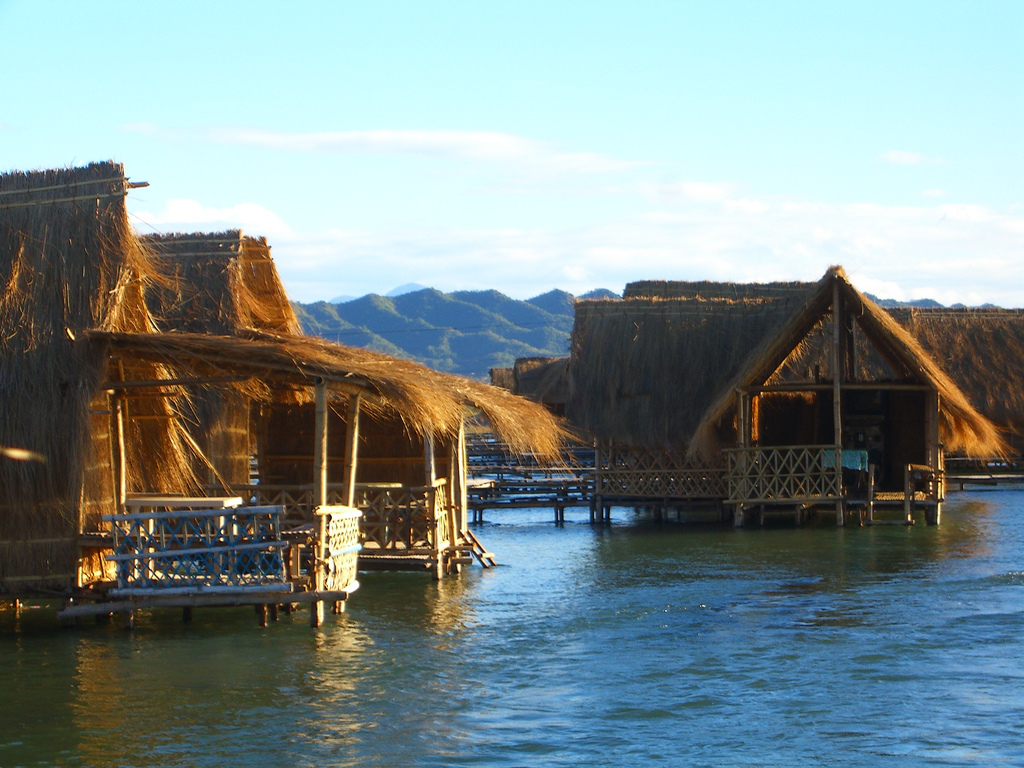
San Miguel Grande Island, By: Shubert Ciencia
Been dreaming to bask under the joyful Philippine sun? Here’s your guide to get there!

Since the Philippine Islands is an archipelago, most visitors get there by plane. International travelers can fly into airports in Manila, Cebu, Davao, Angeles (Clark), Kalibo, Laoag and Zamboanga to name a few. Philippine Airlines (PAL), Cebu Pacific, Airphil Express are among the national carriers.


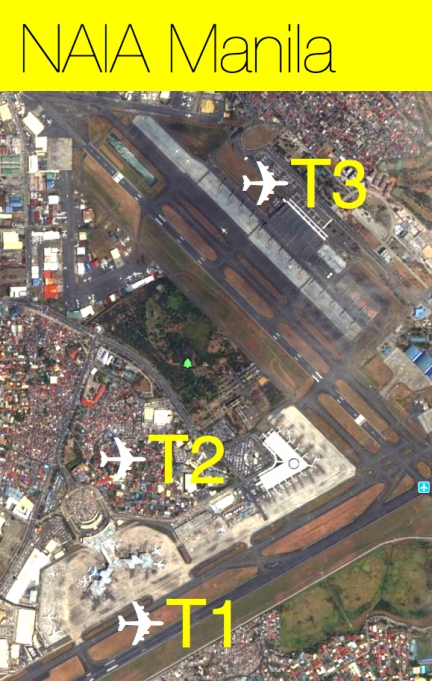
Ninoy Aquino International Airport Manila

Ninoy Aquino International Airport, By: Michael Francis
Most visitors entering the Philippines will fly in through the Ninoy Aquino International Airport (NAIA). The airport is divided into four terminals: Terminals 1, 2, 3 and the Domestic Terminal (also known as Terminal 4). All airlines use Terminal 1 with a few exceptions: Philippine Airlines uses Terminal 2, while Cebu Pacific, Airphil Express and All Nippon Airways use Terminal 3. Zest Airways and SEAIR use the Domestic Terminal. Terminal 1, long regarded as one of Asia’s worst airport terminals, is currently undergoing renovation and several areas of the terminal have been renovated. The newer Terminals 2 and 3 are regarded as being far nicer than Terminal 1, with more amenities to boot.

Major airports in the country serve as an access to maximize travel in the Philippines. The Diosdado Macapagal International Airport (popularly known as Clark International Airport) in Angeles City, Pampanga is 85 kilometers north of Manila and is a popular hub for low-cost carriers serving Manila. The Mactan-Cebu International Airport in Cebu is the Philippines’ second-busiest airport and a major hub for visitors headed to points in the Visayas and Mindanao. Several of the airlines which serve Manila also serve Cebu. The Francisco Bangoy International Airport in Davao is one of the advanced airports in the country and is the leading airport of the island of Mindanao. The Kalibo International Airport in Kalibo, Aklan is a gateway to reach the famous beaches of Boracay Island. The Laoag International Airport in Laoag, Ilocos Norte is your gateway to the northern part of the country.

If you plan to travel around the various islands, it is best to get an open jaw ticket. This can save much time back-tracking. Most common open-jaw ticket combinations fly into Manila and out of Cebu. Local airlines also have regular “seat sales”, advertising cheap fares for flights to domestic destinations. However, be aware of travel dates: some tickets booked during a seat sale may only be used on dates after the duration of the sale, sometimes up to a year after the sale, and advertised fares usually exclude government taxes and fuel surcharges.

If you live in an area with a large Filipino population, such as Los Angeles, San Francisco, New York, Hong Kong, Singapore or Tokyo, look around at travel agencies catering to overseas Filipinos. These travel agencies will usually advertise fares which are far less than posted fares.

Getting to the Philippines by Boat

However, if you intend to travel by water to other islands there are various shipping companies in Manila which can offer packages from cruise to family rooms, depending upon the destination. The Port of Manila is the largest seaport of the Philippines and was located in the vicinity of Manila Bay, one of the finest natural harbors in the world. The Port of Manila is the premier international shipping gateway to the Philippines. From the Port of Manila, you can go to various places via other ports, such as ports located in Caticlan (near Boracay Island), Cebu, Davao, Cagayan de Oro and Zamboanga are those that top the list.

Introduction to Luzon

Introduction to Luzon:
By: Gen Caracena

Luzon, Visayas and Mindanao – these are the three primary island groups of the Philippines, of which Luzon is the largest. Luzon is also the country’s chief economic center and seat of political power since it is the location of Manila and Quezon City, Philippines’s official capital and most populated city respectively.

Economy in Manila is diverse and the majority of the country’s industries and services are found here. Manila hosts the international airport and it is the Chief Seaport of the Country. It is also the center of education being the home of the oldest and leading colleges and universities in the country.
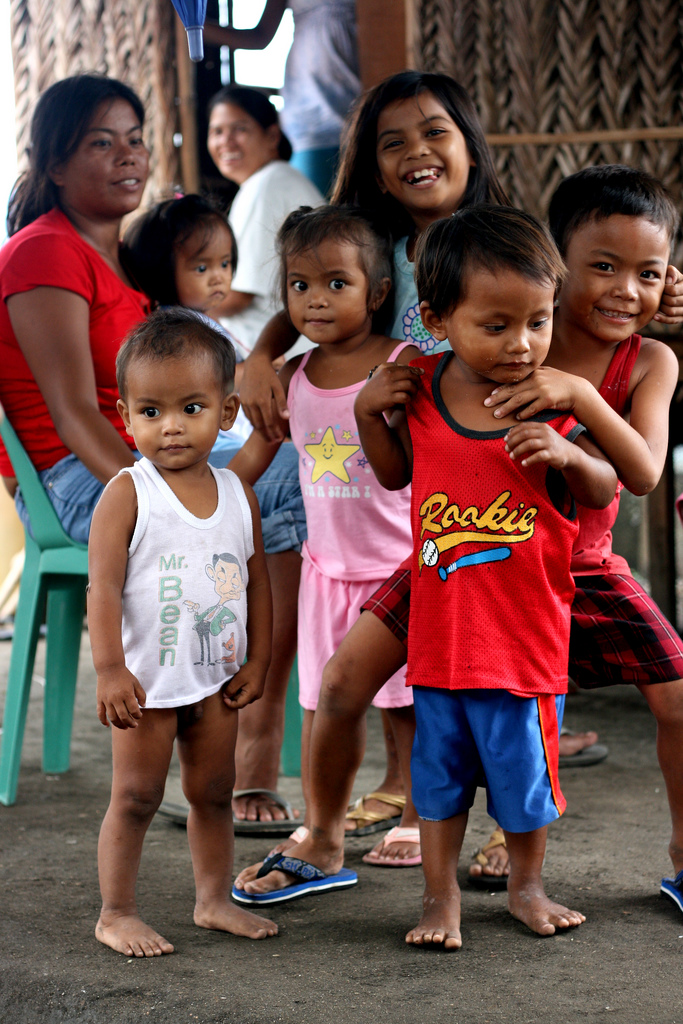
All smiles in Luzon, By: Rain Rannu

People & Culture of Luzon

The people of Luzon are Filipinos of different cultural groups and ethnicities, thus speak dialects or languages that vary from region to region, but the majority speaks Tagalog. For foreign visitors, language is not a barrier because most Filipinos can communicate well in English, both verbally and written.

Christians dominate the island and the majority is Roman Catholic. Other religions include the Philippine Independent Church and Iglesia ni Cristo. Protestantism and Evangelicals are also on the rise under different denominations. Minority groups of indigenous tribes are present in some parts of the island. Communities of Buddhists and Muslims are also present in Metro Manila by virtue of the migration of Muslims and Chinese to the place.

Leading Tourist Destinations in Luzon

Blessed with natural resources and wondrous tourist sites, Luzon has so much to offer to travelers. Here are some of the best destinations you may consider for your next travel adventure to Luzon:

1. METRO MANILA – This bustling city is probably your entry point to the Philippines. Stick around for a few days; Manila has plenty on offer!
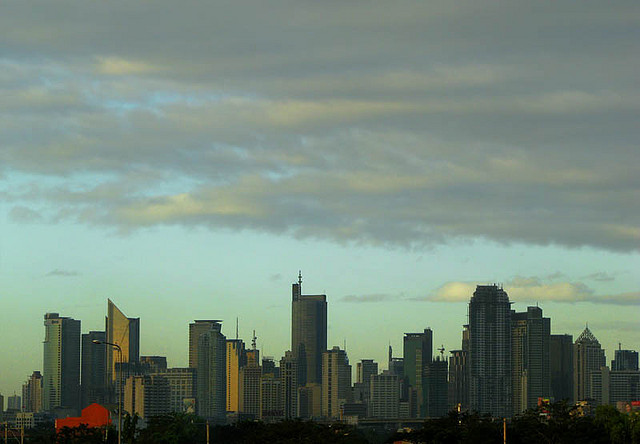
Storm over Manila, By: Cript Manila

Historical sites. Take in the old remnants of the old historical sites such as the Intramuros otherwise known as the Walled City, which was the seat of government during the Spanish Colonial Period. As a cultural center of the Philippines, Manila houses a number of museums like the National  Museum of the Philippines.

Nature parks. Visit parks and green areas, such as the familiar landmark, the Rizal Park commonly known as Luneta Park where the statue of Dr. Jose Rizal, the country’s national hero stands. Free performances and events are regularly staged in Rizal Park. Just behind Rizal Park, be fascinated by the wonders of the sea through the excellent marine life exhibits and other great attractions at the All-Season Holiday Destination within the city, the Manila Ocean Park.

Situated at the heart of Quezon City you will find the Ninoy Aquino Parks and Wildlife, a nature park named after Benigno “Ninoy Aquino, Jr. for his fight against a dictatorship that  led to his death on August 21, 1986. The park’s great attractions to visitors especially the kids consist of exhibits of wildlife that includes birds, reptiles and other mammals. Inside a wide landscape awaits you with beautiful Philippine flora that provides shades to picnic areas, cottages, playgrounds, and a calming lagoon, my favorite spot.

A short distance from the nature park stands the Quezon Memorial Circle, a national park and shrine serving as the city’s landmark. It is a 27-hectare circular park bound by an elliptical road. Trees provide some shade to visitors. Having gone to the place several times, I have seen how full of life the place is especially on weekends or holidays, when families have fun while enjoying their physical fitness routines like biking, jogging, aerobics, brisk walking and strolling. Within the park are playgrounds, bicycle rentals, shopping stalls, food establishments and a lot more. Standing prominently in the center is a shrine where lies the remains of Manuel L. Quezon, the Philippines second president.

Another fun destination in Quezon City is the La Mesa Dam Ecopark, a 33 hectare public park outside the boundaries of the La Mesa Dam Watershed and 40 meters below the reservoir. For minimal fees, you are allowed to use their facilities like fishing rods, swimming pool and boats for paddling. La Mesa Dam Watershed is the main source of drinking water for about 12 million Metro Manila residents.

Shopping Centers. After some breathtaking, but enjoyable tours around Metro Manila, you can pamper yourself by shopping to your heart’s content in the major shopping malls spread all over Metro Manila.

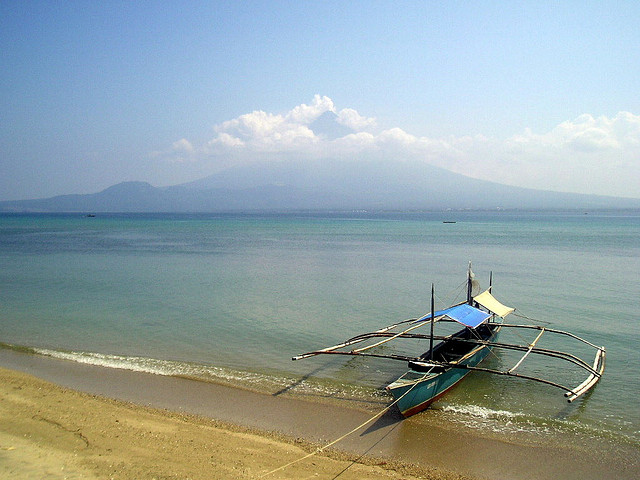
2. BICOL REGION. The region is famous specifically for its Mayon Volcano in the province of Albay. The almost perfect cone shape of the volcano makes a beautiful backdrop for pictures. Apart from Mayon Volcano, the beautiful scenery in the regionincludes beaches, mountains and waterfalls. The region is also a good scuba diving destination.
The Mayon volcano, By: Richard

3. LAGUNA PROVINCE. The  Pagsanjan Falls are a major tourist attraction plus the hot spring resorts located in the municipality of Los Banos and Calamba City on the slopes of Mount Makiling.  The province is also known for its beautiful wood carvings by the people of the municipality of Paete. Laguna is situated southeast of Metro Manila.

4. TAGAYTAY CITY. A city in the province of Cavite, Tagaytay is one of the country’s favorite destinations because of its exceptional panorama and cooler environment. The high elevation makes Tagaytay one of the coldest places near the capital city of Manila and with barely 55 kilometers away, a convenient getaway for Manila residents. At the ridges of Tagaytay you can see the famous Taal Volcano, the world’s smallest active volcano located within a lake called Taal Lake.

5. PANGASINAN is the third biggest province in the Philippines endowed with outstanding natural beauty and unique attractions. Enjoy island hopping in the famous Hundred Islands National Park located in the city of Alaminos.

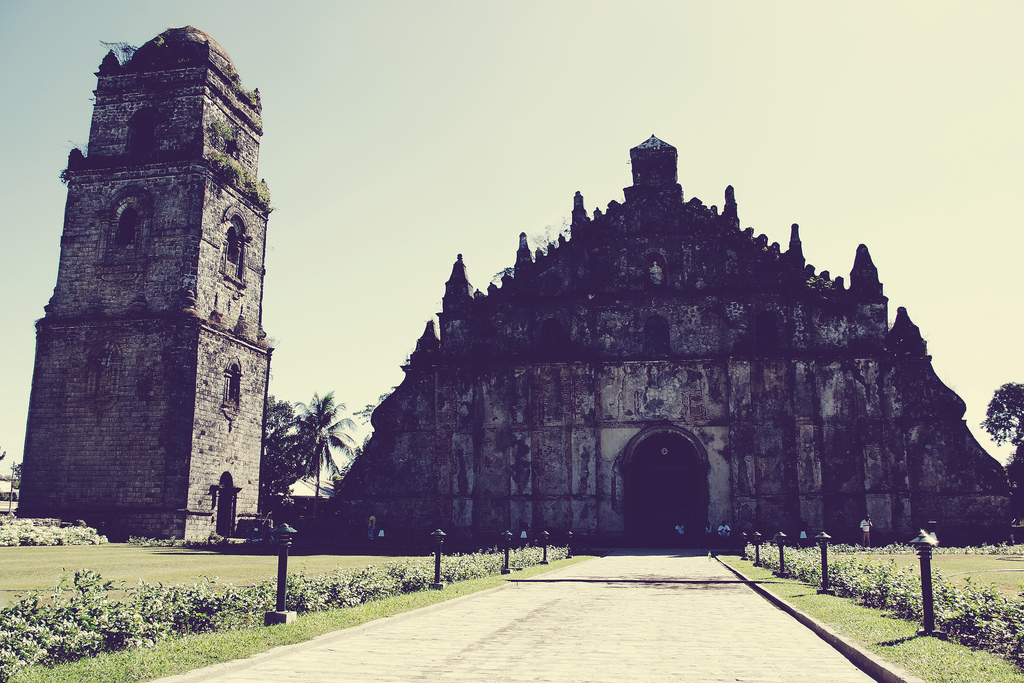
6. ILOCOS NORTE. The province of Ilocos has beautiful white sand beach resorts, historical museums and heritage sites such as the Paoay Church, known for its baroque architecture.
Luzon's Ilocos Norte, By: Eric Molina

Among those must-visit sites in the province is the spectacular Bangui Windmills built alongside an unspoiled black sand beach located in the municipality of Bangui, Ilocos. It is the first wind farm in the country that supplies 40%  of the power requirement in the province.
Paoay Church, By: Hub Hayag

7. VIGAN CITY– Located in the northern part of the Philippines, is one of the most beautiful cities in the country that showcases the cultural past and Spanish heritage of the Ilocandia region. The Vigan Heritage Village is a row of houses built during the Spanish colonial period that is best preserved for the future generations and listed as a World Heritage Site. The village has cobblestone streets with a unique combination of Philippine and European architectural design. Visitors can enjoy the site using a Calesa, a horse driven carriage.

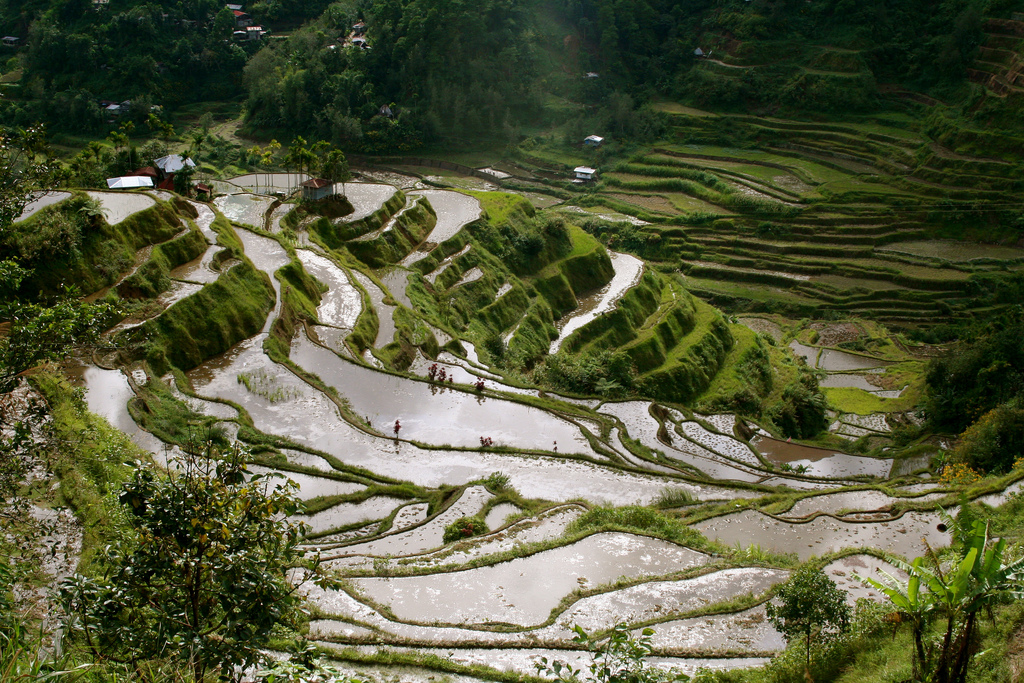
8. IFUGAO – The province of Ifugao is mountainous and rugged, with river valleys and vast forests. Main attractions to the place are the 2000 years old Rice Terraces of the Philippine Cordilleras and Banaue Rice Terraces hand-carved into the mountains by the ancestral tribes, to produce level steps for rice cultivation. These 2000 years old terraces are listed as a UNESCO World Heritage Site.
Banaue Rice Terraces, By: Jon Rawlinson

9.  BAGUIO CITY. The center of trade and commerce and the center of education in the entire Northern Luzon, nicknamed the City of Pines, the City of Flowers, the Summer Capital of the Philippines -  these are some of the highlights of Baguio City.

The weather of Baguio makes tourism one of the major industries in the city. It is known specifically for its beautiful cut flowers, strawberries and vegetables that are transported to other major urban markets across the country.

The world renowned Panagbenga festival attracts local and foreign tourists. Panagbenga or Baguio Flower Festival is a month long affair every February that celebrates the gift of flowers and the richness of culture of Baguio and Ifugao province. The festival includes a parade of colorful floats adorned with flowers, and street dancing in flower-inspired costumes.
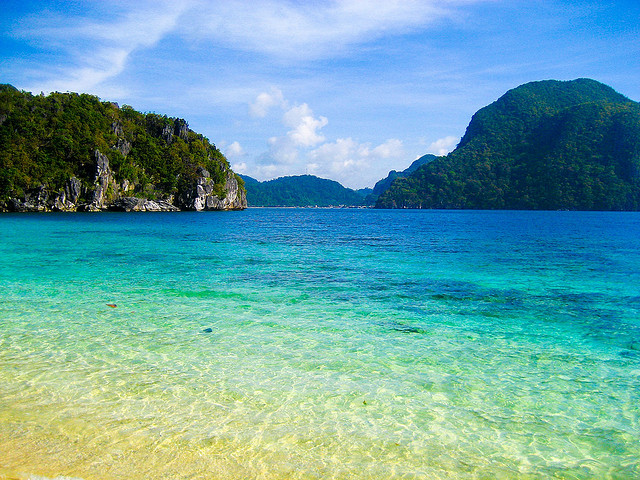
El Nido in Palawan, By: Guido

10. PALAWAN – Palawan is an island province with Puerto Princesa City as its capital. The island offers beautiful beaches and rich flora and fauna. Visit El Nido Marine Reserve Park, Coron Reefs, and Calauit Game Preserve and Wildlife Sanctuary, all part of the richest and best preserved natural ecosystem in the entire world.

Also worth a visit is the Puerto Princesa Underground River that was recently confirmed as one of the New 7 Wonders of Nature.

You see, Luzon has plenty to offer for travelers. Bustling cities with historical sights, shady parks and perfect shopping, rice paddies, volcanoes and beaches, you name it, Luzon has it!

Daily SG: 21 June 2012

Daily SG: 21 June 2012:


(Credit: Spore Says Political Cartoons)
Singaporeans First?

- sgthinker: A pink IC does not give you the right to a job
Daily Disclosure

- Mr. Smith: Older woman argues with younger woman over priority seat

- Blogging for Myself: Kind Act Harshly Repaid on the MRT

- Everything Also Complain: Wallhola more hazardous than rock climbing

- Leong Sze Hian: Petir: Towards higher wages, higher productivity for all?
Internet Code of Conduct – See No Evil, Hear No Evil, Write No Evil

- New Asia Republic: Cherian George, stop pontificating
Truth, Justice, and the Singapore Way

- Alps Tan: Woffles Wu: Justice done or an aesthetic cover-up?

- Limpeh Is Foreign Talent: Woffles and the system part 2

- Feed Me To The Fish: Woffling Through Cheng San . . .
Defending OUR Lion City?

- Yahoo: Man robs NSF of rifle with a screwdriver

- New Nation: BREAKING NEWS: NSF to be awarded for keeping calm
Preserving Heritage

- The Gigamole Diaries: Selling off our heritage – the plight of Kampong Glam
A Vote for Change

- Blogging for Myself: Assimilating the foreigners among us

- Singapore Notes: Talk About Town

Singapore appoints diplomats to head US, New Zealand missions

Singapore appoints diplomats to head US, New Zealand missions: SINGAPORE: The Singapore government on Thursday appointed two diplomats to head its missions in New Zealand and the United States of America.

Five Nations provide language training to UNTL teachers and lecturers

Five Nations provide language training to UNTL teachers and lecturers:
UNTL Administrator Mateus Fernandes.Five nations currently support the National University of Timor Lorosa’e UNTL with languages – Portuguese and English – teaching at the Faculty of Education, Department of English and Portuguese.
Lecturers from five nations, Brazil, Portugal, New Zealand, Australia and the United States of America, provide Portuguese and English language training to lecturers and students at the university to improve their language ability.

“We now have an English Language Training Centre (ELC), supported by Australia. Currently we are in the process to try and make this language centre the best model in Timor-Leste,” said UNTL Administrator Mateus Fernandes (24/05), at the Liceu, UNTL, in Dili.
According to him, even though Tetum and Portuguese are the official languages of the country, English is equally important because it is an International language.

Courts using Portuguese, translators on hand

Courts using Portuguese, translators on hand:
Justice of Peace Jose Ximenes, Court of Appeals, in Caicoli, Dili.Timor-Leste Courts make available interpreters and translators to try and ensure the general population can follow court proceedings because in most instances, cases are heard in Portuguese.

“The Courts have translators on hand. The Appeals Tribunal has one interpreter. At the Baucau Court there are three. In Oe-cusse there is one and as well, in Suai  there is one. The Dili Court has four,” said Justice of Peace Jose Ximenes (04/06) from the Court of Appeals, in Caicoli, Dili.

He added, to become an interpreter the individual needs to be fluent in all the languages – Portuguese, English and Tetum – and they must also have knowledge of other local languages.

Academics: Asean's 'sick patient'

Academics: Asean's 'sick patient': Unless Thailand decisively ends the prolonged debate over whether the country should be led by guided or popular democracy, it will remain a sick patient in the emerging and competitive Asean Community, academics said at a seminar on Thursday.

Is a judicial coup in Thailand imminent?

Is a judicial coup in Thailand imminent?:
BP has already blogged on what BP views as the very low likelihood of a military coup. This post will look at a judicial coup. We have already seen the increased role that the judiciary has played in politics over the past few years, but we really need to go back to the Thaksin concealment case in 2001 for the first time in “modern, post-1997″ Thai politics where the court intervened politically and gave Thaksin the benefit of the doubt.
Then, you can say there was a lull until 2006, but after HM the King’s speech in 2006 the judiciary’s role become more prominent. (In 2007, a former judge and then constitutional drafter stated “Even HM the King places trust in the judges; would you condemn them?”). The Court invalidated the April 2006 election and then judges refused to grant bail to the election commissioners (Kaewsan even criticized that decision) as the commissioners refused to resign. The result of spending time in jail was that the commissioners lost their positions and they were granted bail after that.
In 2007, after the coup, we saw a changing in the balance of power in Thailand with the judiciary being given more powers under the 2007 constitution including being on committees to appoint Senators (who then in turn confirm judges) and members of independent agencies. Judges also choose against themselves who will fill the top positions in the judiciary.  This meant that judges were no longer exercising only judicial power, but judges were still able to use  contempt of court to limit criticism (also see these posts about contempt of court here and here )*. Nevertheless, this didn’t stop the judiciary from making public comments criticizing politicians and the political system and moved beyond appearing as merely impartial observers who are above politics.
With all this power though, you still had the question on, who will guard our judicial guardians? The essence of the reason for separation of powers is as explained by Wikipedia that you “[n]ever give ultimate power to any one group; the executive, legislative, or judicial”. The 2007 Constitution gave, in BP’s opinion, too much power towards the judiciary.
It was though in 2008 that the judiciary really started to assert its authority. You had the Samak case where Samak lost his position as Prime Minister because of his role on a cooking show deemed him to be an employee of the show and this was contrary to the Constitution- see posts here, here, and here. Then, you had the Constitution Court apply a very broad meaning to Section 190 of the Constitution when they  ruled that the Communique with Cambodia on Preah Viehar was a treaty which needed parliamentary approval and hence as it didn’t have such approval, it was unconstitutional. This surprised the Foreign Ministry who had been approving the signing of MOUs for years and eventually the broad interpretation caused so many problems with even minor agreements needing parliamentary approval that this provision of the Constitution was amended last year. Yes, interpretations have consequences. Even now, there are concerns that things are still uncertain.
Former Foreign Minister and now ASEAN Sec-Gen Surin as quoted in the Bangkok Post:
A lack of detail as to which agreements require parliament scrutiny has been holding back Thailand as the government has failed to make decisions out of concerns of violating the charter.
“It is barring Thailand from taking a leading role. There are delays in a number of issues because the [country's] leaders do not make decisions and have to ask for parliamentary approval.
“These issues do not require legal amendments, just ministerial directives. In the eyes of other countries, Thailand lacks a clear international policy and continuity in [following up on] agreements,” Mr Surin said on the sidelines of the Asean Economic Ministers meeting held from Tuesday until today in Indonesia.
BP: The situation is that a Minister or the Prime Minister goes off overseas for a bilateral or multilateral meeting, but there is a fear of signing a minor agreement or MOU lest it be deemed to be a treaty – which legally is a different type of document – and the signing being deemed unconstitutional and this leading to criminal charges. In essence, you have few decisions being made out of fear on what may happen.**
Then, of course, you had the dissolving of the pro-Thaksin PPP and two other parties in December 2008 and banning of executives of each party. The dissolution happened so quickly with the court restricting testimony from the defense and holding the final hearing in the morning and writing the judgment in less than an hour delivering that afternoon. This directly led to the downfall of the PPP-led government as it allowed Newin and MPs in his faction to leave the Thaksin fold (as they were no longer PPP MPs as PPP had been dissolved, they could legally join a new party without restrictions which wouldn’t have been possible without the dissolution). This decision was the actual judicial coup – a coup requires the removal or effective removal from power. The fix was clearly known as a Wikileaks cable entitled “THAI PRIME MINISTER SOMCHAI DISREGARDS ARMY COMMANDER’S SUGGESTION HE RESIGN” (08BANGKOK3143) dated October 17, 2008 showed.  The key paragraph is:
6. (C) Anuporn Kashemsant, a foreign liaison officer for the Queen in the Principal Private Secretary’s office, remarked to us October 17 that various political maneuvers were ongoing. He said ”a coup like what happened September 19, 2006 is not one of the options” for resolving Thailand’s political crisis, because the military had proven it was incapable of running the country. His qualification evoked the remark of former Prime Minister Anand Panyarachun on October 16 (ref A) to Charge that there would not be ”a coup in the traditional sense of the word.” Anuporn hinted that significant developments likely would take place in the coming days, but refused to predict what might occur, beyond saying there were two possible paths forward.
BP: Indeed, there was not a coup in the traditional sense of the word, but there was a judicial coup about 6 weeks later…Although, of course in a decision in 2009, we see that politicians such as Newin who had by then left the Thaksin fold were acquitted on corruption charges in 2009.
Even though the judiciary has more power, there has been little public discussion about our new judicial guardians. This is despite surveys showing widespread payment of money to judges in cases and whether this is a good thing. The judiciary can come under all kinds of influence, but there is little mention in the media about corruption in the justice system. Surveys of foreign businessman on corruption showed concerned about the expanded powers for the judiciary. Given the increased role of the court and many controversial decisions, BP was not surprised when a survey in 2011 found that 57% of those surveyed had little or no confidence in the Constitution Court.
It is in the above context that things are currently being played out. Talk of deals and with the introduction of the reconciliation bills and the constitutional amendments, it appeared things were on track, but things appeared to quickly fall apart. On Friday June 1, the Constitution Court accepted a petition to review amendments to the constitution on the grounds that the amendments have (or potentially will in the future?) breach Section 68 of the Constitution which provides that “No person shall exercise the rights and liberties prescribed in the Constitution to overthrow the democratic regime of government with the King as Head of State under this Constitution”.  After the acceptance, we saw concern expressed about another judicial coup.
Daniel Ten Kate for Bloomberg:
Another ‘‘judicial coup” may take place before street protests spin out of control, a possible pretext for another military intervention, according to Paul Chambers, director of research at the Southeast Asian Institute of Global Studies at Payap University in Chiang Mai, a city in northern Thailand.
“If things continue as they are right now, then Yingluck’s days are numbered,” he said. “If Pheu Thai steps back and ends the attempts to change the constitution, then Yingluck can stay in office perhaps until her term is over.”
Nirmal Ghosh in the Straits Times:
Meanwhile, efforts to amend the Constitution have stalled after the Constitution Court accepted a petition from the Democrat Party and four individuals questioning the legality of the government’s action.
“The ‘judicial coup’ has begun,” a Puea Thai minister said in a text message, using a common term to describe a stream of court judgments against Thaksin and his parties since 2007.
“And they (the PAD and Democrat Party) are trying to stir up violence so that the army can step in,” the minister added.
BP: Since the court’s acceptance of the petition there has been widespread criticism of the court by legal experts. BP has summarized some of the criticisms here. BP has blogged on the defence of the Constitution Court provided by noted Thaksin opponent, Kaewsan. BP has blogged on the Constitution Court’s defence of the acceptance of the petition and also blogged on the Attorney-General stating that the amendments don’t breach the constitution. BP has also blogged querying why the Court has changed its interpretation of the wording in Section 68 from a previous case where the Court rejected to accept a petition directly against the Democrats.
As blogged on the court’s acceptance and the likely outcome:
The amendments do guarantee – actually they are much broader than the current guarantee – that the monarchy will not be amended.
...Simply put, it is one thing to delay the amendments. It is another to go beyond that. The Court in its defence did not actually state what evidence of a threat there was. They have just said people said there was a threat so we would look into that. Based on the evidence presented, and the actual wording of the amendments is the most relevant, there is no evidence of a threat to overthrow the monarchy. Unless there is some no evidence introduced – exactly what is even hard to imagine – it will be very difficult for the court to find an argument to stop the amendments, let alone, do something beyond that like dissolving Puea Thai and banning its executives.
The court then is much more likely to (a) either dismiss the petitions, or (b) look for a face-saving move, such as, require a more strongly worded guarantee. This then provides the rationale for the court accepting the petition in the first place (and hence avoiding criticism of the court for delaying the amendments). It would mean we have additional delays in the amendments which was the whole point of the entire exercise in the first place. The government is then put in a position of defying an actual decision of the court – which is different from an actual order – as opposed to complying and there only be a further delay.* The easier thing to do for the government then is to comply…
BP: Now, you may say, well BP look at what happened in 2008. Simply put, the process was unusually sped up in 2008, but the major problem then was the harsh law. BP does not think you can say the court’s interpretation of the law was unreasonable. The law was designed for the precise propose of dissolving parties and banning executives. This time around to get the judicial coup removing Yingluck and PT from power on the grounds of Section 68 would mean the Court would need to disregard the the actual wording of Section 68 making such a decision a farce. BP thinks this is not that easy to do and the court is unlikely to go down that road.
Not every hiccup for the government will result in a judicial coup. For example, just after last year’s election, when the Election Commission was slow to endorse Yingluck after the 2011 election there was speculation that we are embarking on another judicial coup. As noted at the time, BP thought such claims were, as they turned out to be, premature. Then, you had the Constitution Court accepting the petition to review the constitutionality of executive decrees transferring 1997 financial crisis debt to the Central Bank & authorizing 350 billion baht in loans for flood recovery, but the Court then ruled them constitutional.
Hence, merely because the court has accepted the petition doesn’t mean the court will permanently block amendments or dissolve Puea Thai. The court may do so, but BP sees only a 25% chance of that happening. A temporary delay or some other face-saving measure is more likely.
There are many other cases that have recently cropped up including the Alpine Land case (mainly affecting the Interior Minister), the Ombudsman “ethics” investigation into Yingluck and other politicians etc.  They may eventually develop into cases where the government can be removed, but there do not appear to any imminent serious threats on the horizon although things are less certain than they were just a month ago and can change at anytime.
*Although, returning to the present day,  the court’s acceptance of the petition against the constitutional amendments has resulted in significant criticism, but so far contempt of course has not been raised, as far as BP is aware so perhaps this is less of an issue now.
**A diplomat told BP of an instance where a minor donation was to be made, but the donating country required a MOU to be signed on the Thai side ensuring that the donation was used properly. And then things hit a roadblock as no one from the Thai side wanted to sign the MOU…

Are we any closer to a settlement with the insurgents in Thailand’s Deep South?

Are we any closer to a settlement with the insurgents in Thailand’s Deep South?:
BP has previously blogged about the idea of autonomy for the Deep South when Chavalit raised the issue here, the idea of a referendum here, on a op-ed by Achara here in the Bangkok Post,  another op-ed by Veera in the Bangkok Post here, an op-ed by Chandler Vandergrift in the Bangkok Post here, and on an article that independent researcher Jason Johnson has written an article for Asia Times on the Deep South here.
Then, a few months back BP blogged some statistics on the level of violence in the Deep South including from March 2012 and the coordinated attacks at the end of March which injured hundreds. In March 2012, there were  56 deaths and 547 injuries in Thailand’s Deep South. 547 injuries was a dramatic increase and was the most number of injuries ever in a single month although the number of deaths was above the previous few months although not unusually high. As noted then:
Hence, these two incidents explains the increase in the number of injuries. Most of the injuries were minor, ie. smoke inhalation, and vast majority went home that day. This is not to understate what happened that day, but it is a single day and on its own, it does not yet suggest a sustained increase in violence – you can see there were 221 injuries between November 2011-February 2012 which is less than the number of injuries in the two months prior to this (i.e September-October 2011 where there were 268). The violence goes up and down like a yo-yo at times – look at deaths in Chart 4 in particular – so we need to wait for another 3-6 months to see if there is a consistent increase.
Nevertheless, the demonstration of the increased capacities of the Hat Yai and Yala bombings shows the insurgents have the capacity to dramatically increase the number of fatalities from a couple of incidents, but we are still waiting to see whether this will happen (i.e was March 31 a one-off, an escalation, or something in between – BP thinks the latter).
Jason Johnson, an independent researcher based in the Deep South, had an article last month in Asia Times Online. Some key excerpts below:
While journalists and security analysts have emphasized growing insurgent strength, will and capacity to escalate the unrest, statistics show the insurgency remains locked in a military stalemate. The number of deaths, injuries and violent incidents continues to fluctuate month to month but has shown no clear indications of an upward or downward trend.
There were 56 and 28 deaths resulting from violent incidents in the region respectively in March and April, according to data provided by the Deep South Watch, a Pattani-based think-tank that monitors violence in the region. Both figures fall within the general statistical range of deaths in the region since mid-2007.
BP: So no increase in April. There is not yet any pattern to suggest an upsurge in the violence and agree with Jason that the March and April death figures fall within the general statistical range of deaths.
Jason continues and raises negotiations and Thaksin’s role, particularly in light of stories of Thaksin meeting with some insurgent leaders (as blogged about here):
Yet Thaksin’s role in aggravating regional unrest may have little bearing on future negotiations. Far more significant, according to sources knowledgeable about the situation, is the government’s limited ability to kick-start a negotiation process. At this stage, they say, Yingluck, Thaksin and Tawee lack the political clout to push forward a peace deal.
Thai army chief General Prayuth Chan-ocha, a loyalist to the country’s influential monarchy and known Thaksin adversary, has denounced Puea Thai’s push for “Pattani Mahanakorn”, a proposed model of decentralized democratic regional governance crafted by civil society groups that some have suggested could be introduced as a bill to the country’s parliament.
Prayuth has also criticized Thaksin and Tawee for not talking with all separatist figures believed to have authority over insurgents in the region. The shadowy insurgency is believed to be fragmented into several groups and Thaksin is believed to have been in contact with only certain group representatives.
Since secretive and informal peace talks began under the coup-appointed government of General Surayud Chulanont in 2006, the Barisan Revolusi Nasional Coordinate (BRN-C), the group playing the largest role in the violence but believed to be highly factionalized, has largely refused to engage in talks.
Military figures emphasize that BRN-C’s refusal stems from hardline aspirations for full-blown independence rather than more autonomy. Yet other sources with knowledge of the talks say that as long as Yingluck’s government is unable to demonstrate it is sincere about negotiations and at the same time guarantee it has civilian authority over the powerful military, the movement will never come forward coherently to the negotiation table.
That authority is in doubt, despite Prayuth’s insistence that the army operates on Yingluck’s civilian orders. While her government may be too weak to draw separatist figures with authority over insurgents to the table, Thaksin’s apparent position is precisely what civil society and the international community have long hoped for: a government that intends to end the protracted conflict through negotiations and by introducing some form of special democratic regional governance for the minority region.
Stalemates and settlements

Even if a unified commitment towards a negotiated settlement takes hold in Bangkok, comparative literature on the termination of internal conflicts indicates that it is highly questionable that any such settlement would stick.
BP: To be honest, BP doesn’t have much to argue with Jason about so will keep it short and suggest you give the article a read as am largely in agreement. His opinion is that there is no settlement in sight for now. Will the government push more further given the strong opposition from Prayuth particularly given other political problems? Possibly although unlikely. The situation in the Deep South has been in ‘too hard basket’ for a while now with successive governments outsourcing the issue to the military. Will Thaksin risk the wrath of the military and possible failure in negotiations? If not, there is little chance in a settlement. The constitutional amendments and reconciliation bills providing amnesty are likely much greater priorities….
As BP blogged at the end of 2010 on whether autonomy is a solution:
First, BP is of the view that some form of substantive autonomy/decentralization would assist in reducing the violence. Sure the hardline insurgent leaders would not be happy, but counterinsurgency doesn’t require you win the hearts and the minds of the hardliners. It requires you win the hearts and minds of the local population. Let’s not mince words. The insurgents could not operate without such tacit support/turning a blind eye by many sections of the local community (other sections provide more active support). But those tacit supporters are not always necessarily going to be tacit supporters. Therefore, not only must your words help develop trust with the local population, but your actions must, too. One way to do this is provide the local population with a greater say over how their affairs are organized instead of top-handed, Bangkok-appointed bureaucrats running the show.
BP’s problem with the Ministry proposal is that it appears to be one of these meaningless symoblic gestures which won’t do much and well if it is Ministry it will still be a Bangkok-appointed peson running the show. There are not enough specifics in the article, but it doesn’t seem to go far enough. BP is not opposed to a stepping stone/incremental approach, but just if the step is too small then the reaction may also be small. The reduction in violence or other changes are also likely to be small. If the progress is neglible because the first step is too small, will there be a second step? BP is just very sceptical that a Minister on its own is a substantive step. A Minister + elected governors now that would be….
btw, autonomy is not a pancea for all problems, please see these posts (herehere, and here) on the situation in the Philippines where the violence did not end, although it did drop.