Jul 8, 2012

Best Time to Travel to the Philippines

Best Time to Travel to the Philippines:
By: Leonard Estores Dalugdog

Traveling to the Philippines? If you are, then, here are some suggestions on the best time to explore the 7,107 islands of the archipelago.
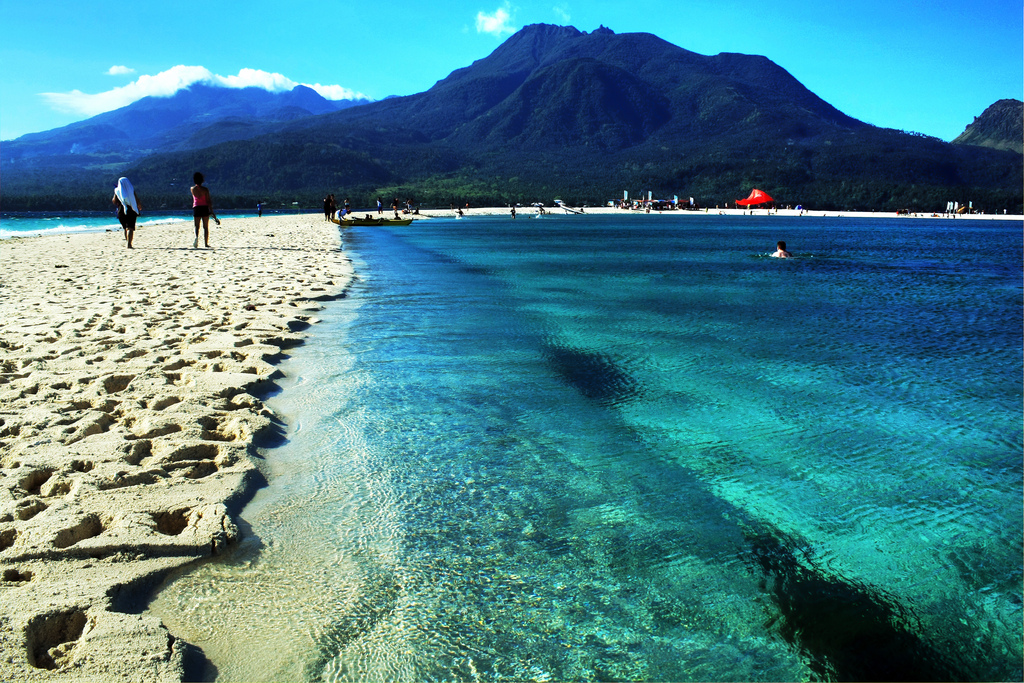
Camiguin Island Philippines, By: Allan Donque

Best Time to Travel the Philippines for Beach Bums & Nature Lovers

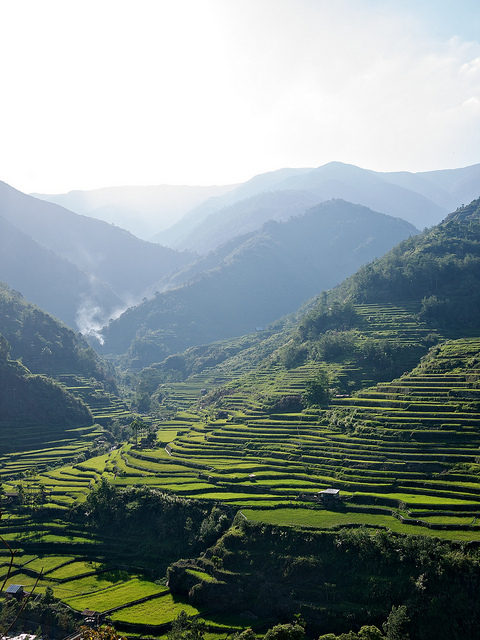
If you are planning to have a blast by the beach, the best time for a beach bum to travel is during the summer season when the weather is a bit humid and perfect for water fun. The summer season in the Philippines would be around March to May. Various summer sports activities, like kayaking, snorkeling, and surfing, are readily available. The most popular destinations are Boracay Island, Puerto Gallera, Manila, Banaue Rice Terraces, Bohol, Cebu City, Siargao Island, Palawan, and Davao City, to name a few.
Happao rice terraces, By: Miguel Castaneda

On the other hand, if you dig highland experience, you can travel from Manila to Baguio City—the summer capital of the Philippines. It generally takes about 5-7 hours to get to Baguio by bus. You can enjoy both scenic and adventurous experiences with its high altitude and challenging terrain. Tourist destinations in Baguio include Camp John Hay, Burnham Park, Mines View, Botanical Garden, and other enjoyable, and not to mention, romantic spots.

Best time to Travel to the Philippines for Party Lovers

It is not only during the summer that you get to maximize your stay in the Philippines but also during the peak of the ‘festival’ season. The festival season, when Filipinos celebrate various festivities in line with their culture, happens all year round, with peak months from August to December.

With the variety of festivals from Panagbenga (floral festival in Baguio City), to Cebu’s Sinulog Festival and Ilo-Ilo City’s Dinagyang  , down to the Kadayawan (festival of abundance in Davao City) where one can truly jive with the locals’ tropical rejoicing syndrome. As they say, “Every day, a fiesta is being celebrated in the Philippines.”

Be sure to book yout hotel in advance during any festival, as prices may double ot even triple and rooms get booked out quickly. This is especially the case for the Holy Week (during Easter) and New year.
Sinulog devotee, By: Roy Chan

Best Time to Travel to the Philippines: Weather, Seasons & Cyclones

Weather patterns in the Philippines are dictated by the prevailing winds – the habagat (southwest monsoon), which runs from May to October, and the amihan (northeast monsoon), which prevails from November to early May. Be aware though that each island and region has their own weather characteristics. The Philippines’ weather has, as in many other places in the world, become more unpredictable in recent years, but January to May usually brings the best weather to most of the country. However, this is also the high tourist season. Typhoons, known as bagyo, are common from June to November. Striking mainly in Luzon and the Visayas,they cause a lot of damage, but, as all natural disasters are hard to predict.

The whole year round, traveling to the Philippines guarantees a lot of fun. Make sure you plan your itinerary very well because the Philippines offer unlimited possibilities for travel experiences that you will never forget.

Jul 7, 2012

Parliamentary Election Update 9.00pm 07 July 2012 | East Timor Law and Justice Bulletin

Parliamentary Election Update 9.00pm 07 July 2012 | East Timor Law and Justice Bulletin

Polls close in East Timor elections

Polls close in East Timor elections: Voting ends in parliamentary elections pitting PM's governing party against Front for Independent East Timor.

WikiLeaks Releasing Trove of Syria Documents

WikiLeaks Releasing Trove of Syria Documents: The group said the cache of more than 2.4 million e-mails between Syrian politicians, government officials and companies would embarrass President Bashar al-Assad of Syria as well as his adversaries.

Olympics Terrorism Fears on Display in Britain

Olympics Terrorism Fears on Display in Britain: A passenger’s attempt to light up on a bus to London played into fears of a terrorist attack tied to the Olympic Games.

Temperatures Soar as Heat Wave Continues

Temperatures Soar as Heat Wave Continues: At least 36 heat-and-weather related deaths have been reported since the temperatures first spiked about 10 days ago, according to reports by The Associated Press.

The faces of the dead in Syria’s unrest

The faces of the dead in Syria’s unrest:
BEIRUT — Sakher Hallak went all out last year during his first trip to the United States.
He visited his brother in Philadelphia, checked out Times Square in New York and even hit Miami Beach.
Hallak, 43, ran a successful ­eating-disorder clinic in his native Syria, and he had come to the United States for a medical conference. Before he returned, Hallak discussed with his brother the unrest gripping their homeland.
Read full article >>


For Egypt’s new Islamist government, jobs are first priority

For Egypt’s new Islamist government, jobs are first priority:
CAIRO — After their dramatic rise to power — and it’s hard to imagine one more operatic than the clash of revolution, democracy and religion that swept the formerly outlawed Muslim Brotherhood into Egypt’s presidential palace — the country’s untested new leaders now face a more prosaic first priority: Egypt needs jobs.
Read full article >>


U.S. warns of ‘dangerous’ confrontation as Iranian exiles balk at moving from Iraqi base

U.S. warns of ‘dangerous’ confrontation as Iranian exiles balk at moving from Iraqi base:
State Department officials warned Friday of the potential for renewed violence between Iraqis and an Iranian dissident group living north of Baghdad, citing stalled efforts to relocate the Iranians to a new, temporary home.
Read full article >>


Black women are among country’s most religious groups

Black women are among country’s most religious groups:
Georgetown law student Melanie Habwe Dickson stood nervously outside a District courtroom, waiting for the chance to argue for her client, a domestic-abuse survivor.
It was Dickson’s first time in front of a judge, and she needed something to help her relax. She pulled out her smartphone to find an inspirational verse and then remembered that she still carried an excerpt from a text she had read during her weekly Bible study group.
Read full article >>


Despite unprecedented criticism, Egyptian military still a revered institution

Despite unprecedented criticism, Egyptian military still a revered institution:
CAIRO — When Egyptian protesters overthrew Hosni Mubarak’s 30-year autocracy last year, they initially embraced the long-hallowed armed forces as revolutionary guardians. But that amity quickly decayed amid reports of troops firing on demonstrators and abusing women, and suffered further when an interim junta delayed the democratic transition and stripped powers from the president.
Read full article >>


‘I Tried To Speak Up for My Country’

‘I Tried To Speak Up for My Country’:
Huynh Thuc Vy, 26, blogs about democracy, human rights, and political violence in Vietnam, a country rated rated by Reporters Without Borders as one of the world's top "Enemies of the Internet."
The daughter of a dissident who spent 10 years in jail for his writings, Huynh Thuc Vy has faced fines from authorities for her “propaganda” and endured a raid on her family’s home last year, when police confiscated their computers.
On July 1, Huynh Thuc Vy went Ho Chi Minh City to take part in an anti-China demonstration. Three days later, she was taken into custody and driven to her home province of Quang Nam, where police interrogated and harassed her in what she believes was an attempt to scare her into avoiding further protests.
She spoke to RFA’s Nanh Kanh about her ordeal on July 6, just after returning home:
Everything started happening after [the demonstration on] July 1. On July 4 I went to the police station in Tan Quy Ward, District 7 in Ho Chi Minh City. Police kept me there for three hours. I intended to go home with my husband, but when we left the station police from my home province came and forced me into their van and took me away without my husband.

I didn’t know which street or road we were traveling on, until finally I realized we were going back to my hometown. The van went very fast, and during the trip the personnel in the van interrogated me and were harassing me and terrorizing me.
When the van stopped at Tam Ky [the capital city of my home province] the security police of the PA 61 office [a special branch of the police] came to meet me and asked many questions of me repeatedly for a long time. I know that they knew the answers already, but they continued to ask me.
Questioned
They were intentionally terrorizing me and harassing me. They kept asking the same questions over and over again.

They asked me about the purpose of my writing, the purpose of the demonstration, and how I knew about the demonstration. They wanted to know how we communicated as organizers. They wanted to know if my father approved of me attending the demonstration, where I stayed in Ho Chi Minh City, and who I stayed with.

They asked many private questions, like about my email address, my username on Skype, and my passwords, but I wouldn’t tell them. They tried to trap me to make it look like I was denouncing my friends who took part in the demonstration.

They wanted me to talk about Hang Bui [a nationalist demonstrator who was arrested and sent to jail after anti last year’s anti-China demonstrations]. I told them I don’t care about her past, what her ideas are, or her behavior. To me she is a patriotic demonstrator. She tried to do the best thing for our country, so I respect her.

Around 9:30 pm on July 5 I finally got home, but they dumped me out of the van a few kilometers away from my home, so I had to walk all the way back at night.

The whole time I was in the police station I didn’t eat or drink. They only gave me a little water and a little rice porridge. I was starving. I felt very exhausted because they kept interrogating me and I had to work with many different people. They wouldn’t say the reason why they detained me.

Intimidation

I guess that they are afraid that I will participate in the next demonstration next weekend. I think that’s why they forced me to go back to my hometown. They are trying to control me during that time.

I tried to speak up for my country to show how much I love it and the people.

The police asked me if I had just participated in the demonstration or whether I was an organizer who had encouraged other people to join. Actually, I just wanted to participate to show how much I love my country.

International rules

Actually, the Vietnamese police act like gangsters. It makes me feel ashamed because they present themselves one way, but act totally lawlessly.

I’ll do whatever it takes to show the basic human rights of the citizens of Vietnam, but they told me that it was illegal because the laws of Vietnam are different from those in other countries. They explained that as a Vietnamese, I must follow Vietnamese law.

I said, when you’re playing a soccer match, do you follow the laws of Vietnam or do you play according to international rules? They went silent because they had no answer to that.

Even if they arrest or detain or kidnap me, I’ll still keep my faith that I will never stop doing what I can for my country.

They’ve taken many of my family’s laptops. We had to save money instead of eating to buy those, but they took many of them away from us. Right now we are dealing with many difficulties in our family. I will try to continue my efforts to fight to make Vietnam better in the future.

E-Book Is Reading You

E-Book Is Reading You: Digital-book publishers and retailers now know more about their readers than ever before. How that's changing the experience of reading.

Army Preps Spy Blimp

Army Preps Spy Blimp: The U.S. military is preparing for the maiden flight of a football-field-size airship laden with surveillance gear designed to do the work of a dozen drones—and destined for Afghanistan.

America's New Tiger Immigrants

America's New Tiger Immigrants: Asians have arrived in record numbers in recent years and are transforming the terms of the debate.

Report: Women in Asia Face Barriers to Top Jobs

Report: Women in Asia Face Barriers to Top Jobs: Asia's women face more barriers than those in the West in penetrating the top ranks of corporate management, contributing to a shortage of talent that threatens to stifle the region's economic growth, according to a report.

Watching How China Censors

Watching How China Censors: China's government isn't the only one paying close attention to what the country's citizens are saying on social media sites.

Gadhafi-Era Spy Tactics Restarted in Libya

Gadhafi-Era Spy Tactics Restarted in Libya: Libya's caretaker government has quietly reactivated some of the interception equipment that fallen dictator Moammar Gadhafi once used to spy on his opponents.

Think Tank Urges China to Adjust One-Child Policy

Think Tank Urges China to Adjust One-Child Policy: Researchers with an government-affiliated think tank recommended China relax its one-child policy, the latest move putting focus on restrictions in the wake of outrage over a woman forced to abort her seven-month-old fetus.

When Facebook, Twitter and Instagram Crash the Party

When Facebook, Twitter and Instagram Crash the Party: It is impolite to text at the table—always was, always will be. But that is the least of the social media mis-manners modern party hosts and attendees are likely to encounter.

Turkey Finds Pilots' Bodies

Turkey Finds Pilots' Bodies: Turkey said it found the bodies of two pilots shot down by Syria during a contested flight, in a finding that is likely to lead to renewed fingerpointing between the neighbors.

Cambodia Probes Children's Deaths

Cambodia Probes Children's Deaths: Cambodian and international health officials said they are investigating an unexplained disease that has killed more than 60 children since early April.

Pentagon Digs In on Cyberwar Front

Pentagon Digs In on Cyberwar Front: A new U.S. Air Force program trains airmen how to hunt down electronic intruders, defend networks—and launch cyberattacks.

Syria Defector's Little-Traveled Path

Syria Defector's Little-Traveled Path: A Syrian oil official who defected to Turkey attributed the lack of high-level civilian defections largely to steppedup security measures.

Malware May Knock Thousands Off Internet

Malware May Knock Thousands Off Internet: Despite repeated alerts, tens of thousands may still lose their Internet service Monday unless they do a quick check of their computers for malware that could have taken over their machines more than a year ago.

Singapore Looks to Stiffen Casino Regulations

Singapore Looks to Stiffen Casino Regulations: The Singapore government proposed stricter regulation of casino operations and local gamblers, as it looks to contain gambling-related social ills.

Facebook Targets Ads by App Usage

Facebook Targets Ads by App Usage: Facebook is launching a new type of mobile advertising that targets consumers based on the apps they use, pushing the limits of how companies track what people do on their phones.

Delayed Rains Strain India Economy

Delayed Rains Strain India Economy: Swaths of northern India are facing water shortages due to the late arrival of monsoon rains and a time when India's economy is already fragile.

U.S. Names Afghanistan Major Non-NATO Ally

U.S. Names Afghanistan Major Non-NATO Ally: U.S. Secretary of State Hillary Clinton arrived in Afghanistan on a surprise visit ahead of a key conference in Tokyo that is expected to secure long-term international assistance for Kabul, as Washington gave the war-torn country "major non-NATO ally" status.

Libyans Flock to Polls in First Vote After Gadhafi

Libyans Flock to Polls in First Vote After Gadhafi: Turnout was high and the atmosphere celebratory as Libyans voted in their first chance to steer the country's political future since ousted dictator Gadhafi seized power in 1969.

Jul 6, 2012

Vietnam Joins Cambodia on Xayaburi Opposition

Vietnam Joins Cambodia on Xayaburi Opposition:
Cambodia and Vietnam will jointly urge Laos to suspend the controversial Xayaburi dam, a Cambodian official said Tuesday, following reports that the project’s construction is moving ahead despite government pledges to wait for further study.
With the letter, Vietnam will join Cambodia in stepping up its opposition to the U.S. $3.5 billion hydropower project, the first of 11 proposed dams on the mainstream Lower Mekong River.
Te Navuth, secretary general of Cambodia’s National Mekong Committee, said the two countries have agreed that their prime ministers will send a joint letter to urging Laos to allow more time for a comprehensive review of the dam, which has sparked concerns over its environmental impact.
“Its aim is to require Laos to extend the consultation time for the dam and wait for the results of research that show the dam’s [potential] impact on the mainstream Mekong River,” said Te Navuth, secretary general of Cambodia’s National Mekong Committee.
The agreement comes after a meeting between Cambodia’s Minister of Water Resources Lim Kean Hor and Vietnam’s Minister of Natural Resources and Environment Nguyen Minh Quan in Phnom Penh on Tuesday.
Te Navuth said the letter, expected before the end of July, would also be sent to Thailand, which is providing financial backing for the1,260-megawatt hydropower project and will receive 95 percent of its electricity.
“The letter will be drafted by Vietnam, then signed by Cambodian Prime Minister Hun Sen and sent to the prime ministers of Laos and Thailand,” he said.
He added that Cambodia and Vietnam had made the decision at a meeting in June between their prime ministers at conference in Vietnam's Kien Giang province on mutual investment in their countries.
"In Kien Giang, the two governments agreed to write a joint letter from the prime ministers,” Te Navuth said.
Mekong River Commission
As the first dam on the mainstream Lower Mekong, the Xayaburi dam is also the first to undergo a regional review process through the Mekong River Commission (MRC), a four-nation body that manages development along the river and has expressed reservations over the project.
Through the MRC, established in 1995, member countries have agreed to a protocol for consulting with and notifying each other about use of the river’s resources, but the organization has no binding jurisdiction on what Laos does about the dam.
One study commissioned by the group recommended a 10-year moratorium on all mainstream Mekong dams due to a need for further research on their potentially catastrophic environmental and socioeconomic impact.
Cambodia has already lodged its official protest with Laos over the project, warning Lao MRC representatives in a letter in April not to allow the dam to move ahead.
The letter followed earlier threats from Cambodia to take Laos to international court over the dam.
In May, a group of Vietnamese scientists urged Prime Minister Nguyen Tan Dung and Vietnam's National Mekong Committee to protest the dam directly to the Lao government.
The team of experts from the Vietnam Rivers Network insisted that the dam will directly threaten the livelihoods of around 20 million residents in the Mekong Delta, as well as Vietnam's national and regional food security, the newspaper said.
In late April, another Vietnamese scientists’ group, the Vietnam Union of Science and Technology Association, voiced its concern over the dam, which it also said will threaten regional food security and affect the lives of millions downstream, particularly in the Mekong Delta, the heart of the country’s rice production.
Construction
On Tuesday, Lao Deputy Minister of Energy and Mines Viraphonh Viravong vowed to stall construction on the dam until all of the neighboring countries’ concerns have been resolved, state media reported.
"The Xayaburi project will develop one of the most transparent and modern dams in the world," the Vientiane Times quoted him as saying.
However, construction on the project has plowed ahead in recent months.
In late June, after investigating the site, environmental group International Rivers said that construction and resettlement activities on the Xayaburi Dam have been “significant” and contradict claims that only preliminary work has been done on the project.
A member of a Thai NGO associated with International Rivers said that Ch. Karnchang, the Thai developer tasked with construction of the hydropower project, has already begun to build a dam wall where a village used to be. The NGO staff member said that the more than 330 residents from 65 villages had been resettled to a new area.
Controversy over the dam has flared since April, when Ch. Karnchang said it had signed a contract for the project’s construction, even though the MRC had recommended the project be postponed pending further research.
Environmental groups in Thailand and Cambodia have staged protests against the company and a group of Thai banks lending the firm funds to proceed with construction.
The Chiang Rai-based Lower Mekong People’s Network, which represents communities from seven different provinces in Thailand along the Mekong River, plans to file a lawsuit against the company in July.
U.S. Secretary of State Hillary Clinton will visit Laos next week for talks that are expected to focus on the Lower Mekong Initiative, which is aimed at enhancing political cooperation among the four riparian countries.
Reported by RFA’s Vietnamese service. Written in English by Rachel Vandenbrink.

Not Just Another Ugly Duckling Story

Not Just Another Ugly Duckling Story:
By: Labodalih Sembiring


Jeidy at Andreas Oedang
To all young girls out there, imagine yourself constantly likened to Olive, the cartoon fictional character Popeye’s love interest, because you are taller than any of your friends and they think you are too lanky. And imagine having to hear a derogatory term thrown your way each day because your mother is Chinese and you inherit her strong jaws and slanted eyes. You are beautiful. But many seem to disagree, including yourself.

If instead of imagining the above descriptions you are reminded of just another day in your life, try this one: Imagine that in a few years from now you are going to become a model, like the woman in this photo.

The Early Years

Her name is Alfaria Jeidy Azahary, an established Indonesian model that has graced runways and pages of fashion magazines, such as Femina, Bazaar Indonesia, Dewi, Elle Indonesia, Kartini, and Amica. Before she was a model, she was “Olive” the “cokin” (the Chinese Olive), just two of the nicknames her peers at Senior High School 90 Jakarta derided her with.

“To the others, my stature was not normal, and I was very thin. I lacked confidence, so I wore large size skirts and shirts, plus a pair of spectacles,” Jeidy, as she is always called, said. “My seniors would order me around, telling me to carry a bucket and a mop for no reason. Even my teacher said I was stupid because I was too tall that my brain and my body were too far apart.”


Jeidy at 17

The harsh treatments and words took a toll for some time. Jeidy became quiet and introverted, and every now and then would escape into fantasies. Things began to change when she decided to join her school’s theater group.

“I channeled all my wild imaginations into the extracurricular activity. I shaped a new character for myself, the character I wanted to become, a person who is more perceptive of her surroundings,” she said. “So in a way, the bullying experience motivated me to become who I am now — confident, sociable, relatable, aware of the conditions of the people around me, and definitely more thankful.”

Being a Model

The 28-year-old graduate of Jakarta’s London School of Public Relations indeed has a lot to be thankful for. Wanting to help her mother’s home tailoring business after having graduated high school, she signed up at famous designer Adjie Notonegoro’s class to learn to apply sequins. It did not take the fashion designer long to realize that Jeidy had something else to offer to the industry.

“He pushed me to become a model. I did not believe him at first. It was hard for me to see myself as a normal human being, let alone a beautiful woman,” said Jeidy, who also teaches modeling and personality development at 3 Pentas Production at Serpong’s Summarecon and London School of Public Relations’ STIKOM Modeling Club. “But Adjie Notonegoro transformed me. I was trained for three months to become a professional model at his modeling school and agency, Flash Fashion Model.”


Jeidy at YSL Show

Being a Role Model

Her newfound calling led her to a totally different direction, and it has been an ongoing journey. After the training, the same agency offered Jeidy a two-year contract to work as a professional model, and she got to visit Singapore, Vietnam, and India to do fashion shows. She then became a face of Femina, one of Indonesia’s top women’s magazines, for which Jeidy has modeled up until now. She has walked on different runways, such as in Jakarta Fashion Week, Jakarta Fashion and Food Festival, and Adjie Notonegoro’s solo show in Hanoi. When not posing on runways or in front of the camera, Jeidy can be found talking in seminars about fashion and personality development.

“Modeling gave me the confidence I never knew I had. My oriental face and my skinny body, things that people found laughable, turned out to be a big asset not everyone is blessed to have,” Jeidy said.

Jeidy encourages young people to make a stance against bullying in the forms of verbal and physical abuses. “Also, fill your days with positive activities at school or outside the school environment. Schools should also be encouraged to cooperate with organizations or groups that focus on or have anti-bullying programs,” she said.

Si Phan Don, an Island Experience in Landlocked Lao

Si Phan Don, an Island Experience in Landlocked Lao:
By: Isaac Olson


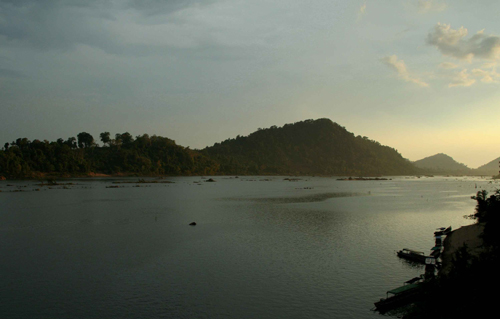
Sunset Near Hat Xai Kong Nyai Beach on Don Khon by Isaac Olson

Si Phan Don or the 4,000 Islands are nestled in the Mekong River in the Champasak Province of Southern Lao (Laos) near the Cambodian border. Whether or not there are actually 4,000 islands is unclear, but three principal islands cater to tourists with others remaining largely free of visitors.

Don Det – the Backpacker Vibe 

The ‘happy pizza’ laidback atmosphere and the offering of numerous side trips from local travel agents make this place the quintessential youthful budget traveler destination. Chartered long tail boat trips to other islands and waterfalls can be arranged but are fairly pricey. A cheaper option is to hop on a sunset party boat. One-day kayak trips are also available, and inner tube trips upriver would cost around 30,000 kip. Rented bicycles make for a convenient mode of transportation to explore the surrounding islands, since all of the islands are connected by ferries (10,000 kip for short crossings, price includes motorbikes and bicycles). There is also a small beach on Don Det, but it is often crammed with boats and ferries docking and unloading. History buffs can view the remains of the French-built port near the island’s school.


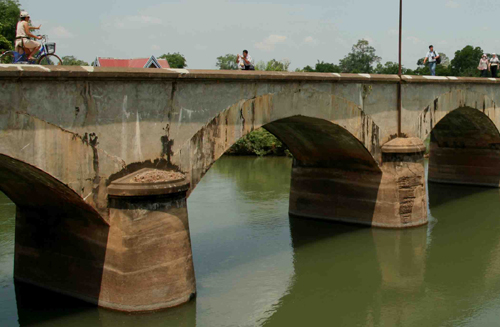
Arch Bridge between Don Det & Don Khon by Isaac Olson


Don Khon – a Less Hippy Feel

Directly south of Don Det and connected by a concrete arch bridge (20,000 kip, but if staying in Don Khon it should be free), Don Khon offers a number of activities and has superior natural beauty. Given that a bridge connects Don Det and Don Khon, they can more or less be considered as one island. However, the guesthouses cater to a quieter and more refined clientele on Don Khon. The bike path on the island is in great shape, since it is built on a railroad bed. To learn about the French attempts to bypass the waterfalls in the area, check out the two old railway locomotives and read the historical panels surrounding them. There are also several French colonial buildings remaining on the island. From Don Khon, one can visit Somphamit – Liphi Waterfall (20,000 kip). Attempting to view dolphins from the island is popular but sightings are rare and happen quickly with just a glimpse of a dolphin head. Tickets for long tail boat rides to the dolphin pool (30,000 kip per person) are sold at the southern tip of the island with trips lasting approximately one hour. However, the drivers may get impatient and take people back to shore after only 30 minutes. There is also the very charming beach of Hat Xai Kong Nyai on Don Khon where people can swim in a natural pool, jump off rocks (do be careful), and explore other rocky islands close by.


Sunset Near the Dolphin Pool on Don Khon by Isaac Olson

Don Khong – Explore the Countryside

This is the largest island in the area and the only one with a paved road encircling it. Even though the road is paved, there isn’t much traffic, making it great for cycling or motorbike touring. Other travelers are present, but locals are often quite curious when they see outsiders away from the ferry-landing site. Exploring the island is a good way to observe Lao agriculture, which consists mostly of rice, but tobacco is also grown here and the island is well known for its palm sugar candy. Tours can be arranged to Don Det and Khone Phrapheng Falls. A ferry (10-15,000 kip, price should include motorbikes) runs to the island from the passenger ferry landing off the highway. There are a number of places to stay and unlike the other islands; Don Khong offers a bank and ATM facilities. The Don Khong District Museum is housed in a French colonial building near the passenger ferry-landing site. Also nearby is an excellent outdoor restaurant, Nongnoi. that can be identified by its Beer Namkhong signs.


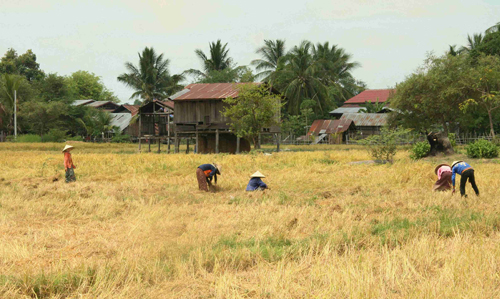
Harvesting on Don Som by Isaac Olson


Don Som – Off the Beaten Path

The word “path” actually describes this island well, since the only way to cross it is on a dirt path. Actually, it turns into a single-track dirt rut at times. This is the place to really see rural life in Laos. Agriculture and fishing are the only industries on the island, and they are still done quite traditionally. Water buffalo might block your path from time to time, but don’t worry, they are quite docile. This could actually be a good opportunity to take a splash in the river with the beasts to escape the heat. You might even get to see a long tail boat being crafted by hand, and children especially are quite curious when they see foreigners. The island can be reached by short ferry crossings (10,000 kip) from Don Det or Don Khong. Exploring the island on bicycle or motorbike is the best option.

Khone Phrapheng Falls


Khone Phrapheng Falls by Isaac Olson
A must see on any visit to Si Phan Don, these cataracts are the largest by volume in Southeast Asia. In reality, they resemble large rapids more than waterfalls. There is a viewing platform for a good photo opportunity. But, one can walk down closer to the falls to really feel their power by traversing some nearby rocks. Entrance to the falls is 20,000 kip.
Many travelers through mainland Southeast Asia skip Si Phan Don. However, visiting the islands is a worthwhile way to get off the main tourist track without getting into overly remote country. Add Si Phan Don to the itinerary of that Southeast Asian adventure to get a unique Mekong experience.

Introduction to Solo: the Online Solo Travel Guide!

Introduction to Solo: the Online Solo Travel Guide!:
By: Umi Lestari


How to Capture the Artefacts by Hafitz Maulana

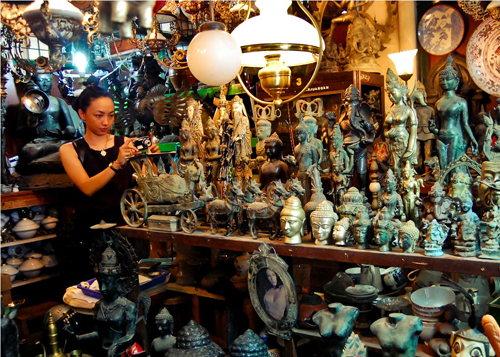
As an eternal rival of Yogyakarta, Solo or Surakarta is arguably the epicenter of Javanese identity and tradition along with Yogyakarta. Both cities share many similarities, but if we look deeper, Solo is more westernized than Yogyakarta. This 44-km² city can be explored with at least on overnight visit. This city famous for its batiks offers an elegant keraton (Royal Palace), backstreet kampongs, traditional markets and gleaming malls. Solo is an excellent place to witness the traditional performing arts and a great place to buy traditional crafts.

The Heritage City

It was at the Giyanti Treaty when The Mataram Kingdom was divided into two: Surakarta, which was close with the Western powers and Yogyakarta, which remained relatively independent. The influence of Western culture can be seen from the Panggung Songgo Buwono inside The Kasunanan Surakarta or Keraton Surakarta. The Keraton also boasts the Sasono Sewoko Museum, which preserves ancients artifacts such as silver and bronze of Hindu Javanese figurines, weapons, antiques, and portraits of the royal heirlooms.  Istana Mangkunegaran, which is located behind the palace, can also be visited. This is the living quarters of the members of the aristocratic family. Several traditional ceremonies or Javanese music and dance practices can also be seen at the pavilion of the palace.

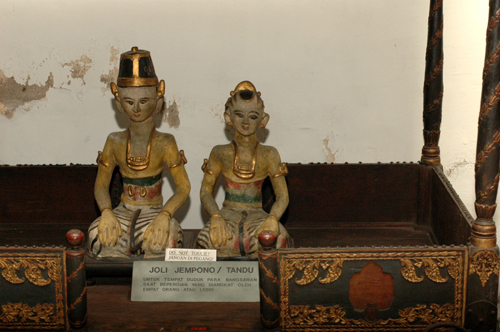
Solo also has the Radya Pustaka Museum which is located on Jl. Slamet Riyadi. This small museum has an impressive display of gamelan instruments, Kris’s, puppets, a small collection of wayang, and Rajamala (the King’s ship).

Batik and the Largest Batik Market in Indonesia


The heads of Buddha and The Modern Woman by Hafits Maulana

Since 2009, Batik was acclaimed as a “Masterpiece of Oral and Intangible Heritage of Humanity”. This appreciation over Batik put Solo on the proverbial map. This city has renowned areas such as Kampung Kauman or Laweyan that are the homes of traditional batik merchants. Three of Indonesia’s batik manufacturers; Batik Danar Hadi, Batik Keris and Semar are also based in Solo. For those who want to see the batik collections, they can visit the Danar Hadi Museum on Jl. Slamet Riyadi. This small museum that boasts a large batik collection collects antiques and royal batiks from different cultural influences such as Javanese, Chinese, Indian, and colonial Dutch.

Going to the west of Kasunanan Surakarta Royal Palace, travelers can find the largest batik and textile wholesale center in Indonesia, Pasar Klewer (Klewer Market).  For people who love to shop, Pasar Klewer shouldn’t be missed. From the kebaya (traditional Javanese female garment), batik shirts, fabrics, formal clothes, blouses, as well as kid clothes, all are inexpensive and can be bargained.

The Famous Flea Market


The Old Tandu in Radya Pustaka Museum by Cahya Arie Nugroho

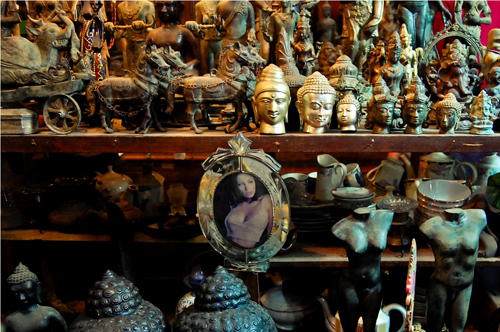
It should be noted that Solo has one of the most famous flea markets in Indonesia. Triwindu Market (now named Windujenar Market) is a heaven for antiques and boasts many treasures from royal heirlooms. This market has many collections of old bank notes and coins, batik stamps, bicycles from the 1930s, and artefacts claimed as the fossils from Sangiran. Subsequently, the market also features old paintings, jewelries, Buddha statues and coal iron. Triwindu Market is truly the best place for Javanese treasures hunters.

Around Solo

After exploring Solo, Yogyakarta can be the next destination. Visitors can take a train or travel by car (approx. 1 hour). Borobudur Temple, as the largest Buddhist Temple in the world, also can be reached from Solo. Also, to witness the UNESCO World Heritage Site and and archeological treasures, Sangiran Early Man Site should be visited. This site contains the skeleton of Java Man (Pithecanthropus Erectus). Prambanan Temple, featuring a large set of Hindu Temples lays only 50 km away from Solo. And finally, a hill station, Tawangmangu, is located on the slopes of Mount Lawu would also be a significant point of interest.

Jakarta Living Costs: Accommodation, Transportation, Food & Entertainment

Jakarta Living Costs: Accommodation, Transportation, Food & Entertainment:
By: Ario Triwibowo

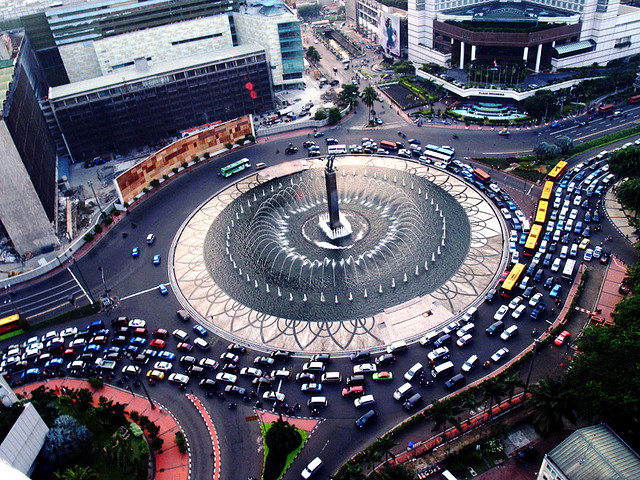
Jakarta is one of the world’s busiest, largest and most populous cities. The Indonesian capital is ranked as the 9th largest city and 13th most populous city in the world. As the center of governance and business, the city attracts more and more people (Indonesians as well as expats). Indonesians come to Jakarta in search of better education, work and above all luck. Expats mostly for the latter two. Adding to the estimated 10-15 million people, this is not without consequence. The traffic is pure mayhem and living costs soar.
Jakarta can have you spinning in circles, By: Bonita Suraputra

Jakarta Living Cost: Housing/Accommodation

For expats, renting an apartment is probably the most convenient way of living in Jakarta. The city’s property sector has been growing rapidly throughout the past decade, as the need for strategic-located housing increased. Traffic jams have also contributed to this rapid boom. Traffic jams eat time, money and patience, so location becomes even more important when you want to settle down in Jakarta. If you work in the business district, be sure to find housing in the vicinity, or with good access to and from the toll road.

Apartments are considered expensive in Jakarta. An apartment differs from a flat (rumah susun). Flats in Jakarta are relatively smaller and less convenient than apartments. They are mostly occupied by long time residing Indonesian families and rarely offer any space. Almost all expatriates in Jakarta live in an apartment. Strategic areas with a lot of apartments on offer are Kuningan, Cilandak, Pondok Indah, Thamrin and Tanjung Duren.

In Jakarta, the apartment rent rate varies according to type, location and facilities. If you plan to rent an apartment with one bedroom prices start around Rp. 5.000.000 to 25.000.000 (around USD 500 to 2500) a month, while two bedrooms go from Rp. 25.000.000 – 50.000.000 (around USD 2500 -5000) a month. Three bedroom apartments will set you back even more, starting from Rp. 35.000.000 – 70.000.000 (around USD 3500 – 7000) a month. If you think about buying an apartment, prices start at Rp. 1.000.000.000 (around USD 10,000).
A typical residential apartment block in Jakarta, By: Andrew Kippen
A typical apartment block in Jakarta, By: Andrew Kippen

Don’t have that kind of cash on you? You can always rent a room in a boarding house (like most Indonesians do) called “kos-kosan”. These boarding houses vary widely in terms of the luxury and facilities. There are minimal types which just consist of a small room without air condition, that go for as little as Rp. 300.000 – 500.000 (around USD 30 – 50) per month. But normal rates, including air conditioning and other facilities can range from around Rp. 800.000 – 2.000.000 (USD 80 – 200), once again depending on the room and location. Boarding houses are almost available in every part of Jakarta.

Vehicle Ownership in Jakarta

Owning a vehicle in Indonesia is expensive, but living in Jakarta you are almost forced to buy a car as distances are huge and public transport is not very efficient. A cheaper option is a motorcycle, but remember you can’t enter the toll roads with those. Both cars and motorcycles can be obtained easily through credit payment, (hence the ludicrous amount of brand spanking new cars and motorcycles on the road in Indonesia). First let’s look at the cars. Most Indonesians prefer Japanese cars since they are energy efficient and easy to maintain. But the main thing is that Japanese cars are more affordable. A standard Japanese family car like the Toyota Avanza or Daihatsu Xenia costs around Rp. 130.000.000 – 180.000.000 (around USD 13000 – 18000), depending on the type (standard or deluxe edition, automatic or manual transmission, etc). Smaller cars strangely might cost you more than normal family cars. The most popular small cars (including sedans) in Indonesia are Toyota’s Yaris, Vios and Corolla. The Altis costs around Rp. 200.000.000 – 400.000.000 (around USD 20.000 – 40.000). The Honda Jazz is also popular and costs around Rp. 200.000.000 – 225.000.000 (around USD 20.000 – 25.000), while the City, Civic and Accord start around Rp. 300.000.000 – 480.000.000 (around USD 30.000 – 48.000). European and American cars are considered luxury items in Indonesia. A Mercedes-Benz or BMW can cost from Rp. 400.000.000 to a whopping 4.000.000.000 (around USD 40.000 – 400.000).
A new model attracts the attention

Motorcycles are Indonesia’s most common means of transport. It’s cheaper and more efficient, provided you know the way. In big cities, motorcycles are often used to avoid traffic. But as the years went by, motorcycles grew rapidly in numbers so these days many people say traffic is CAUSED by motorcycles. There are many types of motorcycles in Indonesia like dual-sports, sport bikes, scooters and the most famous “bebek” motorcycle known as an underbone motorcycle in English. In Indonesia, it is better to buy a smaller, compact, light and easy handling motorcycle. Small motorcycles like bebek and scooters cost around Rp. 12.000.000 – 15.000.000 (around USD 1200 – 1500). While bigger motorcycles like dual sports or sport bikes can cost double or more.

Jakarta Public Transportation

Jakarta’s public transportation is considered insufficient, impractical and inconvenient. When you realize to vast number of public buses, minivans and other modes of public transport, the system still falls short, especially during rush hours. Jakarta’s public transport doesn’t have a reliable schedule as arrival and departure times depend on traffic jams. Trains are more predictable but often late and most certainly overcrowded.
The busway in front of Sarinah, Jakarta, By: Basibanget

Transjakarta is Indonesia’s first Bus Rapid Transport (BRT). Transjakarta’s routes covers almost all major points in the city, so it has become a much used means of transportation. However, it will be very crowded during rush hours and long queues are a daily occurrence. At least it’s cheap. Tickets cost Rp. 3.500 (around USD 0.35) for a one way ride.

Taxis are also abundant and a good alternative when getting around in Jakarta. But you might want to stick with the most qualified taxis, since there are some dodgy taxi companies that charge more while the driver doesn’t even know where he’s going. The taxi fare is usually, around Rp. 20.000 – 50.000 (around USD 2 – 5) within city limits, but can cost up to 150.000 (around USD 15) for longer routes, such as from the airport to the city center.

Another convenient means of transport in Jakarta is the motorcycle taxi called “ojek” in Indonesian language. Ojek have unfixed prices, so you need to negotiate with the driver before you hop on. Typically, a 10 minute ride should be around Rp. 10.000-15.000.
What would Jakarta be without nasi goreng, By: Azlan DuPree

Food in Jakarta

Indonesia is famed for its culinary diversity. An advantage of the huge influx of immigrants is that you can taste all the archipelago’s cuisines in one city. You can either grab a meal at a street hawkers or try out the innumerable restaurants. Street vendors or hawkers are abundant in Jakarta. They sell various meals, such as chicken noodles (mie ayam), satay (sate), fried rice (nasi goreng), fried fish dumplings and tofu (batagor), steamed fish dumplings (siomay), vegetables with peanut sauce (gado-gado) and many more. You can enjoy these delicious meals for around Rp. 5.000 – 10.000 (around USD 0.5 – 1). Restaurants can often be found in malls (food courts are a great way to savor the rainbow). It will obviously cost more in eating a restaurant rather than eating at a street vendor’s. Typically a plate of nasi goreng in a diner should set you back around Rp. 20.000 – 50.000 (around USD 2 – 5). Fancier restaurants that provide gourmet food with all the trimmings will charge Rp. 100.000 – 250.000 (around USD 10 – 25) per dish.
Whatever you do, don't forget your hp ('handphone'), By: Yasmina Haryono

Jakarta Entertainment
Jakarta’s entertainment is mostly centered around malls. The nightlife is surprisingly lively. Drinks for two are around Rp. 100.000 – 200.000 (around USD 10 – 20) and to enter a club you have to rake out another Rp. 80.000 – 100.000 (around USD 8 – 10) per person.
X2 Nightclub in Jakarta filled to the rim, By: Rollan Budi
X2 Nightclub in Jakarta filled to the brim, By: Rollan Budi

The cinemas here are also mostly located in malls. Watching movies in Jakarta is a very cheap way to keep yourself occupied, at only Rp. 15.000 (around USD 1.5) on weekdays and Rp. 35.000 (around USD 3.5) on Fridays and weekends. State of the art, plush Blitz Megaplex offers comfy seats, big screens, surround sound and some English subtitled films.

Concerts are also a popular passtime. Over the years, many music promoters have succeeded in bringing international artists to perform in Jakarta. The ticket price for attending a music concerts varies depending on the artist performing. It can range from reasonable Rp. 300.000 – 700.000 (around USD 30 – 70) to over the top at Rp. 700.000 – Rp. 2.000.000 (around USD 70 – 200).

Living in Jakarta can at times be frustrating, with the congested traffic, the lack of green and huge distances one needs to cover. But there are advantages too: there are many things to explore, see, hear and to eat! If you want to survive in and explore Jakarta, a little patience and a whole lot of positivity can be very useful along the way. Enjoy Jakarta!
Cross-Cultural Couples: Gerard and Komang

Cross-Cultural Couples: Gerard and Komang:
By: Emma Kwee

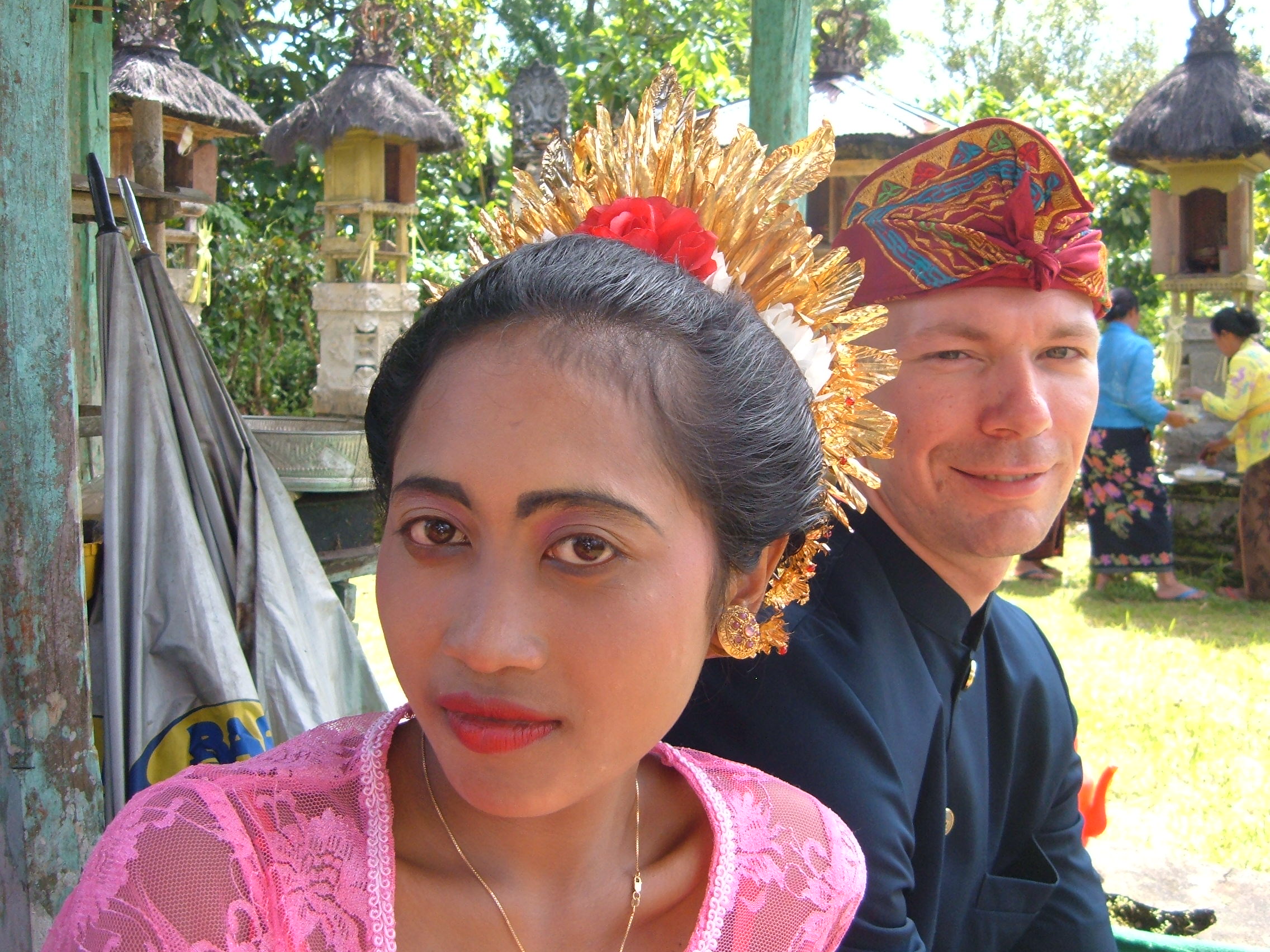
This next portrait in our cross-cultural couples series came to us from an unexpected corner of the world. Yours truly was enjoying a nice mother-daughter weekend on a small, windy island in the Netherlands, Ameland! While on a cycling trip we decided to stop for lunch in the village of Nes. The girl working there looked decidedly Indonesian. That’s how I met Komang, from Bali, who turned out to be married to Gerard, who also works in the fish shop. They met on Bali 9 years ago and one thing led to another. Now they divide their time between their two most loved islands: Bali and Ameland.
Gerard and Komang met on Bali and moved to Ameland, where they work in a fish shop.

Do you have an equally inspiring story to share? If you want to be part of this series, all you have to do is e-mail info@latitudes.nu!

Please introduce yourselves to our readers.
We are Gerard Tiemersma (33) and Ni Nyoman Sriartini, but everybody calls her Komang (28). We live on the beautiful island Ameland. I grew up in Buitenpost (a small town in the northeast of Friesland province). Komang was born and raised in Tabanan on the island of Bali.

How did you meet and where?
We met 9 years ago on Bali. Komang was doing an internship in a restaurant in Kuta. As soon as she walked up to my table there was a click and we started talking.

How did your relationship evolve?
Actually it was love at first sight. I fell head over heels for her. I somehow already knew this was right. Komang felt the same way but she was still hesitant. She didn’t speak a lot of English either. I offered to teach her some English and that’s how we became good friends. That seemed better at the time because it would be so hard to have a long distance relationship, coupled with the cultural differences. Still, we felt we were in love with each other. Luckily just before I left something happened and we both said we were going to give it a try. After some years of uncertainty, waiting and humongous phone bills I finally found myself on the way to Schiphol to pick her up from the airport. In September we will have been married 7 years and we live in a nice little home on Ameland, the island where we both live and work.
Gerard and Komang on Bali

What does it mean to your relationship to be of two different cultures?
When we started out we had some difficulties, but you get used to each other in a couple of years. The problems were mostly caused because I had to start working again which would leave Komang on her own a lot. But when she started to speak the language she quickly found a job as well, and everything turned for the better.

Has it ever caused any problems or miscommunication?
Yes, especially the cold and getting homesick. We don’t interact with our families that much here in the Netherlands. On Bali they tend to live together with their family.

How did your surroundings react to your mixed relationship?
In the beginning both our parents weren’t that positive. We had to deal with a lot of criticism from Bali, fueled by the Wild West stories of prostitution and also because of their Hindu beliefs. Luckily, by persevering and staying myself, trust has grown and now I get on great with my inlaws.
Gerard and Komang tied the knot 9 years ago

What are the biggest challenges you had to overcome?
For Komang mostly the freedom, the cold weather and Dutch food.

What are the best things that this relationship brings you?
Love and the fact that, after waiting for so long and dealing with so many obstacles, we can finally be together.

What makes you a perfect fit?
Komang is pretty strong headed, whereas I am a bit milder. We both enjoy good food, especially Indonesian food. We have the same taste when it comes to decorating our home; warm and lots of color. And we both love Ameland and Bali!

What language do you speak with one another?
We speak Dutch now, but we started out in English.

Are religious differences an issue between you and your partner? How did you solve these?
Komang was raised Hindu and I have not been raised with any faith. Most people in the Netherlands don’t hold on to one single faith. I respect other faiths but mostly believe in myself.
Fairytale in a forest

What are your future plans?
Our house has just been built and we enjoy living there tremendously. We don’t really have any plans for the future, even though we might want children in the future, we are taking it easy for now. We want to enjoy life with the two of us first.

Do you have any tips for other mixed couples?
Stay who you are and never give up. Love conquers all!

Iraq says al-Qaeda flowing into Syria

Iraq says al-Qaeda flowing into Syria: Foreign minister says his country is worried that extremists could threaten the stability of the entire region.

US sanctions six over 'ties to al-Shabab'

US sanctions six over 'ties to al-Shabab': Names added to Treasury Department blacklist include intelligence chief and senior military officer from Eritrea

DR Congo battles rebels for key supply town

DR Congo battles rebels for key supply town: Al Jazeera gains exclusive access to UN forces backing up the Congolese army in the battle for strategic Bunagana town.

Syrian general close to Assad defects

Syrian general close to Assad defects: Manaf Tlas, a Republican Guard commander and friend of the president, has fled and is reportedly bound for Paris.

Mexico confirms Pena Nieto as new president

Mexico confirms Pena Nieto as new president: Official count gives Enrique Pena Nieto 38 per cent of vote, seven points and 3.3 million votes ahead of next candidate.

China thwarts major child-trafficking rings

China thwarts major child-trafficking rings: Government says police break up two massive child-trafficking gangs, arresting 802 suspects and saving 181 children.

Facebook starts to let you know how many friends logged in recently, and the last time you’ve posted

Facebook starts to let you know how many friends logged in recently, and the last time you’ve posted: 4357227835 0d31c600b6 z 520x245 Facebook starts to let you know how many friends logged in recently, and the last time youve posted
What’s the fun in having a lot of data if you don’t end up using it? Facebook has information on over 900M people, and the data alone isn’t interesting.
It looks like the social network is starting to put some of the data to good use. As Techie-Buzz spotted, Facebook is showing you how many of your friends have recently logged in and the last time you posted a status update.
Have a look:
facebook friends logged in1 520x95 Facebook starts to let you know how many friends logged in recently, and the last time youve posted
facebook friends viewed posts 520x100 Facebook starts to let you know how many friends logged in recently, and the last time youve posted
Facebook tends to push small features like this into a small group of users for testing purposes, but this hasn’t hit my account yet.
It’s interesting to see what Facebook is trying to do when it comes to getting its userbase more engaged. Recently, the company started showing us trending videos to try and bring more activity to News Feed items that we may have missed.
We’ve reached out to Facebook for a comment, but have yet to hear back.
Does getting a reminder that you haven’t posted in 2 days make you want to do so? Let us know in the comments.
Also, be sure to drop us an email to tips@thenextweb.com if you see any interesting or new features on Facebook.

Google+ announces “Events” feature that is active before, during and after your party

Google+ announces “Events” feature that is active before, during and after your party:
Today during Google I/O, Google senior VP Vic Gundotra announced that a new feature for Google+ was launching, and it’s called “Events.” I got a sneak peak at the product this week and it absolutely blew me away.

When I asked Gundotra about why events were such an area of focus, he told me:
Going to an event, a picnic a wedding, is the most social thing we do. They’re the most memorable thing that we do, various discreet events.
Google+ Events help with all facets of having an event: before, during and after.

Before the event

Naturally, Google+ events is fully integrated into Google Calendars. When you set up your own event, you can choose a theme, called cinegraphs, that were custom-built by Google. There are subtle animations in them which carry over to the invitation on your Calendar.
googleeventthemes 520x832 Google+ announces Events feature that is active before, during and after your party
Without a doubt, the invitation process is a simple one, but by having those invitations fully integrated into your Calendar is huge. You’ll be able to get all of the details about the event, as well as letting the person know if you’ll be there or not.
googlepluscalendar 520x435 Google+ announces Events feature that is active before, during and after your party

During the event

This is where Google+ Events really shines. The service has something called “Party Mode” which takes all of the photos and videos that you shoot during the time period of the event and uploads them to the event page. If everyone is using Google+ on the recently updated Android app, this feature will do the work for everyone.
googlepluseventsparty 520x832 Google+ announces Events feature that is active before, during and after your party
During the event itself, you could toss the event page on to a big screen TV, as it has a “slideshow” mode for photos. Imagine having all of the people at your wedding reception taking photos that are automatically shared, it would be awesome.
I got to see this feature in action at Google’s offices, and the experience is absolutely seamless. Watching the photos stream in within 30 seconds of taking them is pretty awesome.
googleeventslideshow 520x306 Google+ announces Events feature that is active before, during and after your party
Now that all of those photos are uploaded, they are sorted by which photographer took them, as well as how interesting people thought the photos were. If a particular photo has a bunch of +1′s, it will then find its way to the top.
The best part is that your friends who can’t make it to your event can still check out the event page and all of the content, if they’re invited. Want to go public with your event? Simply switch on the “On Air” mode, which will broadcast it publicly.
Gundotra tells me that the On Air option is great for concerts and conferences.

After the event

If you’re someone who isn’t using Google+ on an Android device, you’ll get an email from the event reminding you to upload your photos. Everyone who was invited has a “folder”, and can add their photos to it easily. All of the photos will be sorted chronologically. Pictures also get facetagged.
googleplusphotocoll 520x678 Google+ announces Events feature that is active before, during and after your party
Gundotra is extremely proud of Google+ Events:
This makes going to the event page after the event the most amazing and magical experience anyone has ever built.
Google+ Events is available today, and might take a while to roll out to everyone. This is another example of how Google is using + as a social layer to tie all of its products together.