Jul 10, 2012

In Niger, hunger crisis raises fears of more child marriages

In Niger, hunger crisis raises fears of more child marriages:
Balki Souley lost her son during childbirth the other day. Her body was so frail, so weakened by a lack of food that she, too, nearly died. “When I return to my village, I will try to have another child,” she said shyly as she lay on the floor of a crowded maternity ward.
Read full article >>


A man depicts the often grim atmosphere in assisted living facilities

A man depicts the often grim atmosphere in assisted living facilities:
People my age — I’m now 62 — might go to an assisted living facility every now and then to visit an older family member. But few people in my age group actually live in an assisted living facility. I do.
Read full article >>


In Lebanon, a hard-line Sunni cleric gives voice to deep sectarian tensions

In Lebanon, a hard-line Sunni cleric gives voice to deep sectarian tensions:
SIDON, Lebanon — From his mosque in south Lebanon, Sheik Ahmad Assir, a hard-line cleric, embodies a new trend in the Middle East: the rise of conservative Sunni Islamists openly opposed to their Shiite counterparts and their backers, Iran and Syria.
Read full article >>


Jail for Bahrain protest leader over tweet

Jail for Bahrain protest leader over tweet: Nabeel Rajab given three-month prison term for "insulting" some Bahrainis in tweet criticising prime minister.

Egypt parliament meets in defiance of court

Egypt parliament meets in defiance of court: Military leaders and Supreme Court face challenge as recently dissolved parliament convenes "to review court rulings".

UN to help DRC troops protect Goma

UN to help DRC troops protect Goma: MONUSCO peacekeepers will reinforce fresh Congolese brigades in fight against Ntaganda-led rebels based in Bunagana.

Ansar Dine destroy more shrines in Mali

Ansar Dine destroy more shrines in Mali: Al-Qaeda-linked group destroys shrines at Timbuktu mosque, vowing to attack more World Heritage sites.

Rebels Threaten Mining Exports in Congo - WSJ.com

Rebels Threaten Mining Exports in Congo - WSJ.com

Don't Look for an End to Partisan Stalemate - WSJ.com

Don't Look for an End to Partisan Stalemate - WSJ.com

Jul 9, 2012

The 19th ASEAN Regional Forum: Background on the Issues

The 19th ASEAN Regional Forum: Background on the Issues

Jakarta Becomes Land of the ‘Free’ - Southeast Asia Real Time - WSJ

Jakarta Becomes Land of the ‘Free’ - Southeast Asia Real Time - WSJ

Likely members of Timor-Leste's next parliament

Likely members of Timor-Leste's next parliament:
CNRT (30)

1. KAY RALA XANANA GUSMAO

2. DEONISIO DA COSTA BABO SOARES

3. MARIA FERNANDA LAY

4. VICENTE DA SILVA GUTERRES

5. EDUARDO DE DEUS BARRETO

6. VIRGINIA ANA BELO

7. ARAO NOE DE JESUS DA COSTA AMARAL

8. DUARTE NUNES

9. BRIGIDA ANTONIA CORREIA

10. ADERITO HUGO DA COSTA

11. NATALINO DOS SANTOS NASCIMENTO

12. MARIA ROSA DA CAMARA “BI SOI”

13. IZILDA MANUELA DA LUZ PEREIRA SOARES

14. PEDRO DOS MARTIRES DA COSTA

15. VIRGILIO MARIA DIAS MARCAL

16. MATEUS DE JESUS

17. JOSE DA SILVA PANAO

18. CARMELITA CAETANO MONIZ

19. DOMINGAS ALVES DA SILVA “BILOU-MALI”

20. JACOB DE ARAUJO

21. CESAR VALENTE DE JESUS

22. ANSELMO DA CONCEICAO

23. JACINTO VIEGAS VICENTE

24. ANGELA M.CORVELO DE A.SARMENTO

25. ALBINA MARCAL FREITAS

26. ANTONIO XIMENES

26. FRANCISCO DA COSTA

27. DOMINGOS CARVALHO DE ARAUJO

28. AGOSTINHO LAY

29. BENDITA MONIZ MAGNO

30. MANUEL G. DA COSTA GUTERRES
PD (8)

1.FERNANDO LA SAMA DE ARAUJO

2.MARIANO ASSANAMI SABINO

3.MARIA DE LURDES MARTINS DE SOUSA BESSA

4.ANTONIO DA CONCEICAO

5.JACOB XAVIER

6.ANGELINA MACHADO DE JESUS

7.ADRIANO DO NASCIMENTO

8.ADRIANO JOAO
Frente Modanca (2)

1. JOSÉ LUIS GUTERRES

2. JORGE DA CONCEIÇÃO TEME
FRETILIN (25)

1.FRANCISCO GUTERRES “LÚ-OLO”

2.MARI BIM AMUDE ALKATIRI

3.JOSEFA ÁLVARES PEREIRA SOARES

4.FRANCISCO MIRANDA BRANO

5.ESTANISLAU DA C. ALEIXO MARIA DA SILVA

6.ILDA MARIA DA CONCEIÇÃO

7.JOAQUIM DOS SANTOS

8.DAVID DIAS XIMENES

9.AURORA XIMENES

10.ANTONINHO BIANCO

11.ANICETO LONGUINHOS GUTERRES LOPES

12.FLORENTINA DA CONCEIÇÃO PEREIRA MARTINS SMITH

13.OSÓRIO FLORINDO DA CONCEIÇÃO COSTA

14.ELÁDIO ANTÓNIO FACULTO DE JESUS

15.MARIA ANGÊLICA RANGEL DA CRUZ DOS REIS

16.INÁCIO FREITAS MOREIRA

17.MANUEL DE CASTRO PEREIRA

18.ANA DA CONCEIÇÃO RIBEIRO

19.AURÉLIO FREITAS RIBEIRO

20.MANUEL GASPAR SOARES DA SILVA

21.ANGÊLICA DA COSTA

22.ANTÓNIO DOS SANTOS “55”

23.FELISBERTO MONTEIRO GUTERRES

24.ANASTÁCIA DA COSTA S. AMARAL

25.LEONEL MARÇAL
Source: CIJTL

East Timorese weigh unity as poll count continues - Sydney Morning Herald

East Timorese weigh unity as poll count continues - Sydney Morning Herald:


East Timorese weigh unity as poll count continues
Sydney Morning Herald
East Timor's sometimes fractious politicians are discussing the extraordinary possibility of forming a government of national unity, in which all the parliamentary parties would govern together. The two major parties, Fretilin and CNRT, are being urged ...

East Timor Food

East Timor Food:

What do the East Timorese eat?

The cuisine in East Timor consists or rice, vegetables and occasionally meat.
Picture
Rice, rice, rice- the carb of choice in East Timor

Rice

East Timorese love their rice. Makes sense, it’s cheap and it’s filling. They eat it for breakfast, lunch and dinner. A meal is not complete without rice. A friend from work was telling me about a trip she did to Australia for a conference:

“At lunchtime, I had to search the streets of Melbourne looking for rice because they only gave me a sandwich for lunch. Just a sandwich, no rice! I was starving. So I looked and looked and finally I found a Chinese restaurant. I just ordered rice.”

After about twelve months of living in East Timor and eating my fair share of white rice, I felt the exact opposite:

Enough with this rice! Someone please give me a sandwich.

But good sandwiches are hard to come by in East Timor, especially if you want to make one yourself. Cheese and deli meats are expensive items and don’t even think about using the supermarket bread because it’s sickly sweet!

And if you’re body, like mine, is not used to eating that much rice, you’ll also notice the pounds piling up. It took me twelve months and 7 kilos before I decided it was time to reduce my rice intake. But I wasn’t the only one to notice by body swelling from too much rice, my East Timorese friends were happy to point out how much weight I’d gained:

“Oh Sister, you’re so fat now!”

Yep, East Timorese politeness goes out the window when it comes to talking about someone’s ‘changing’ appearance.

Rice with ...... what?

Picture
Meals with the lot, except notice that mine (on the right) has NO rice

Vegetables

East Timorese usually eat their rice with vegetables (leafy greens, potatoes, beans, carrots etc…). They simply boil or slather them with oil and  serve them. You can buy all sorts of fruit and vegetables that are grown locally and are mostly organic from the street markets and at some supermarkets. The local produce tastes pretty good but don’t expect to see the perfectly shaped bananas and avocados you are used to seeing at home. Because of this, some supermarkets import their veggies from Singapore and Australia.
Fish East Timor
Fish caught in Timor and then cooked on a stick

Protein

Meat is a luxury. The cheaper the meat, the more it is eaten. Frozen chickens aren’t too expensive and are sold in all the supermarkets. Fish is also popular. Local fisherman stand along the man roads swatting flies and trying to offload their latest catches everyday. Red meat like buffalo, pig and goat are mostly eaten at big events like weddings and funerals.
 
To supplement their diet, they get a lot of their protein from tofu and eggs. You'll often see young boys walking around the streets selling trays of boiled eggs with chilli sauce for 25c.

Condiments

  • Oil (they deep fried anything and everything including two minute noodles)
  • Chilli- just like rice, East Timorese add chilli to everything, they like their food H-O-T!

Sweets and Snacks

Timorese aren’t massive buyers of sweets which is probably why their bread is so sweet. But there are Indonesian style cake shops which is where you’ll be able to buy some incredible looking birthday cakes. You can even have the cakes decorated with messages while you wait.

Kids are satisfied with plenty of cheap and interesting lollies and chocolates, which you should definitely try too. You can find them at any small kiosk located along the roads.

For snacks they like two minute noodles, nuts, fried banana strips, rice and supermarket bread with butter. They do make their own bread- yummy non-sweet small rolls called ‘paun’- but you have to get up really early to buy it from a kiosk before it sells out. I’m such a BIG fan of Timorese paun that I’m not going to mention anything else about it now, I reckon I’ll dedicate a whole post to in the next few months!

Drinks

Coffee is the drink of choice in Timor-Leste. Even though they grow their own AMAZING coffee in East Timor, a lot of Timorese drink Nescafe especially the 3 in 1 packet, which is a coffee, milk and sugar instant mix. It’s not as bad as it sounds. 

And for you? You can buy lots of different drinks. At the Western bars they have everything, including cider!  But when it comes down to it, sometimes all you want, is to brush your teeth in good old tap water.
Timor Coffee
Cheap Nescafe 3 in 1 coffee

Have we left any foods popular with the East Timorese out? You can let us know down below. And if you're dying to know what foods expats can eat in East Timor, well you'll have to keep an eye out for our post on that, which will be up on this blog in a few weeks.
Image of rice: FreeDigitalPhotos.net

Democratic Consolidation in Timor-Leste

Democratic Consolidation in Timor-Leste:
The results of the parliamentary elections in Timor-Leste on Saturday have resulted in two outcomes, the first of which is a major boost in the vote for CNRT, the party of prime minister Xanana Gusmao, from 24 per cent to 36 per cent of the total vote. The second and more important outcome has been the consolidation of the democratic process in Timor-Leste just ten years after achieving independence.

After changing government in 2007, the people of Timor-Leste have again voted strategically, to focus their vote on the major parties, with CNRT taking much of the vote away from the many smaller parties which tended to reflect personalities rather than policies or party positions.

CNRT will probably form government with one or possible two coalition partners. Of the 21 parties that contested the poll, 17 now appear to have missed the cut-off threshold of three per cent, leaving just four, possibly five, represented in the parliament.
read more

Cambodia carve-up under the spotlight

Cambodia carve-up under the spotlight: The preferential access to Cambodia's rich natural resources that Prime Minister Hun Sen has granted tycoons and military commanders for political loyalty is coming back to bite him in the shape of mounting accusations that Cambodian land has been sold to foreign interests. As Hun Sen responds to bad publicity with toothless moratoriums, Cambodians see his power as increasingly undermined. - Sebastian Strangio (Jul 9, '12)

The Green Hajj

The Green Hajj:
By: Kafil Yamin


The Peak of Haji Season by the Muslim 7-Year Action Plan on Climate Change

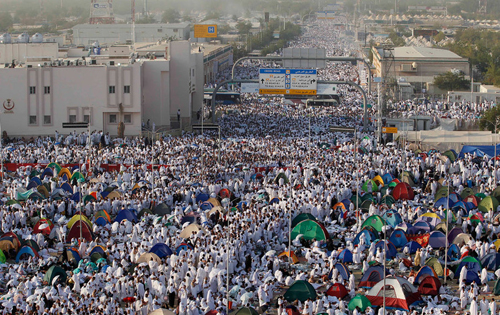
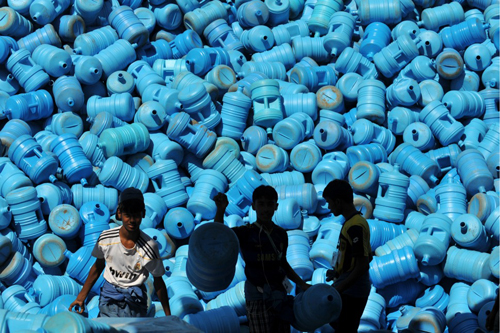
300.000 Indonesian Muslims, along with around 3 million pilgrims, return from Mecca annually and leave behind 100 million plastic bottles. Unless immediate measures are taken, the holy land will soon transform into a waste land. The figure, published by the Alliance of Religions and Conservation [ARC], does not include mounting waste from takeout foods and other goods during the 30-day hajj season. This daunting situation has caused a major headache among Muslim academics for the prospects of the holy land. “Islam venerates cleanliness in all aspects of life. This situation in Mecca is a great cause for our concern,” said Dr. K.H. Ma’ruf Amin , chairman of the Indonesia Ulema Council [MUI]. Muslims leaders and academics then put forward the so-called green hajj scheme.


Gallons of zam-zam water by the Muslim 7-Year Action Plan on Climate Change

The Green Hajj

Green hajj is an implementation of the Muslim Seven-Year Action Plan on Climate Change that was jointly launched in Windsor Castle, UK, attended by Prince Philip, the secretary-general of the United Nations Ban Ki-moon and various world religious leaders. Last week, a guide book on the green hajj was jointly launched in Jakarta by the National University [Unas] and Indonesian Ulema Council [MUI]. The book publication is a further step of the Muslim 7-Year Action Plan.

The Green Hajj Guide called on pilgrims, popularly called ‘haji’, to use cloth bags and reusable bottles during their hajj; plant one tree each in their own district before they leave for hajj and choose travel companies with environmentally conscious policies. The tree is the paid price for gas house emission they would produce during their pilgrimage. “A carbon print of an haji can be neutralized by the tree they plant, it is a sort of carbon offset scenario,” said Dr Fachruddin Mangunjaya, Research Associate at the Universitas Nasional, who co-wrote the book with Dr Husna Ahmad of the London-based Faith Regen Foundation.

A carbon calculator shows that each pilgrim produces 2.3 tons of CO² in the atmosphere. This is based on 43.13 Passenger miles flown per gallon of jet fuel and an average distance of 4000 miles for each haji.


Hajj camp in Arafah by the Muslim 7-Year Action Plan on Climate Change

A Better Hajj For The Future

More recently, some groups of Muslims in the Middle-East and the North African region chose to leave earlier in the season so they may travel slower; taking a bus is a way of group travel that cuts down on the CO2 emission per person. The Guide also contains theological explanations about the responsibilities of all Muslims as Khalifas – vicegerents – to take care of the natural world and urges pilgrims to become advocates for green living amongst their families and communities on their return.  This is the Indonesian version of the first Green Hajj guide book launched by the Global One 2015 and EcoMuslim in Assisi, Italy, on Nov 2, 2011.

The Hajj – one of the five pillars of Islam – is the biggest annual pilgrimage in the world. By November 1, nearly 1.8 million pilgrims had arrived for this year’s Hajj, according to the Hajj authorities.  The Hajj is also a spiritual exercise of piety, which is described by means of symbols and rituals that give a real lesson in life. 
During Hajj, pilgrims are prohibited from doing activities that damage and disrupt the environment. One is forbidden to kill game animals, damage trees and even harm any living creatures, however small.

Humans cannot use contaminated water for ablutions, and yet water sources in Indonesia are increasingly being contaminated by pollution, industrial waste, poor sewage, and chemical pesticides. Hopefully the Green Haji Guide will be a first step to not only a sustainable hajj, but also an overall change in behaviour.

Latest Chrome Beta brings better Google Cloud Print and communication integration

Latest Chrome Beta brings better Google Cloud Print and communication integration: 449596474 74b08a36b0 z 520x245 Latest Chrome Beta brings better Google Cloud Print and communication integration
The great part about tinkering around with beta versions of software like Google’s Chrome browser is that you get access to cool features before they’re made widely available. It also means that you might hit some bumps in the road while using them, but that comes with the territory.
Today, the Google Chrome team announced some new integrations within the latest beta version of its browser, and they’re actually quite useful.
For those of us who still have to print things out (it happens to the best of us), it is now easier to do so from within Chrome’s print dialog:
Today’s Beta release also brings a new and improved printing experience for Google Cloud Print. Now your printers in Google Cloud Print are integrated right into Chrome’s print dialog, so you can easily print to your Cloud Ready printer, Google Drive, Chrome on your mobile device, or one of over 1,800 FedEx Offices.
If you’re not familiar with Google Cloud Print, it’s a way to print things out no matter where you are. I’ve personally used the FedEx integration in a pinch while I was traveling and it was seamless.
Google Chrome 1 520x335 Latest Chrome Beta brings better Google Cloud Print and communication integration
In addition to the new Cloud Print integration, the latest Chrome beta also lets web apps access your camera and microphone without the need for a plugin:
In today’s Chrome Beta release, it’s now possible for you to grant web apps access to your camera and microphone right within the browser, without a plug-in. This is thanks to the getUserMedia API, which is the first big step for WebRTC, a new real-time communications standard that aims to allow high-quality video and audio communication on the web.
magic xylophone Latest Chrome Beta brings better Google Cloud Print and communication integration
Both of these features are extremely helpful, but also show off the increasing power of ChromeOS, which is Google’s operating system. The more things you can do from a browser, the less you need to actually install full-featured applications. I’ve been tinkering with a ChromeBox but miss apps like Spotify quite a bit. It will take time to get consumers to buy into the browser-only operating system, but features like this do help.
Google Chrome Beta

A famine crisis one year on: Lives saved and lessons learned

A famine crisis one year on: Lives saved and lessons learned: In a refugee camp in Ethiopia, a coordinated approach and an understanding of the culture of those being aided averts a health catastrophe.

Somalia - Total IDPs by Region, July 2012

Somalia - Total IDPs by Region, July 2012

Daily Number: 73% - Most Asian Americans See More Opportunity in U.S. than Country of Origin

Daily Number: 73% - Most Asian Americans See More Opportunity in U.S. than Country of Origin: About three-fourths of Asian Americans see greater opportunity to get ahead in the U.S. than their country of origin.

Pakistani Public Opinion Ever More Critical of U.S.

Pakistani Public Opinion Ever More Critical of U.S.:

Overview

Following a year of tensions between their country and the United States, Pakistanis continue to hold highly unfavorable views of the U.S. and offer bleak assessments of the relationship between the two nations.
Roughly three-in-four Pakistanis (74%) consider the U.S. an enemy, up from 69% last year and 64% three years ago. And President Obama is held in exceedingly low regard. Indeed, among the 15 nations surveyed in both 2008 and 2012 by the Pew Global Attitudes Project, Pakistan is the only country where ratings for Obama are no better than the ratings President George W. Bush received during his final year in office (for more, see “Global Opinion of Obama Slips, International Policies Faulted,” released June 13, 2012).
Only 13% of Pakistanis think relations with the U.S. have improved in recent years, down 16 percentage points from 2011. Strengthening the bilateral relationship is also becoming less of a priority for Pakistanis. While 45% still say it is important to improve relations with the U.S., this is down from 60% last year.
Moreover, roughly four-in-ten believe that American economic and military aid is actually having a negative impact on their country, while only about one-in-ten think the impact is positive.
Additionally, over the last few years, Pakistanis have become less willing to work with the U.S. on efforts to combat extremist groups. While 50% still want the U.S. to provide financial and humanitarian aid to areas where extremists operate, this is down from 72% in 2009. Similarly, fewer Pakistanis now want intelligence and logistical support from the U.S. than they did three years ago. And only 17% back American drone strikes against leaders of extremist groups, even if they are conducted in conjunction with the Pakistani government.
Since 2009, the Pakistani public has also become less willing to use its own military to combat extremist groups. Three years ago, 53% favored using the army to fight extremists in the Federally Administered Tribal Areas (FATA) and neighboring Khyber Pakhtunkhwa, but today just 32% hold this view.
Overall, concerns about extremism have ebbed since 2009, when the Pakistan military was battling Taliban-affiliated groups in the Swat Valley area near Islamabad. Then, fully 69% were concerned that extremists might take control of Pakistan, compared with 52% today.
While concerns about extremism may have decreased, extremist organizations remain largely unpopular. Majorities, for example, express a negative opinion of both al Qaeda and the Taliban, as has been the case since 2009. In 2008 – before the peak of the Swat Valley conflict – pluralities expressed no opinion about these organizations.
When Pakistanis are asked more specifically about the Afghan Taliban and Tehrik-i-Taliban (also known as the TTP or Pakistan Taliban), opinions are again, on balance, negative, as they were in both 2010 and 2011.
Views are somewhat more mixed, however, regarding Lashkar-e-Taiba, a radical group active in Kashmir and widely blamed for the 2008 Mumbai terrorist attacks. Roughly one-in-five Pakistanis (22%) have a favorable view of Lashkar-e-Taiba, while 37% give it a negative rating and 41% offer no opinion.
Meanwhile, a solid majority (64%) offers no opinion about the Haqqani network, a group associated with the Taliban that is active on both sides of the Pakistan-Afghanistan border, but is largely believed to be based in the FATA region of Pakistan.
Respondents in the Khyber Pakhtunkhwa province consistently express more negative views about extremist groups than those in other provinces. Al Qaeda, the Taliban, Tehrik-i-Taliban, the Afghan Taliban and Lashkar-e-Taiba all receive especially poor ratings in Khyber Pakhtunkhwa. Pakistanis who pray five times per day are also more likely than those who pray less often to offer negative views of extremist groups.
These are among the key findings from a survey of Pakistan by the Pew Research Center’s Global Attitudes Project. Face-to-face interviews were conducted with 1,206 respondents between March 28 and April 13. The sample covers approximately 82% of the Pakistani population.1 The poll in Pakistan is part of the larger 21-nation spring 2012 Pew Global Attitudes survey. Throughout the report, unless otherwise noted, trends from 2011 refer to a survey conducted in Pakistan from May 8-15, 2011, following the May 2, 2011 U.S. military raid that killed Osama bin Laden.2 The May 2011 survey showed that, with a few exceptions, the killing of bin Laden had little impact on America’s already low ratings in Pakistan. The current poll reveals that, in some key areas, Pakistani views of the relationship between the two countries have become even more negative in the year since the Abbottabad raid.

High Marks for Khan, Low Ratings for Zardari, Gilani

Pakistanis continue to express considerable discontent with conditions in their own country. About nine-in-ten (87%) are dissatisfied with the country’s direction, barely changed from last year’s 92%. Similarly, 89% describe the national economic situation as bad; 85% held this view in 2011. And overwhelming majorities rate unemployment, crime, terrorism, and corruption as very big problems.
The dismal public mood is reflected in poor ratings for the leaders of the incumbent Pakistan People’s Party (PPP), President Asif Ali Zardari and former Prime Minister Yousaf Raza Gilani. Only 14% view Zardari favorably, little changed from last year, but down significantly from 64% in 2008. Gilani, who was recently convicted of contempt and dismissed from office by Pakistan’s highest court, fares only somewhat better, at 36% favorable. Gilani received similarly poor ratings last year, although as recently as 2010 a majority of Pakistanis expressed a favorable view of him.
The most popular leader included on the survey is Imran Khan. Seven-in-ten Pakistanis offer a favorable opinion of the former cricket star and leader of the Pakistani Tehreek-e-Insaf party (PTI). This is essentially unchanged from last year, but up significantly from 2010.
Former Prime Minister Nawaz Sharif is also generally well-regarded – about six-in-ten offer a positive view of the leader of the country’s main opposition party, the Pakistan Muslim League-Nawaz (PML-N). Sharif has consistently received high marks in recent years, although his ratings are down somewhat from the 79% registered in 2009.
Slightly more than half rate Chief of Army Staff General Ashfaq Parvez Kayani and Chief Justice Iftikhar Muhammad Chaudhry favorably. Ratings for both the army chief and the chief justice have slipped slightly since 2010. Former President (and military chief) Pervez Musharraf, who has occasionally suggested he may return to Pakistani politics, receives relatively poor ratings.
Meanwhile, the military continues to receive overwhelmingly positive marks from the Pakistani public – 77% say the institution is having a good influence on the country. Roughly six-in-ten (58%) also say this about the court system.

Negative Views of India

Only 22% of Pakistanis have a favorable view of traditional rival India, although this is actually a slight improvement from 14% last year. Moreover, when asked which is the biggest threat to their country, India, the Taliban, or al Qaeda, 59% name India.
Pakistanis have consistently identified India as the top threat since the question was first asked in 2009. The percentage fearing India has increased by 11 points since then, while the percentage naming the Taliban has decreased by nine points.
Despite these negative sentiments, 62% of Pakistanis say it is important to improve relations with India. And roughly two-thirds support more bilateral trade and further talks to try to reduce tensions between the two nations.
Most Indians also want better relations, more trade, and further talks between the two nations. Still, Indian attitudes toward Pakistan remain largely negative. Roughly six-in-ten Indians (59%) express an unfavorable opinion of Pakistan, although this is down slightly from 65% in 2011.
India is not the only country, however, where negative views of Pakistan prevail. Majorities or pluralities give Pakistan a negative rating in six of the seven other countries where this question was asked, including China, Japan, and three predominantly Muslim nations – Egypt, Jordan and Tunisia.

Also of Note

  • A 43%-plurality of Pakistanis expect the economy to get worse over the next 12 months, while just 26% think it will improve. Still, there is more optimism than in 2011, when 60% said the country’s economic situation would worsen in the coming year.
  • China continues to receive high marks in Pakistan. Nine-in-ten Pakistanis consider China a partner; only 2% say it is more of an enemy.
  • Pakistanis and Indians agree that Kashmir should be a priority for their countries. Roughly eight-in-ten Pakistanis and about six-in-ten Indians say it is very important to resolve the dispute over Kashmir.
  • Those who identify with Imran Khan’s Tehreek-e-Insaf party are especially likely to oppose American involvement in the battle against extremist groups in Pakistan, including American aid to areas where extremists operate and intelligence and logistical support to the Pakistani army.


  1. For more on the survey’s methodology, see the Survey Methods section of this report.
  2. An earlier survey had been conducted in Pakistan in April 2011 – overall, results showed few differences between the two 2011 polls. For more, see "U.S. Image in Pakistan Falls No Further Following bin Laden Killing," released June 21, 2011.

INDONESIA: Too many pre-term births

INDONESIA: Too many pre-term births:
JAKARTA, 9 July 2012 (IRIN) - Linda Rullis sold her motorcycle and borrowed money from relatives to cover neo-natal treatment for her daughter, who was born after only 24 weeks of pregnancy, barely weeks within the threshold of survival. The baby girl is now one year old and weighs 5.1kg.

SRI LANKA: Focus on food insecurity in Jaffna

SRI LANKA: Focus on food insecurity in Jaffna:
JAFFNA, 9 July 2012 (IRIN) - In Sri Lanka's northern Jaffna District, Parameswary Rasakumar, 32, a mother of two, points to an assortment of red plastic containers on the floor of her makeshift shelter, holding what little food the family has. “That's it. That's all the food we have in the house at the moment.”

UGANDA: Refugee influx prompts government call for regional talks

UGANDA: Refugee influx prompts government call for regional talks:
KAMPALA, 9 July 2012 (IRIN) - Uganda is “overwhelmed” by the current influx of Congolese refugees fleeing renewed fighting in North Kivu Province in the neighbouring Democratic Republic of Congo (DRC) and is calling for an emergency meeting of countries in the Great Lakes Region to work out a road map for lasting peace, say officials.

SECURITY: Ammunition - the next round in arms trade control

SECURITY: Ammunition - the next round in arms trade control:
JOHANNESBURG, 9 July 2012 (IRIN) - For a couple of hundred dollars or less an arms dealer can illegally source a blank end user certificate with the required signatures and stamps - needed to transfer weapons across international borders - and “if no one checks its authenticity (often the case) he can ship his wares to the world's hotspots with minimal risk, for maximum profit,” a report by the Small Arms Survey (SAS) [ http://www.smallarmssurvey.org/publications/by-type/yearbook/small-arms-survey-2008.html ] said in 2008

Backsliding in Burma and Malaysia? | ASEAN Beat

Backsliding in Burma and Malaysia? | ASEAN Beat

Asean Must Get Savvy with Superpowers

Asean Must Get Savvy with Superpowers:
For the audience in Washington, Assistant State Secretary for East Asia and the Pacific Kurt Campbell’s speech at the Centre for Strategic and International Studies on June 26 was very fitting and calculated.
He stressed the White House’s strategy in Asia and highlighted Secretary of State Hillary Clinton’s visit to the region with a big delegation this week. This included representatives of both the private and public sectors as well as philanthropists after a series of meetings in Phnom Penh during the Asean annual ministerial conference.
Campbell mentioned quite a few countries in Southeast Asia that are pivotal to the US—Laos, Malaysia, Vietnam, Singapore, Burma and, of course, the Philippines with its revitalized alliance. He even praised Manila, especially President Beningo Aquino, as one of the best governments the US has worked with over the past 20 years.
But although Campbell mentioned Indonesian Ambassador Dino Patti Djalal who was in the audience at the time, what was conspicuously absent yet again from his speech was Thailand.
The fact that Kurt neglected Thailand, despite an animated Thai-US strategic dialogue being held in Washington less than two weeks earlier, is a strong indication that all was not well within this relationship. Obviously, the joint statement after their discussions failed to reflect the true reality of their much-troubled dealings.
Washington is once again caught in a “Catch 22” situation in these important bilateral arrangements. Two proposals—humanitarian assistance and disaster relief as well as the NASA project on climate change—were designed to increase the value of this much forgotten alliance.
Unfortunately, they were politicized to the point that any decent bilateral cooperation was no longer possible between the two countries. If this trend continues, which is highly likely, Bangkok will further lose its political and strategic clout as well as harming Thai-US relations and the latter’s overall strategies in the Asia-Pacific.
Indeed, the US can choose to ignore Thailand at its own peril. To sustain the US rebalancing effort in the region, all alliances must be functioning and operational. At the moment, the Thai-US alliance is an aberration and remains the weakest link in the security chain.
For a better outcome at the Center for Strategic and International Studies forum, Campbell could have urged Thailand to come out with clear indications what was to be expected from the Thai-US relationship over the months and years to come.
Washington’s attitude is that until Thailand can overcome it own domestic divides, especially those pertaining to the alliance’s obligations, there is nothing much the US can do. Some strategists have argued that the US does not need to rely on Thailand, its key ally during the Cold War, as much as before due to Washington’s success repositioning itself in the Asia-Pacific over the past two years—winning new friends while reinvigorate old ones. Despite a near 180-year-old friendship, Thailand is just too unpredictable without any clear direction.
To firm up its position, the US will now engage further with the European Union as a collaborator regarding Asia akin to their joint efforts in Afghanistan and elsewhere. This is an important strategic shift because the US-EU partnership on political and security matters has been previously confined to the Asean Regional Forum activities and sanctions against Burma.
Interestingly, Washington’s move comes at an interesting time regarding relations with Asean. By collaborating with the US, the EU’s position within the region seems to be further strengthened. After all, unlike their divergent policies regarding myriad global issues, the EU’s views towards the Asia-Pacific remains united. Like the US, the EU is obsessed with China both in terms of economic and political power. Both are striving to counterbalance rising China.
At this juncture, the EU’s standing in Asean is at a low point. Now with a charge of heart regarding Burma, the EU is playing catch-up with Asean as a bloc. At a recent Asean-EU ministerial meeting in Brunei, Asean literally turned down the EU’s request to issue a joint statement on Burma’s latest developments because the EU refused to end sanctions.
Worse still, Asean also snubbed EU Foreign Affairs Chief Lady Catherine Ashton’s plan to accede to a Treaty of Amity and Cooperation (TAC) without following Asean’s procedural rules. The EU’s plan to join the East Asia Summit (EAS) as soon as possible would be delayed further—impeding US efforts to broaden the security agenda at the EAS.
Clearly Ashton needs to attend more Asean meetings. After years of being put-off, Britain is finally scheduled to sign a TAC in Phnom Penh this week with an eye on the EAS. Suddenly, the US has been found its friends wanting with regards dialogue partners for Asean as part of its long-term strategy to manage the rise of China.
It is also the best time for the loose US-led coalition within Asean as news from the South China Sea, after decades of benign diplomacy and neglect, generates a stream of negative headlines for China. This new psychological bulwark has already put Beijing on the offensive and it will certainly draw a response in the near future.
To break away from this encirclement from Asean, China has quickly found a natural friend in its same superpower league—Russia. Third-time President Vladimir Putin is also paying more attention to the Asia-Pacific and EAS. For the first time since it joined the leaders’ meeting of Asia Pacific Economic Cooperation, Moscow will play host in Vladivostok this October and will be projecting a strong message—Russia is a Pacific power and here to stay.
From now on, Moscow will be missile-zoomed at the Asean Regional and EAS forums. After two decades of inertia, Russia has mustered enough confidence to submit a new proposal to Asean on a code of conduct for Asia-Pacific to boost security cooperation—a habit the former Soviet Union used to do. Russia will discuss the proposal, for which China has expressed support, with Asean this week in Phnom Penh.
With a more assertive US, EU, China and Russia, Asean has to get its act together otherwise the fulcrum, which has made Asean valuable and attractive to world leaders, will turn into a trap with no exit strategies.
It remains to be seen how the upcoming EAS in mid-November will play out. But one thing is clear—the Asia Pacific will be the theater of contention for major global powers. For good or for worse, Asean will be on the receiving end. If Asean, with its longstanding lack of commonality on key security issues, knows how to harness and play these new great games, then the region’s stability and prosperity will continue with marginal collateral damage along the way.
This article first appeared in the Bangkok-based The Nation newspaper. Kavi Chongkittavorn is assistant group editor of Nation Media Group and his views do not necessarily reflect those of The Irrawaddy.

U.N. human rights council passes freedom of Internet resolution

U.N. human rights council passes freedom of Internet resolution

Egyptian Court Affirms Ruling to Disband Parliament - NYTimes.com

Egyptian Court Affirms Ruling to Disband Parliament - NYTimes.com

Egypt’s Morsi pledges to reopen parliament Tuesday, setting up conflict with military - The Washington Post

Egypt’s Morsi pledges to reopen parliament Tuesday, setting up conflict with military - The Washington Post

For black Americans, financial damage from subprime implosion is likely to last - The Washington Post

For black Americans, financial damage from subprime implosion is likely to last - The Washington Post

Mysterious fatal crash provides rare glimpse of U.S. commandos in Mali - The Washington Post

Mysterious fatal crash provides rare glimpse of U.S. commandos in Mali - The Washington Post

Military Cuts Could Be Late Campaign Issue - WSJ.com

Military Cuts Could Be Late Campaign Issue - WSJ.com

Law Agencies Seek More - WSJ.com

Law Agencies Seek More - WSJ.com

2012 Update - Indonesia Project - Crawford School - ANU

2012 Update - Indonesia Project - Crawford School - ANU

Newspaper Industry Is Running Out of Time to Adapt to Digital Future - NYTimes.com

Newspaper Industry Is Running Out of Time to Adapt to Digital Future - NYTimes.com

Jul 8, 2012

For Drug Traffickers, Argentina Has Become a Destination

For Drug Traffickers, Argentina Has Become a Destination: With drug gangs looking to expand their operations, Argentina, a transit point in the 1990s, has turned into a profitable marketplace.

Arab Spring Reveals International Court Flaws

Arab Spring Reveals International Court Flaws: The failure to act against some autocratic leaders challenged by the Arab Spring is emboldening critics who see the court as part of a deeply undemocratic international order.

Tax-Exempt Groups Shield Political Gifts of Businesses

Tax-Exempt Groups Shield Political Gifts of Businesses: Corporations are funding policy organizations that are free of the disclosure rules applying to parties, candidates and PACs.

The Drone Zone

The Drone Zone: At a desert facility, Air Force pilots are trained to fight America’s remote-controlled wars.

The Caucus: G.O.P. Donors Line Up to See Romney in the Hamptons

The Caucus: G.O.P. Donors Line Up to See Romney in the Hamptons: Mitt Romney was in East Hampton, N.Y., on Sunday for a major fund-raiser at the sprawling estate of a billionaire financier and two other events for supporters of his campaign.

U.S. pushes for more scientists, but the jobs aren’t there

U.S. pushes for more scientists, but the jobs aren’t there:
Michelle Amaral wanted to be a brain scientist to help cure diseases. She planned a traditional academic science career: PhD, university professorship and, eventually, her own lab.
But three years after earning a doctorate in neuroscience, she gave up trying to find a permanent job in her field.
Read full article >>


Don’t leave the country without your visa

Don’t leave the country without your visa:
True story: An American traveler flew down to Brazil, only to quickly return to the States without ever touching foreign soil, much less sipping a caipirinha.
What happened? The traveler didn’t have a visa. Serious whoops.
Read full article >>


Obama then and now

Obama then and now:
President Obama’s bus tour through Ohio and Pennsylvania late last week offered a striking look at the evolution of a president. In 2008, Obama used soaring rhetoric and personal biography to talk about binding together a red-blue nation. His message today is about the urgent need to defeat a stubborn opposition party in order to move the country forward.
Read full article >>


In Niger refugee camp, anger deepens against Mali's al-Qaeda-linked Islamists

In Niger refugee camp, anger deepens against Mali's al-Qaeda-linked Islamists:
Tawaye Yatara arrived at the sprawling refu­gee camp here on a recent day after trudging out of northern Mali through the blistering-hot desert. In her arms, she clutched her hungry child. In her heart, she carried anger at the hard-line Islamists who had driven her from her country.
Read full article >>


Venezuela Opposition Says Rally Was Obstructed

Venezuela Opposition Says Rally Was Obstructed: Opposition presidential candidate Henrique Capriles charged the Venezuela government with using its police forces to obstruct a campaign rally Saturday.

Fund Managers Seduced by Facebook

Fund Managers Seduced by Facebook: At least 160 U.S.-based mutual funds and exchange-traded funds bought shares of the social-networking company in May.

France Télécom Outage Hits Cellphones

France Télécom Outage Hits Cellphones: A technical failure crippled France's biggest cellphone network for more than 12 hours Friday, leaving tens of millions of people unable to send or receive mobile calls, text messages and emails.

Libya's liberals claim early election lead

Libya's liberals claim early election lead: Rival party and media reports concur with claim of early advantage from National Forces Alliance.

Doctors identify Cambodia mystery illness

Doctors identify Cambodia mystery illness: Scientists identify illness that killed 64 children as Enterovirus 71, a strain of hand, foot and mouth disease.

Egypt's president orders return of parliament

Egypt's president orders return of parliament: Mohamed Morsi defies court ruling and military council by ordering dissolved legislature to return to work.

Sudan protestors tear gassed amid crackdown

Sudan protestors tear gassed amid crackdown: Police fire tear gas at students protesting against government in Khartoum, a day after arrest of an opposition leader.

Nigerian politicians gunned down in Jos

Nigerian politicians gunned down in Jos: Two politicians killed by herdsmen during mass burial ceremony for victims of earlier attack on Saturday by same tribe.

TIMOR-LESTE: Peacekeeping drawdown begins

TIMOR-LESTE: Peacekeeping drawdown begins:
DILI, 5 July 2012 (IRIN) - The UN peacekeeping force is on track to begin withdrawing from Timor-Leste in October 2012 after a “remarkably peaceful” parliamentary election campaign concluded on 4 July, ahead of the election on 7 July. The United Nations Integrated Mission (UNMIT) in Timor-Leste began in 2006 after a mutiny by soldiers and a breakdown of order led the government to request international support.

PAKISTAN: Enslaved by tradition

PAKISTAN: Enslaved by tradition:
ISLAMABAD, 5 July 2012 (IRIN) - Despite the placing on Pakistan's statute books of tougher laws against the practice of `swara' or the “giving away” of a woman to a rival party to settle a dispute, the tradition continues.

NIGERIA: Bridging the north-south maternal death divide

NIGERIA: Bridging the north-south maternal death divide:
ABUJA, 6 July 2012 (IRIN) - Nigeria's health services halved the maternal mortality rate between 1990 and 2010, but in parts of the predominantly Muslim north, which is less socio-economically advanced, women are 10 times more likely to die in childbirth than in the oil-rich, predominantly Christian south. Maternal health personnel are calling for more appropriate interventions to bridge the gap.

SRI LANKA: Donor interest in north waning

SRI LANKA: Donor interest in north waning:
COLOMBO, 6 July 2012 (IRIN) - Donor assistance is waning in northern Sri Lanka, where the critical priorities of food, shelter, protection and nutrition are not being covered, and many displaced people still need outside assistance more than three years after a decades-long civil war ended.

What's really happened to America's soldiers

What's really happened to America's soldiers: Post-traumatic stress disorder, the debilitating mental and social difficulties that face soldiers returning from the battlefield, can be linked to something called "moral injury". All wars oblige soldiers to commit acts that would be outrageous in normal society, and the resulting scars are very common, and understandable. In recent years, however, with the morality of America's wars themselves deeply questionable, healing these scars has become even more difficult. - Nan Levinson (Jul 5, '12)

Military spending spree in the Philippines

Military spending spree in the Philippines: The Philippines' need to turn its military toward countering China's assertiveness over conflicting claims to the potentially resource-rich Spratlys has spawned a US$1.8 billion wishlist for new fighter jets, attack helicopters and warships, on which the bidding will start next month. Manila, aware that dependence on United States assistance contributed to the sorry state of its defenses, is seeking out new partners. - Al Labita (Jul 5, '12)