Nov 19, 2012

Something to smile about: A 5,000-mile walk across Asia, guided by Google Maps

Something to smile about: A 5,000-mile walk across Asia, guided by Google Maps: Inspiration comes in many shapes and forms. For U.S. Marine Sgt. Winston Fiore, it was a news article about the International Children’s Surgical Foundation (ICSF) and Dr. Geoff Williams, who provides free facial-reconstructive surgeries for children with cleft lips/palates in developing countries. Although cleft palates are quite correctable, if left untreated the deformity can cause serious health issues. Many children don’t have the surgery because the cost of each procedure ($250 USD) is out of reach for their families.


Inspired to do something to help, Winston set out on a 5,000-mile trek across Southeast Asia to raise money and awareness for the ICSF—a mission he dubbed Smile Trek. Armed with sturdy boots, a 20-pound vest carrying essentials and an Android phone with Google Maps, Winston set off on his mission in October 2011. In the last year, he has walked (yes, walked!) through Brunei, China, Laos, Malaysia, Philippines, Singapore, Taiwan, Thailand, and Vietnam. Along the way he’s met countless individuals who have contributed to his cause, whether it was a place to stay, a hot meal or a monetary donation on his website.


Trekking along: Winston, standing in front of a durian fruit stand near Sematan, the westernmost town of Malaysian Borneo


Out on the road, Winston’s Android phone and Google Maps became “the hub” of his entire operation. He used Google Maps to find accurate and easy-to-use walking directions everywhere he went, whether it was through remote villages and farms, down tiny dirt roads, or across rice paddies and desolate sugar cane fields. “Walking directions in Google Maps were critical to my trek. The directions were accurate and efficient—it’s essential to take the shortest route when you’re walking 20-25 miles each day,” said Winston. “But the best part was being routed onto roads and trails through areas I otherwise never would have discovered with, say, driving directions, or even a physical map.”


View the complete map of Winston's journey on his site


In addition to using Google Maps, Winston relied on many other Google products during his trek. He used Google Latitude to keep his family, friends and supporters informed of his whereabouts, and MyTracks to record his speed, distance and the places he visited. He also used Google Translate to communicate with locals, and in one case found it essential: when bit by a stray dog outside of Bangkok, he typed "I got bit by a dog, can someone take me to a hospital?" into his app. A taxi driver took him to the hospital, where he got 11 shots!


Today, after walking 5,000 miles in 408 days, Sgt. Fiore completes his journey, with more than $65,000 raised for ICSF. The money will help to fund more than 200 life-saving surgeries for children in Southeast Asia and other parts of the world. If you’d like to contribute to the International Children’s Surgery Fund and Winston Fiore’s effort, we encourage you to visit smiletrek.org.


Posted by Jennifer J. Chen, Product Manager, Google Maps

HRW Report - "A Long Way from Reconciliation" | Human Rights Watch

"A Long Way from Reconciliation" | Human Rights Watch

HRW Report - Ban ‘Killer Robots’ Before It’s Too Late | Human Rights Watch

Ban ‘Killer Robots’ Before It’s Too Late | Human Rights Watch

Obama, Hun Sen in ‘Tense’ Talks

Obama, Hun Sen in ‘Tense’ Talks:
U.S. President Barack Obama pressed Cambodian Prime Minister Hun Sen on prickly human rights issues during “tense” talks in Phnom Penh on Monday, calling on Southeast Asia’s longest serving leader to release political prisoners and ensure that free and fair elections are held in the country next year.

But Hun Sen vigorously defended his human rights record during the meeting, according to U.S. and Cambodian officials, despite claims by both local and international non-governmental groups that abuses had grown increasingly common in the country.

Obama arrived in Cambodia from a visit to Burma, where he had met with reformist leaders and praised their efforts to transition the country into a democracy following decades of oppression under the former military junta.

His visit to both nations was the first ever by a U.S. president. He had traveled to the region to attend the East Asia Summit and the Association of Southeast Asian Nations (ASEAN) Summit, both of which are being hosted by Cambodia.

A senior Cambodian Cabinet official said Obama particularly raised concerns over prisoners of conscience and rights abuses resulting from land disputes in the country during the meeting with his Cambodian counterpart at the Peace Palace.

“The prime minister replied to the president that in Cambodia there are no political prisoners, only politicians who became prisoners because of breaking the law,” Council of Ministers Secretary of State Prak Sokhon told RFA’s Khmer service.

“The president also spoke about … land disputes. The prime minister replied that the number of land disputes is decreasing because of the government policy of having [university] students measure the land for people [who are in conflict with companies granted economic land concessions].”

He said that Hun Sen planned to give some 200 million hectares (494.2 million acres) of land “to the people” to help alleviate the problem.

White House officials described Obama’s meeting with Hun Sen, which was held shortly after the U.S. president deplaned in Cambodia, as “tense.”

U.S. Deputy National Security Advisor Ben Rhodes said that Obama spent most of the meeting discussing human rights issues.

“He began by expressing that his trip to Burma demonstrated the positive benefits that flow from countries moving down the path of political reform and increasing respect for human rights,” Rhodes said.

“He said that those types of issues are an impediment to the United States and Cambodia developing a deeper bilateral relationship.”

Rhodes said the president had specifically focused on the need for measures to ensure general elections slated for 2013 are contested fairly in a nation where the 60-year-old Hun Sen has held power since 1985 and has said he has no plans to step down until the age of 90.

"In particular, I would say the need for them to move toward elections that are fair and free, the need for an independent election commission associated with those elections, the need to allow for the release of political prisoners and for opposition parties to be able to operate," Reuters quoted him as saying.

Prak Sokhon said that over the past month Cambodia had been the victim of a “campaign of criticism” and “twisted information” aimed at besmirching the country’s rights record and preventing Obama’s visit.

“Samdech told President Obama that Cambodian political rights and freedom of speech are not too bad compared to neighboring countries,” he said, using the prime minister’s honorific title.

He said the prime minister noted that other countries had “dismantled political parties” and “imprisoned their politicians,” but that in Cambodia “we are open for all people to join political parties and they can do whatever they want, within the framework of the law.”

On Sunday, all 10 ASEAN member states—Brunei, Burma, Indonesia, Laos, Malaysia, the Philippines, Singapore, Thailand, Vietnam, and summit host Cambodia—ratified the organization’s first-ever Human Rights Declaration, despite protests from NGOs which had said the charter is not up to international standards and would fail to protect rights in the region.

Hun Sen welcomed recent recommendations from the United Nation's special envoy about election reforms for Cambodia, but said that his country has its own electoral law which prevents the government from accepting those recommendations.

He also reiterated a request to Obama to forgive most of his country’s more than U.S. $370 million debt to the U.S. In January, the prime minister had said the “dirty debt” was incurred by a government that came to power in a 1970 coup backed by Washington.

Opposition

Ahead of Obama’s arrival in Phnom Penh, municipal authorities issued orders preventing any demonstrations in the city, according to rights groups.

On Monday, police stopped opposition Sam Rainsy Party (SRP) supporters from gathering in front of the Peace Palace to request Obama’s intervention in releasing independent Beehive Radio Director Mam Sonando, resolving land issues, and allowing the return of Sam Rainsy—leader of the National Rescue Party (NRP).

Mam Sonando was imprisoned after he was recently convicted of masterminding a revolt of villagers over a land dispute. He has rejected the charges.

Sam Rainsy’s NRP is a united opposition coalition aimed at challenging Hun Sen’s ruling Cambodian People’s Party (CPP) in elections next year. The opposition leader is currently living in self-imposed exile in Paris and could be imprisoned for up to 11 years on his return to Cambodia following convictions for various offenses he says were part of a campaign of persecution by the government.

Also ahead of Obama’s arrival, a group of villagers protesting their eviction from Phnom Penh’s Boeung Kak Lake district gathered on Sunday evening and held signs reading “SOS” and calling on the president to help them return to their homes.

Police were deployed, sealing up access to the district and rounding up the protesters.

Obama welcomed

Residents of Phnom Penh expressed gratitude for Obama’s historic trip to their country, saying the visit would help bring international attention to the problems in Cambodian society.

"When I heard that U.S. President Obama was coming to Cambodia, I became happy. Now that this world leader knows Cambodia has many issues, we want him to help us," said one resident who spoke to RFA on condition of anonymity.

"Those issues include land disputes, corruption, a limited freedom of the press, and a lack of independence in the court system,” the man said. “We want him to see for himself whether Cambodia is a true democracy."

Another resident also expressed his excitement over the president’s visit, adding that he hoped Obama would bring about reconciliation in Cambodian politics.

"I want Sam Rainsy to be able to return to join the election," he said.

Reported by RFA’s Khmer service. Translated by Sum Sok Ry and Samean Yun. Written in English by Joshua Lipes.

Which Tablet to Buy Among Dozens Confuses Shoppers - NYTimes.com

Which Tablet to Buy Among Dozens Confuses Shoppers - NYTimes.com

Paul Ryan Emerges as Power Broker in Fiscal Talks - NYTimes.com

Paul Ryan Emerges as Power Broker in Fiscal Talks - NYTimes.com

Brigades That Fire on Israel Show a Deadly New Discipline - NYTimes.com

Brigades That Fire on Israel Show a Deadly New Discipline - NYTimes.com

Herat, Freewheeling Afghan City, Fearful of U.S. Pullout - NYTimes.com

Herat, Freewheeling Afghan City, Fearful of U.S. Pullout - NYTimes.com

Hamas Leader Dares Israel to Invade Amid Gaza Airstrikes - NYTimes.com

Hamas Leader Dares Israel to Invade Amid Gaza Airstrikes - NYTimes.com

Islamist Groups Reject New Syrian Opposition Coalition - NYTimes.com

Islamist Groups Reject New Syrian Opposition Coalition - NYTimes.com

Egyptians condemn Israeli attacks on Gaza, but most don’t want to go to war over them - The Washington Post

Egyptians condemn Israeli attacks on Gaza, but most don’t want to go to war over them - The Washington Post

In sign of growing clout, Brazil’s corn helps hold up U.S. market - The Washington Post

In sign of growing clout, Brazil’s corn helps hold up U.S. market - The Washington Post

Karzai orders ‘full Afghanization’ of U.S.-run Bagram prison - The Washington Post

Karzai orders ‘full Afghanization’ of U.S.-run Bagram prison - The Washington Post

10 great Google tools you need in your business workflow | PCWorld

10 great Google tools you need in your business workflow | PCWorld

Thanksgiving Resources | USA.gov

Thanksgiving Resources | USA.gov

Obama Makes Historic Burma Trip

Obama Makes Historic Burma Trip:
U.S. President Barack Obama on Monday became the first sitting U.S. president to visit Burma, saying he made the trip to the once pariah nation to acknowledge that it has opened the door to democratic reforms after five decades of harsh military rule.

Obama arrived in Rangoon by plane from Bangkok after a two-day visit to America's oldest ally Thailand.

Tens of thousands of people, many of them waving American flags, lined the streets to catch a glimpse of the U.S. leader as his motorcade sped through Rangoon, Burma's commercial capital.

Obama held talks with reformist President Thein Sein at parliament building in Rangoon and later with opposition leader Aung San Suu Kyi at her lakeside villa, where she had spent years under house arrest during the military junta rule.

"Today, I have come to keep my promise, and extend the hand of friendship," Obama said, according to excerpts of his speech released before his arrival in Rangoon.

"The flickers of progress that we have seen must not be extinguished. They must become a shining North Star for all this nation's people," he said.

Obama prodded the Thein Sein administration to step up reforms.

“That is how you must reach for the future you deserve,” Obama said in the prepared remarks, “a future where a single prisoner of conscience is one too many and the law is stronger than any leader, where no child is made to be a soldier and no woman is exploited, where national security is strengthened by a military that serves under civilians and a constitution guarantees that only those who are elected by the people may govern.”

Prisoners released
burma-obama-assk-305.gif
President Barack Obama (L) being greeted by Aung San Suu Kyi (R) at her residence in Rangoon, Nov. 19, 2012.

On Sunday, Burmese state television said 66 more prisoners would be released on Monday, bringing to 518 the number released over the past week.

The previous batch did not include political prisoners, according to rights groups, but a senior prison department official, who declined to be identified, told Reuters news agency that Myint Aye, a prominent human rights activist, would be among those freed on Monday.

On the eve of Obama's visit, Burma also pledged to agree to adopt new nuclear safeguards that allow inspections of suspected clandestine atomic sites.

The pledge came hours after the White House said Burma has taken "positive steps" to reduce its military relationship with North Korea, which is facing international sanctions for its illicit nuclear program.

Thein Sein also assured the international community on Friday that his government will consider resolving contentious rights issues facing the Muslim Rohingya, including the possibility of providing them citizenship following deadly communal violence between the stateless group and Rakhine Buddhists in western Rakhine state.

It was the clearest indication yet that the government is moving to address the plight of the Rohingyas, whom the United Nations considers among the world's most persecuted minorities.

Rights groups say the Rohingyas bore the brunt of the violence, in which Rakhines were also among those killed and made homeless..

Rangoon
During his six-hour visit, Obama will confine himself to Rangoon, Burma's biggest commercial city, and will not set foot on Naypyidaw, the country's administrative capital widely viewed as the military's power base and to which the U.S. and many Western embassies have refused to move their offices.

On the eve of his Burma trip, while speaking in Thailand, Obama rejected suggestions by rights groups that he was going to Rangoon to offer his "endorsement" of the Burmese government or that his trip was premature.

"This is an acknowledgment that there is a process underway inside that country that even a year and a half, two years ago, nobody foresaw," Obama told reporters in Thailand on Sunday.

He said Burma was moving "in a better direction" under Thein Sein, who has spearheaded political and economic reforms since taking office in March 2011 after landmark elections the year before.

"I don't think anybody is under the illusion that Burma's arrived, that they're where they need to be," Obama said, on his first trip abroad since winning a second term in office earlier this month.

"On the other hand, if we waited to engage until they had achieved a perfect democracy, my suspicion is we'd be waiting an awful long time," he said.

Import ban scrapped

Before Obama left Washington on Saturday, the United States scrapped a nearly decade-old ban on most imports from Burma, opening up to products from the country with the exception of gems, a sector seen as a major driver of corruption and violence.

The move is "intended to support the Burmese government's ongoing reform efforts and to encourage further change, as well as to offer new opportunities for Burmese and American businesses," a statement from the State and Treasury departments said.

Obama will fly later Monday to Cambodia's capital Phnom Penh to attend the 18-nation East Asia Summit that will also be participated in by 10 leaders of Southeast Asia, China, India, Japan, South Korea, Russia, Australia and New Zealand.

Reported by RFA's Burmese service. Written in English by Parameswaran Ponnudurai.

Gallup - Snapshot: U.S. Leadership Unknown in Myanmar

Snapshot: U.S. Leadership Unknown in Myanmar

Nov 18, 2012

Anti-Terror Operations Stoke Religious Tension in Kenya

Anti-Terror Operations Stoke Religious Tension in Kenya: In Kenya’s second largest city,  Mombasa, a string of alleged extrajudicial killings and disappearances of suspected terrorists has raised tensions between the police and the Muslim community. The latest alleged target was Omar Faraj, a 40-year-old cashier, who was shot dead at home by police.

At the butcher shop where Omar Faraj worked as a cashier, the till is unmanned. In late October, Kenyan police killed Faraj, accusing him of planning a terrorist attack.

"Many customers have ...

Record Number of US Students Studying in ASEAN Countries

Record Number of US Students Studying in ASEAN Countries:


The number of US students studying in ASEAN countries is on an upward trend, with more than 3,700 going during the 2009/10 academic year, triple the number from ten years ago.

Christie’s Prospects Clouded by Sandy as Cuomo Solidifies Status - Bloomberg

Christie’s Prospects Clouded by Sandy as Cuomo Solidifies Status - Bloomberg

YouTube TV Pop Out

YouTube TV Pop Out: When you right-click on a YouTube video and select "pop out", you'll notice a new TV-optimized interface. There are new buttons for pausing the video, fast forward and rewind, searching YouTube and visiting a visual homepage.


Click the "home" button or press "g" to find videos from various categories like sports, science, comedy, news, music. Use the keyboard arrows to navigate to a different category and browse the videos. Press "Esc" to go back to the previous screen.


The TV-optimized interface replaces YouTube Leanback and it's also available if you visit youtube.com/tv.

YouTube has made it easier to watch YouTube videos on your TV by pairing a mobile device to a Google TV, Xbox 360, PlayStation 3, Blu-ray player or smart TV. You just need to open the YouTube app or go to youtube.com/tv on your TV (or computer), find the pairing section and get the code. Then go to m.youtube.com on your mobile device or open YouTube's Android app, find the "add TV" option in the settings or the "pair with YouTube TV" option in the menu and enter the code. Google TV is automatically paired with all the devices from the same WiFi network, but only if you use the latest software. Now you can control your YouTube TV screen from your mobile device just like using Apple's AirPlay feature. Touch the "play" button to send the video to your TV, you can pause or resume the video, add videos to a queue, skip to the next video, change the volume and more.


{ Thanks, Sterling. }

Who’s blogging about Korea? A blogger round-up

Who’s blogging about Korea? A blogger round-up:
UPDATED (13 Nov 2012) to include some blogs mentioned in the comments.
It’s been quite awhile since I saw a post about who’s blogging in Korea. To be clear, this is far from a comprehensive list, but is meant to highlight some of the standouts focusing on Korea that actively blog (which for the sake of argument is someone whose most recent post is less than a couple weeks old). The blogosphere is littered with blogs that are no longer updated as often, or were left behind as a souvenir to their time in Korea – but these are the ones worth reading.

Photo credit.
Food
http://aliensdayout.com - because vegans love to eat, too – and this blogger makes everything look tasty. Being a blogger that makes some tasty treats means there’s an online bake shop – and of course it’s all vegan.
http://kissmykimchi.com - it’s not entirely about food, but Brian reviews a number of restaurants around Seoul.
http://www.seouleats.com – one of the oldest blogs dedicated to food in Korea, there are tons of reviews and directions to restaurants here.
http://www.zenkimchi.com/FoodJournal/ - one part food blog, one part business, Joe McPherson and company offers up plenty of tasty Korean food.
Travel
http://farsicknessblog.com - Amanda Slavinsky’s personal travel narratives and photos make for an intriguing combination of posts worth reading, while the stories about her life in Korea tickle the funny bone.
http://www.waegook-tom.com/ - Tom’s travels have taken him across Asia, Europe, and the Middle East – but he’s here in Korea, and he brings a more international perspective to the table while visiting the quirkier corners of Korea.
http://daleskoreantempleadventures.blogspot.kr/ - With a glimpse at the URL, you can correctly identify most everything you’d like to know about the blog – his name is Dale, he travels to temples, and he’s here in Korea. It’s clear he knows his temples, having been to almost 100 temples this year alone.
http://seoulsuburban.com - you’ve always wondered what was around those subway stations you never actually go to explore. These guys do, and they find some interesting corners of Seoul that otherwise go unexplored. Expect lengthy, good reads about the area and some colorful photography to accompany.
Life in Korea
http://evanandrachel.com/ - they’re married, they’re in Yangsan, and they do plenty of videos about their lives in Korea. They’re also really good on camera – what more do you need?
http://www.qiranger.com/ - with one of the most popular vlogs about Korea, Steve the Qi Ranger uses video, podcast, and words to share his times in Korea. Primary topics include traveling, running, and Korean food and drink.
http://foreignerjoy.blogspot.com – she may be leaving in February, but she’s blogged about painting, her life in Korea, teaching in Korea, and a very cute cat.
http://elwood5566.net - between bathhouses (jimjilbang) and traveling Korea, this British gentlemen keeps his finger on the pulse of what happens across the southern half of Korea.
http://seoulistic.com – making life in Seoul and Korea simpler is their main mission, and it’s working. From shopping to getting things for free to some very Korean adventures, check Seoulistic out if you’re new to Korea.
http://www.eslchronicle.com/ - primarily focused on ESL teaching in Korea and interviews with people doing things other than teaching (myself included).
Entertainment
http://www.eatyourkimchi.com  – the Eat Your Kimchi duo is better known than most other entries here, but get a mention because of their unmatched focus on K-pop and their various segments. Whether you enjoy their videos or just tune in for the blog posts, they are a prolific team dedicated at being their quirky selves.
http://www.koreagigguide.com - unparalleled in its coverage of what’s happening around Korea. The blog posts highlight plenty of musicians, but the reason to visit is the “Coming Events” page – always updated and showing who’s performing where, when, and how much it costs to get in.
http://www.koreanindie.com - lest you think all Korean music is over-produced fluff, Korean Indie would disagree. There’s plenty of interesting musicians, and Anna Lee and Chris Park are here to explain what’s worth listening to – in English, of course.
http://magicallydelicioussuperslut.com - and on a completely different note… meet the Magically Delicious Superslut, a dominatrix who understandably remains anonymous on her blog, and focuses on her, um, interesting, experiences in Korea. Why read? Because you’ve secretly wanted to know, but never had the cajones to find out.
http://homelyplanet.wordpress.com - Korea’s Dave Barry. ‘Nuff said. Chris Tharp brings his venerable experience on Korea and southeast Asia to bear on any number of subjects. Warning: NSFW language.
Culture
http://thekimchiqueen.blogspot.kr - The anonymous Kimchi Queen is great at bringing a glimpse of Korean GLBT culture to the light. My personal favorites  (despite not being gay) are the gay slang, along with some interesting events I’d probably never hear about otherwise.
http://thegrandnarrative.com/ - the granddaddy of blogs about Korean culture, he’s been writing about feminism, sexuality, and popular culture in Korea as it relates to sexuality, gender, stereotypes, and a bunch of other things. Check him out for analysis on what’s being shown on TV or being made into a commercial, among plenty of excellent writing.
http://populargusts.blogspot.kr/ - if your history teacher taught you the famous phrase about those that fail to learn history are doomed to repeat it, they’d be happy to know you’re reading Popular Gusts. Expect to learn about what’s happening in Korea, the context linking present and past, and how the Korean media views English teachers.
http://imnopicasso.blogspot.kr/ – occasionally frustrated by your job? Join the club – this blogger tries to comprehend some of the reasons behind it – and should get some props for some serious Korean skills.
Satire
http://dokdotimes.blogspot.kr -  the only current entry in the category, but still one of the funniest reads on the web. If you’re not yet living in Korea, some of the inside jokes or cultural references might be lost on you, but only a fraction of the funny requires it.
News
http://asiancorrespondent.com/author/nschwartzman/ - formerly known as Korea Beat, Nathan Schwartzman keeps readers up-to-date on Korean news by translating it into English – this becomes especially helpful when the Korean media either botches a translation, or more commonly passes it up for their English page.
http://www.rjkoehler.com - one of the most prolific Korean blogs (it helps when there are several authors), it’s a mix of news, avid commentors, and the occasional WTF type story. Robert’s personal photoblog deserves a mention as one of the finer places to view Korean travel photography.
http://kojects.com/ - focusing on news about transportation and other major building projects, Kojects’ singular focus makes it a source for any number of other blogs (including this one). Look here for news about new subway lines or extensions before you hear about it in the mainstream media.
A look inside the Korean mindset
http://smudgem.blogspot.kr/ - self-described as “a man married into a Korean family” while still “the same stubborn Englishman”.  If you’re dating a Korean, you might  appreciate a look at how to relate to your in-laws.
http://askakorean.blogspot.com – one of the few long-timers on the list (blogging is hard work, after all – and some wonderful folks find themselves busy with things like families and graduate school). The Korean does two things really well: referring to himself in the third person, and answering genuine questions about Korea.
http://msleetobe.wordpress.com – since 2010, she’s been married to a Korean gentleman. Being the mother to a still-young baby, there are the occasional stories about cultural differences. If you’ve ever wondered what it was like to raise a child in what can still feel like a very foreign country, this is the blog to read.
Business / Tech
http://seoulspace.co.kr - because people start-up business across the world, and Seoul Space offers one of the best places to start a business in Korea. A few posts are only in Korean, but the majority are in English.
http://wangjangnim.com - most people that blog about their teaching job are teachers. This guy (anonymous on his blog) is a foreigner that owns a hagwon, and blogs about the view from his position at the top. If you’ve ever wanted to know about the business behind private language schools, look no further.
http://blog.torgodevil.com/ – A Geek in Korea has followed the tech scene for quite awhile. Beyond tech, though, our fearless blogger gets personal – especially when mentioning some of the university students.
A little bit of everything
http://seoulistmag.com  – Bespoke Lifestyle and Culture, with weekly posts on upcoming events and a focus on the city of ten million. Check them out for a weekly post on what’s happening around Korea.
http://chincha.co.uk - Don’t let the .co.uk suffix fool you – this is all about South Korean events, art, fashion, and creative community.
http://gwangjublog.com - the multi-authored blog focuses on Korea’s sixth largest city. You’ll find a look at what to see in the city, some posts about K-pop or what’s on TV, where to eat, and occasionally, posts about other places.
http://theothersideofthemoon2009.blogspot.kr - Married to a guy named Aaron, Jill blogs about a little bit of everything from a Korean perspective.
http://www.scroozle.com/ - you probably read his posts on Mannam, but there’s plenty more to Scroozle’s blog. Between sincerely trying to become a better teacher and passing on information about future teaching contracts, Scroozle looks to be having a great time on the east coast.
http://stafford.squarespace.com - one part tech blog, one part what’s happening in Korea, Stafford keeps his finger on the pulse of what’s happening in the tech world.
http://smileyjkl.blogspot.kr/ - Jo-Anna from The View From Over Here keeps readers up on movies, food, life in Korea, and some travel to boot.
http://baileybrosbuildingandloanabroad.blogspot.kr/ – George Bailey Sees The World! Or at least the portion known as Korea. With posts ranging from travel to clever teaching tools, it’s interesting enough to type in the entire domain name.
http://cuteinkorea.com – if you couldn’t tell by the pink color or the blog name, the subject matter will give away the cutesy theme. Expect foods, parties, and places, all from a girly girl’s heroine.
http://theseoulsister.blogspot.kr – blogging about running, teaching, traveling, and the occasional bit of philosophy, she does enough of the first two to tire even the most dedicated runner.
Photography
http://dustincolephotos.com - yep, his name is Dustin, and he takes photos. His specialty is adoption and family photos, though to be clear he’s taken plenty of excellent photos taken throughout Korea.
http://kimchibytes.com - Brent shoots a little bit of everything (and yes, we photographers actively say ‘shoot’ instead of ‘picture’ or ‘photograph’), including some fun events (including some kick-ass pictures from Halloween).
http://www.jasonryanteacher.com - when not teaching, Jason, his wife, and their hedgehog have fun with their cameras (well, the first two anyway). Seriously, though, Jason has some excellent equipment and knows what he’s doing with it. He also blogs about teaching in South Korea, which we both agree has plenty of room for improvement.
http://jasonteale.com/blog - based in Ulsan, with plenty of shots coming from Busan, Jason focuses on spreading the photography bug to anyone with the interest of improving their photography skills. Plenty of HDR here, along with some nicely saturated shots.
Did I not mention your favorite blog about Korea? Pass it on in the comments! I’m always on the lookout for new blogs worth reading and older blogs worth rediscovering.

The inexorable pursuit of an Islamic State

The inexorable pursuit of an Islamic State:

If there is anything unmistakably clear from the recent muktamar or general assembly of the Islamic Party of Malaysia – PAS – is that despite the acceptance of the concept of tahalluf siyasi or political consensus among the three major components of the opposition front – Pakatan Rakyat – PAS’ ambition in establishing an Islamic State and implementing hudud laws is unwavering, if not more resolute.
It appears rather incongruous that despite the acceptance of Buku Jingga or Orange Book as a comprehensive framework of the opposition front on how to govern the country when they come to power, PAS seems to have a higher agenda – to transform the multiracial and multi-religious country into a full-fledged Islamic state with Islamic laws.
Islamic laws and hudud were never mentioned in Buku Jingga and neither was the establishment of Islamic State. PAS even came out with its own manifesto “Nation of Care and Opportunity”. However this concept of a benevolent state is not well received by many PAS members themselves. Reason being, the so-called Erdoganists in PAS mainly mooted it. Recent spate of debate about the concept of Islamist Democrat – a term popularised by the Erdoganists – between the ulama faction and the young Turks clearly proved that they are considered contaminants in the “pure and pristine” PAS struggle.
The changing trend
While PAS has been in existent since 1951, it has remarkably shown to be very consistent in its struggle ever since, no matter how insensible it could have been to many. PAS has tried to restore Islam’s place as a central reference point for all social, cultural, economic and political life in Muslim society. In the words of Bobby Said in his book “A Fundamental Fear: Eurocentrism and the Emergence of Islamism”, he said: Islamism is a project that attempts to transform Islam from a nodal point in the discourse of Muslim communities to a master signifier. In particular, the Islamist project is an attempt to make Islam the master signifier of the political order.
However this project of political Islam has taken a new turn after what is known as the Arab Spring or the Arab Awakening. The discourse now is not about establishing an Islamic State or implementing hudud laws. The aspiration now is to nurture pious Muslims within a democratic polity. Rachid Ghannouchi, leader of en-Nahdha in Tunisia has categorically rejected Islamic State in favour of parliamentary democracy. His party en-Nahdhah is committed to social justice, multiparty democracy and religious pluralism.
A Professor of Sociology at the University of Illinois, Asef Bayat termed this shift as post-Islamism. There was a clear shift from the age-old slogan of al-Islam huwa al-hal – Islam is the solution to all problems – to a more practical approach and solution.
As put forward by Rachid Ghannouchi in interpreting the saying of the Prophet: “You are the best people to know what is beneficial for you in your worldly affairs” meaning to say that it is not the duty of religion to teach us agriculture, industrial or even governing techniques. Reason is qualified to teach this truth through the accumulation of experiences. The role of religion, however, is to answer the big question for us, those relating to our existence, origins, destiny and the purpose for which we were created. It is to provide us with a system of values and principles that would guide our thinking, behavior and the regulation of the state to which we aspire.
Same old rhetoric
For those who followed closely the recent Muktamar, it is evident that PAS is still trapped in the age-old agenda. Implementing hudud laws still remain a priority in its struggle. Obviously this is a clear contradiction to the mutually agreed Buku Jingga. Whether they are aware of the repercussion or not, it definitely provides ammunition to the ruling party that PAS has an ulterior motive to change this country into an Islamic State.
The patronising speech by Head of Dewan Ulama or the Religious Council in saying in a jest that hudud will create more job opportunities since training is needed in order to chop off hands and that training is also needed for caning of alcohol drinkers only showed that they are not serious about the current economic problems faced by the nation. It is as though by simply implementing hudud, all the economic woes and social ills of the society will be solved.
Nothing serious was discussed about the idea of nation of care and opportunity. PAS seems to have lost interest in pursuing the welfare state agenda. The main tone that vibrates especially among the Islamic scholars was nothing more than hudud and their unyielding push for this agenda and not in the least worried about going public about it.
Little Napoleons
One of the most worrying trends during the Muktamar is the voices of little Napoleons who tried to silence Harakah and the online Harakahdaily who had been accused to give more space to progressive figures in PAS and sidelining conservative forces.
Harakah is accused to have strayed away from its original intent and aspiration of PAS. Such an act would have been seen by many who understand freedom of the press as stifling with the most fundamental foundation of freedom of speech.
The Universal Declaration of Human Rights states that everyone has the right to freedom of opinion and expression: this right includes freedom to hold opinions without interference, and impart information and ideas through any media regardless of frontiers.
Now this act by the little Napoleons only showed how much they understand and respect human rights and what the future may hold if they come to power. There will not be any room left for dissension and differing opinions than what is being held by them.
The political reality
Perhaps the most important thing that PAS should appreciate and understand is that the appeal for hudud and Islamic State is not there anymore in the post-Islamism period. PAS should not misunderstand the votes they received as amounting to the support for their Islamic agenda.
More than a hundred thousand went to the street for demonstration during Bersih 3.0 recently. The demand was not to implement hudud or establishing an Islamic state. People of various races and religions from all walks of life marched together for a better democracy. They wanted a clean and fair election and a government free of corruption. It was an act of defiance to the draconian and unconstitutional Act that prevented people from any peaceful assembly.
It must be heard loud and clear that the people want a truly democratic state. Not a state ruled by a group of Mullahs who considered themselves to be above the law. The precedent was already set when one state under PAS passed an enactment that a fatwa or religious verdict from a Mufti cannot be challenged in the court of law.
It has to be understood that the state is not something from God but from the people. The state has to serve the benefit of the people and not just a certain group based on their faith. The state has to be neutral in all aspects. It must also be made clear that a state is a human product and managing a state requires human endeavor and not divine inspiration. The governance of a state falls under the realm of political and is not in the realm of revelation.
Any observance of religious values must never be through coercion. A state should respect personal beliefs and moral values and not imposed itself on its citizens. Unfortunately, the current situation in states under PAS rule failed to prevent this obtrusion of the state into private sphere. A state should not dictate how we should wear in public as this falls under personal affairs. However to regulate how women should dress seemed to be the first agenda under many Islamic governments; PAS not excluded.
Matters of the heart such as faith should be left to individuals. It is not the state to meddle in matters of the heart. There is no value in observing a faith that was made through coercion. Coercing people to believe in a faith they have no believe anymore through state’s coercive tools only turn them into hypocrites. People are created free and any effort of the state to coerce people from embracing or leaving a faith is worthless and futile.
The road forward
As a concluding remark, it must be re-emphasised that Islam in one way or another has always influenced a state under Muslim rule throughout history. Islam has not known a separation between state and religion in the sense of excluding religion altogether from public life. However a clear demarcation must be made between what belongs to the realm of ad-deeni or religious and those that fall under as-siyasi or political.
Great Islamic jurists like ash-Shatibi and Ibnu Ashur have agreed that the highest objective of all divine messages is to establish justice and attaining maslahah by realizing people’s interest. The pursuit of justice and public interest is done merely through the exercise of reason. And religion only provides values and guidelines in this pursuit.
Hence it is wrong to envisage that governing a state must follow a fixed manual and that manual is none other than the Qur’an. The domain of state governance falls under as-siyasi – the political – that will require human intellect to establish justice and equality.
Thus justice cannot be achieved unless human rights are secured for every individual and group in this country. And primary among human rights are rights to belief and to express one’s belief.
In a country that has achieved independence since 1957, the sovereign nation was founded upon the principles of justice and freedom as stated in the Declaration of Independence. Unfortunately, the principles of justice and freedom were forgotten and the provisions of fundamental liberties enshrined in the constitution were progressively compromised and eroded by the ruling elite.
Our aim now is to recover the lost hope, of justice and freedom, and not to turn this country into another repressive state that claims to rule with a mandate from God.
Dr. Ahmad Farouk Musa is a director at Islamic Renaissance Front.

M'sia opposition backs Hadi for PM

M'sia opposition backs Hadi for PM: The Ulama wing wants Malaysia's Pan-Islamic Party (PAS) president Abdul Hadi Awang to be prime minister if Pakatan Rakyat comes to power. Ulama representative Hairun Nizam said Hadi was the best cand .....


The day I saw 248 girls suffering genital mutilation - The Guardian

The day I saw 248 girls suffering genital mutilation - The Guardian:

The Guardian

The day I saw 248 girls suffering genital mutilation
The Guardian
It's 9.30am on a Sunday, and the mood inside the school building in Bandung, Indonesia, is festive. Mothers in headscarves and bright lipstick chat and eat coconut cakes. Javanese music thumps from an assembly hall. There are 400 people crammed into ...

Indonesia: Popular new Jakarta governor raises hopes of the poor - Green Left Weekly

Indonesia: Popular new Jakarta governor raises hopes of the poor - Green Left Weekly:

Green Left Weekly

Indonesia: Popular new Jakarta governor raises hopes of the poor
Green Left Weekly
Yet this is exactly what happened on October 15, according to the progressive Indonesian publication Berdikari Online. It reported that thousands of people ― among them many from Jakarta's urban poor communities ― braved the scorching heat to welcome ...

Seametry, a Dream School for Village Children in Cambodia: Muoy You Comes Full Circle

Seametry, a Dream School for Village Children in Cambodia: Muoy You Comes Full Circle:
By: Gabrielle Yetter

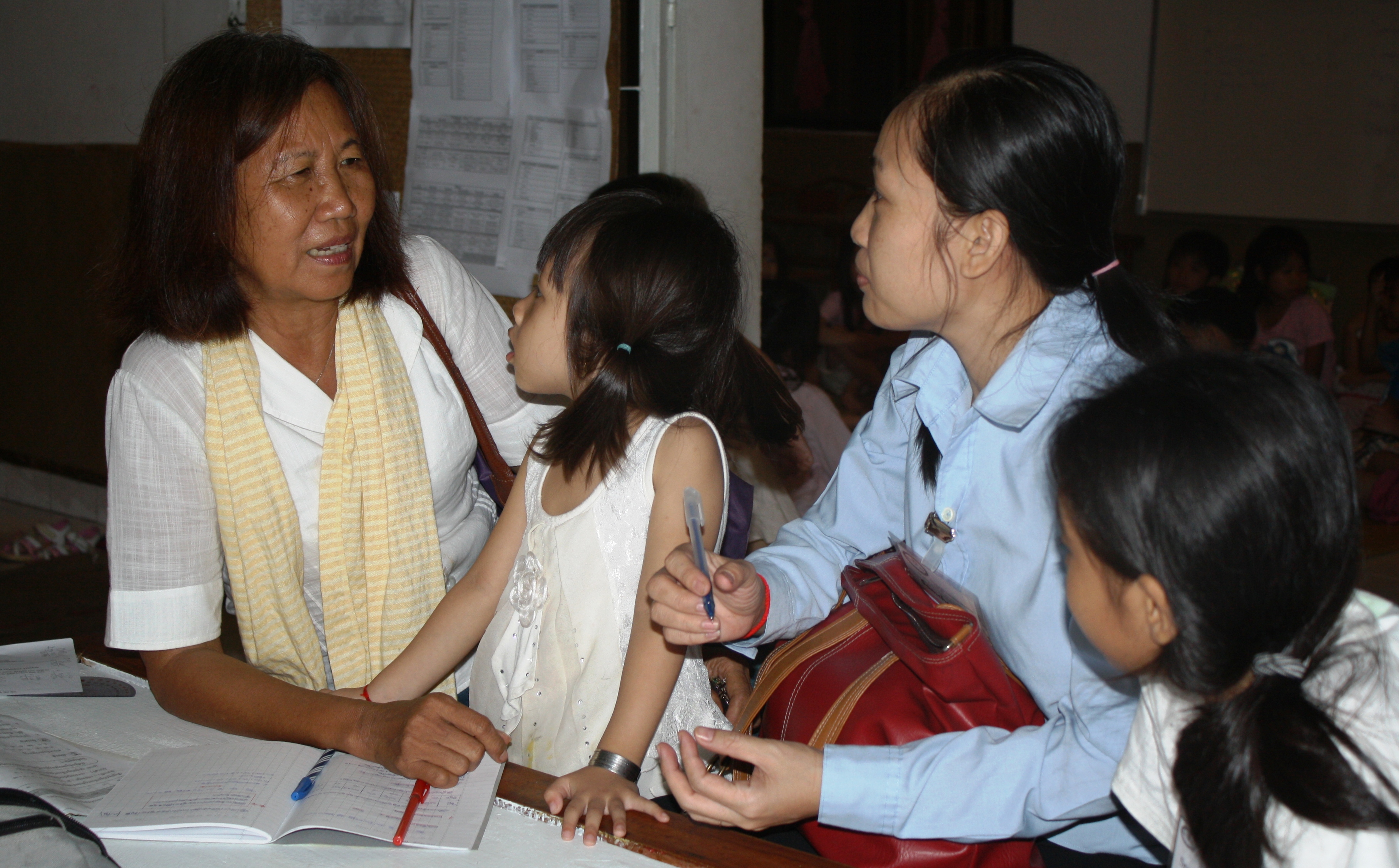
Forty years ago, Muoy You’s pursuit of a quality education in France saved her life. Today, she wants to give the same educational opportunity to young Cambodians.
Muoy You comes full circle with Seametrey Children’s Village

In 1972, she received a scholarship to study overseas. She never dreamed it would be 31 years before she returned home to Cambodia.

Unbeknownst to the enthusiastic young woman at the time, her education probably saved her life. The journey to France took place while tables were turning in her home country and, exactly two years and five months after her departure, the Khmer Rouge marched into Cambodia, evacuating thousands and tearing the country apart. From her apartment in Paris, Muoy watched it on TV, powerless to connect with the family she’d left behind and unable to return to her home.

After decades of searching, waiting and reuniting with lost family members, Muoy returned in 2003 and opened Seametrey Children’s Village in Phnom Penh as a way of giving back to the country which, she felt, now needed her help.
Seametry Children’s Village
Seametry Children’s Village in Phnom Penh

“Everybody wants to leave their mark on this earth,” she said. “And I have always wanted to do something in Cambodia. If I were younger, I’d go into politics but now I want to provide education that will bring change to this country.”

Raised by a father who repaired bicycles on the side of the road and a mother who sold coffee in Phnom Penh, Muoy was inspired by books provided by her free government education.

Reading opened my mind and made me dream of seeing beyond my limited horizon.”

What began as a three-year scholarship to France turned into five years in the country, followed by jobs in Sudan and the Ivory Coast where she taught French and got married. Constantly watching the situation in Cambodia, she planned to return in 1975 but was prevented from travelling since she was then pregnant.

“Again, I feel my life was saved,” said Muoy. “This time it was saved by my oldest child since my pregnancy made me unable to travel and I only discovered later that it was unsafe to be in the country. Two of my friends were in Cambodia at the time – one died and the other lost a child to the Khmer Rouge regime.”

Still unable to locate her family, Muoy watched and waited in hope. In May 1980, a letter arrived. It was from one of her sisters and had travelled from France to Sudan to the Ivory Coast, taking three months to reach her. In it, Muoy read that most of her family had died and that her sister was living in the Khao I Dang refugee camp in Thailand.

“My feeling was disbelief, like in a nightmare, and then a big void opened inside me that remains to this day,” said Muoy. “It makes me emotional every time I talk about Cambodia.”

In 1997, Muoy retired from teaching and focused on her dream of creating a school in Cambodia. She returned for a short while but, once again, had to leave because of unrest and returned to France where her children finished school.

When she finally moved back in 2003, she rented a house for the school, hired teachers and waited. No children showed up.

“Seametrey was designed to be a school for both rich and poor,” said Muoy. “But poor families were very conservative who didn’t see us as a traditional school and rich families wanted to send their kids to established schools and not mingle with poor kids. So, nobody wanted to come to my school”.
Seametrey presently provides an education for 92 children, many of whom are too poor to pay for schooling

Eventually, a friend mobilized the neighbourhood and eight children enrolled. After three months, they began speaking English, which impressed their families, and children started filtering through the door.

“We weren’t charging them anything for schooling and the challenges were more than I expected,” said Muoy. “Every month there was money going down the drain and I was scared.”

After a few months, Muoy and her late husband scraped together their funds, bought a small house and converted it into a rustic school with bamboo fences and an apartment on top floor where they lived. Later, they bought the house next door, turned it into a guesthouse and finally started to break even.
Stay at You Khin House to come full circle too...

“My goal is to provide quality education for all Cambodian kids,” said Muoy. “Most of the aid organizations want to empower the poor but I feel that’s not enough.  I also want to educate rich kids since upper classes are usually the ones who make the laws and they, too, need to receive a good education.”

Seametrey presently provides an education for 92 children, many of whom are too poor to pay for schooling (like the son of Muoy’s coconut seller and the daughter of her tuktuk driver).

However, her lease expires in 2013 and she cannot afford to keep the school in its same location. Since she owns a plot of land in Tonle Bati ((30km south of Phnom Penh), her dream is to build a school to provide education for 1,000 kids from all over Cambodia.

This week, she launched a fundraising campaign through Indiegogo and needs to raise $15,000 to clear the land and build a nursery and primary school.

“I want to provide education that will bring change to my country,” she said. “I want to groom future leaders so that, in 20 years time, they will be able to change the face of this country.

“I want to pass on my own legacy to children in Cambodia so they are able to realize their own opportunities and dreams.”

Nigeria: What Obama's Reelection Means for Africa

Nigeria: What Obama's Reelection Means for Africa: [Daily Trust]In the heat of the just concluded American presidential elections, a few of my Nigerian friends on Facebook were peeved that Nigerians invested more emotional energy in the American elections than they ever did in the affairs of their own country. "What has Obama done for Africa?" one of them asked. I think that's a legitimate question.

High time to support Ethiopian Muslims By Abebe Gellaw - Abugidainfo

High time to support Ethiopian Muslims By Abebe Gellaw - Abugidainfo:

High time to support Ethiopian Muslims By Abebe Gellaw
Abugidainfo
Though Ethiopian Muslims are waging their struggle in a religious context, they are showing us that nonviolent struggle is not “impossible” but a “force more powerful” to crack, stress out and eventually dismantle the tyrannical TPLF regime. While the ...

and more »

Turkey to ask NATO for missiles on Syria border - Vision Insights and New Horizons

Turkey to ask NATO for missiles on Syria border - Vision Insights and New Horizons:

Deutsche Welle

Turkey to ask NATO for missiles on Syria border
Vision Insights and New Horizons
BERLIN, Nov 17 (Reuters) - Turkey will formally ask NATO on Monday to set up missiles on its border with Syria due to growing concern about spillover from the civil war in its neighbour, a German newspaper reported on Saturday. The Munich-based ...
Report: German arms deployment to Turkey's Syria borderDeutsche Welle
More Syria officers, soldiers and families defect to TurkeyReuters
Turkeyto formally request NATO missiles for Syria border on Mondayallvoices
NOW LEBANON
all 55 news articles »

Obama supports Israeli right to defend itself amid Gaza truce talk

Obama supports Israeli right to defend itself amid Gaza truce talk: U.S. President Barack Obama Sunday said it was “preferable” for the Gaza crisis to be ended without a “ramping up” of Israeli military activity, but squarely blamed militants for causing the showdown.

“Israel has every right to expect that it does not have missiles fired

Saudi women get U.S. ‘victim visas’ following family disputes

Saudi women get U.S. ‘victim visas’ following family disputes: Five Saudi women living in the United States replaced their student visas with “victim visas” following disputes with male members of their families.

The women, whose change of status renders them ineligible for financial support from Saudi Cultural Bureau in Washington DC, were accompanying

Tens of millions of hackers target Israel govt websites

Tens of millions of hackers target Israel govt websites: More than 44 million hacking attempts have been made on Israeli government web sites since Wednesday when Israel began its Gaza air strikes, the government said on Sunday.

Finance Minister Yuval Steinitz said just one hacking attempt was successful on a site he did not want to name, but it was

Egyptian President Mursi absent at enthronement of Pope Tawadros II

Egyptian President Mursi absent at enthronement of Pope Tawadros II: President Mohamed Mursi was absent at the installation ceremony of the new Coptic Pope Tawadros II on Sunday to the dismay of Christians who fear being sidelined in the new Islamist-led Egypt.

Pope Tawadros II was installed at Cairo's Abbasiya Cathedral in a ceremony attended by Christian

Kurdish prisoners end hunger strike

Kurdish prisoners end hunger strike: Jailed PKK leader Abdullah Ocalan intervenes to stop a 68 day strike in protest against his island imprisonment.

DRC rebels close in on regional capital

DRC rebels close in on regional capital: The rebel army is at the gates of DR Congo's capital, causing panic in the city as government soldiers, officials flee.

Drug Shortages Are Becoming Persistent in U.S.

Drug Shortages Are Becoming Persistent in U.S.: A drug crisis caused largely by an array of manufacturing problems is leading health care workers to treat patients with less-effective alternative medicines and expired drugs.

Akela Flats Journal: Fort Sill Apache Tribe’s Casino Plans Lead to Conflict

Akela Flats Journal: Fort Sill Apache Tribe’s Casino Plans Lead to Conflict: A year after the federal government designated a roadside plot in New Mexico as their sole reservation, the Fort Sill Apache are mired in a dispute over their efforts to build a casino on the site.

Hamas finds greater support in a changed Middle East - The Washington Post

Hamas finds greater support in a changed Middle East - The Washington Post

‘Little Hu’ eyed for the next wave of Chinese leaders - The Washington Post

‘Little Hu’ eyed for the next wave of Chinese leaders - The Washington Post

Ron Barber defeats Martha McSally in race for Giffords’s former seat - The Washington Post

Ron Barber defeats Martha McSally in race for Giffords’s former seat - The Washington Post

AARP uses its power to oppose Social Security, Medicare benefit cuts for retirees - The Washington Post

AARP uses its power to oppose Social Security, Medicare benefit cuts for retirees - The Washington Post

Petraeus scandal puts four-star general lifestyle under scrutiny - The Washington Post

Petraeus scandal puts four-star general lifestyle under scrutiny - The Washington Post

Will Senate Democrats’ filibuster reform plan change anything? Experts answer a resounding, “Maybe.”

Will Senate Democrats’ filibuster reform plan change anything? Experts answer a resounding, “Maybe.”

Israel strikes media buildings in Gaza, expanding its range of targets - The Washington Post

Israel strikes media buildings in Gaza, expanding its range of targets - The Washington Post

Nov 17, 2012

Obama should press Yingluck on rights - The Nation

Obama should press Yingluck on rights - The Nation

Activists Released After Congress

Activists Released After Congress:
Authorities across China have begun to release rights activists held in detention centers and hotels or under house arrest following the smooth transition of power to the next generation of ruling Chinese Communist Party leaders this week, though a number remained unaccounted for on Friday.
Beijing-based activist Xu Yonghai, a member of an unsanctioned Protestant "house church," said his house arrest had ended on Friday, a day after China announced the line-up for its next-generation Politburo Standing Committee.
"They have basically lifted the restrictions on me," Xu said by telephone. "I went to buy groceries today with no police following me."
But he said some of his friends and fellow activists, including opposition party activists He Depu, Gao Hongming, and Wang Ling, had failed to show up for a planned gathering.
"Maybe some of them are still being held," he said.
Forced 'on holiday'
China launched a nationwide security clampdown ahead of the 18th Party Congress and the once-in-a-decade leadership transition, sending rights activists to labor camps and forcing lawyers and dissidents to leave their homes or remain under house arrest.
Beijing-based pro-democracy activist Zha said he had arrived back in the capital on Thursday after being forced to go "on holiday" to the southern region of Guangxi.
He said He and Gao had also returned to Beijing as the 18th Party Congress after the Party Congress concluded on Thursday.
"He Depu and his wife got back [late on Thursday], and Gao Hongming came back to Beijing from Yunnan [Friday evening]," Zha said. "[The police] told me that the police restrictions were being lifted today; I got that from them directly."
Held in a hotel
Elsewhere in China, activist Liu Feiyue, who runs the Hubei-based rights group China Rights Observer, said he had been brought back home by police after being held under unofficial detention starting on Nov. 7, a day before the Congress began.
"I got back [on Thursday]," he said. "I was being held in a hotel in a southern suburb, and I was only allowed out for meals."
"The rest of the time, I was locked up," he said, adding that many of his friends were apparently still under police detention linked to the Congress, which has seen unprecedented security measures against activists, petitioners and rights lawyers this year.
He said Hubei-based veteran pro-democracy activist Qin Yongmin, who has been the target of police harassment since his release from jail in November 2010 after serving a 12-year term for subversion, had yet to be freed from security restrictions.
'Home this whole time'
In neighboring Sichuan, civil rights activist Yuan Jian said he had been held under house arrest for more than a week during the Party Congress.
"I have been home this whole time," said Yuan, adding that he had been allowed to move around freely following the announcement of the new Communist Party leadership. "This is the first time I have been able to receive a phone call," he said.
Midnight detention
In the provincial capital, petitioner and land rights activist Wu Ping said she and fellow petitioner Li Hong had been detained by state security police in Beijing in the middle of the night on Sunday.
"Our county Party secretary came and asked us what use petitioning in Beijing was, as all they did was bounce the complaint back to the local level to deal with," Li said.
But she added: "I think a lot of petitioners will now gradually be released and sent home."
Reported by Fang Yuan for RFA's Mandarin service and by Lin Jing for the Cantonese service. Translated and written in English by Luisetta Mudie.

Hundreds Call for Village Vote

Hundreds Call for Village Vote:
Several hundred villagers in southern China’s Guangdong province protested Friday demanding elections to replace a newly appointed village committee following clashes over official corruption linked to a land sale, residents said.
The move came nearly a year after residents in another village in Guangdong took to the streets over a land grab by their local committee, forcing politicians on the panel out of office and winning the right to elect their own representatives.
Friday’s protest by residents of Liantang, in the city of Shantou, followed a standoff  last month with local officials that led to clashes with police sparked by the sale of community land.
Local leaders asked residents to nominate new village committee members following the clashes but largely did not take into consideration their proposals, residents said.
The authorities announced this month a list of 15 new committee members containing few of the names residents had put forward, triggering the demands for elections.
Residents have collected over 10,000 signatures for a petition that they plan to hand to local leaders calling for a popular vote for the village committee.
At the protest in front of village committee offices on Friday, residents called on local authorities to explain the rationale for the selection of the new village committee members, a Liantang resident surnamed Lin said.
"We called for the leaders to come out and explain. We want them to withdraw the list of names that they announced. We asked them in what way were these people selected,’” he told RFA’s Cantonese service.
“If there are some villagers who support having them on the list, we would like to see the evidence. We want to know how those people got to be elected [to the committee],” he said.
The villagers remained outside the offices until evening but no officials came out to talk to them, he said.
Land dispute
Tensions between residents and authorities had stemmed from the village committee’s sale of over 1,000 mu (67 hectares or 135 acres) of the village’s forest and farmland earlier this year.
Receiving no compensation for the land, residents accused local authorities of corruption and embezzling funds from the land sale.
Some of the residents had lost their livelihoods that depended on the farmland.
Tensions hit a peak at the end of October, when over 4,000 local residents blocked roads leading to the village in a standoff that was violently dispersed by police.
A resident surnamed Liu said that he suspected local authorities with close ties with the Shantou Public Security Bureau of Shantou had sent local police to threaten his son after he urged the village party secretary to quit.
"I had told the party leader of the village face-to-face that he should choose to step down because this is the villagers’ wish. But then the local police station sent someone to threaten my kid.”
He said that by speaking out against official corruption, the villagers were standing up for their rights.
“Though we lack legal knowledge, we still know how to protect our rights according to the law.”
Staff contacted by RFA on Friday at the Jinping district government office declined to comment and phone calls to the Liantang village committee offices ran unanswered.
The requisitioning of rural land for lucrative property deals by cash-hungry local governments sparks thousands of "mass incidents" across China every year, many of which escalate into clashes with police.
Last year, the rebel village of Wukan southwest of Liantang in Guangdong drew international attention when residents staged landmark protests and threw out its officials.
Their violent protests against unscrupulous land grabs and rigged elections sparked rare concessions after an investigation by the Guangdong provincial government concluded that most of the Wukan villagers' demands and complaints were fair.
In China, all land is ultimately owned by the state, but is allocated to rural communities under collective contract and through the household responsibility system that replaced the state-run farms and communes of the Mao era.
Reported by Fung Yat-yiu for RFA’s Cantonese service. Translated by Shiny Li. Written in English by Rachel Vandenbrink.

Freedom of Speech Roundup

Freedom of Speech Roundup:
In the weekly Freedom of Speech Roundup, Sampsonia Way presents some of the week’s top news on freedom of expression, journalists in danger, artists in exile, and banned literature. M

The 18th National Congress of the Communist Party of China met last week barring many international news sites from accessing the congress and inciting many protests in reaction to China's policy on Tibet. Photo: Remko Tanis

The Communist Party Returns Beijing to Pre-Internet Age

The New Yorker. To ensure that the 18th Party Congress went smoothly this week multiple international news sites were blocked, and local newspapers were “forbidden from reporting on, commenting on or publishing Hu Deping‘s online article ‘Reform Cannot be Wasted.’” Read here.

Tibetan Self-Immolations Continue in China

Al Jazeera There have been 12 Tibetan self-immolations in the last 10 days, coinciding with the 18th meeting of the Communist Party Congress in China. Read here

Mexico: Risking Life for Truth

New York Review of Books. “It overwhelmed us. We’d come in from a scene where the victims’ mothers were crying, the families were crying, and then we had to sit down and write. Or it would be three in the morning and I’d find myself comforting a reporter who was weeping…” –Rocío Gallegos, news editor of El Diario. Read here.

U.S. Sanctions Iran Over Internet, Media Censorship

The News. In a move designed to prevent the Iranian government from establishing a national internet Washington unveiled sanctions last Thursday against top Iranians and national bodies, including the communications minister and the culture ministry. Read here.

Azerbaijan: How to Measure Free Speech on the Internet?

Eurasia.net. Some internet users in Azerbaijan hope that the United Nation’s Internet Governance Forum, which was held in the capital November 7-9, will bring attention to the “serious problem [of] content regulation and [governmental] monitoring of email correspondence, social-network content and websites.” Read here.

The Fight to Publish

A lJazeera This mini-documentary follows the struggle of Kazakh journalist Zhanara and the opposition newspaper she reports for: Respublika. Respublika is one of only a few dissenting voices in Kazakhstan, mainly because many of those who do dissent fall victim to violent government oppression. See the documentary and read articles by the filmmaker, Simon Ostrovsky, and Zhanara here.


Video: Al Jazeera Witness.

Amiri Baraka: Walk On To The Freedom Land

Blues.Gr “The two things people just really need are education and employment based on that education.” An interview with poet/ activist Amiri Baraka discusses his involvement as a poet and civil rights activist over the last half century. Read here.

Israel and Twitter: Where does free speech end and violence begin?

GIGAOM An exploration of the Israeli government’s presence on social media like Twitter, Facebook, and youtube, during the recent violence in Gaza with Hamas, and the role these information networks play in moderating the posted information during times of war. Read here.

Google report reveals sharp increase in government requests for users’ data

The Guardian A recently published transparency report published by Google indicates that government surveillance has increased dramatically over the last 6 months. The United States alone has made 7,969 requests for user data between the months of January and June of 2012. Read here.

‘Crushing Eastern Europe’ Behind the ‘Iron Curtain’

NPR An interview with Anne Applebaum about her new book The Iron Curtain. She discusses how the Soviet Union worked to control the Eastern Bloc and the way those countries worked to undermine the Soviet Oppression. Interview here.

Nov 16, 2012

Thai-US pact to ensure 'enduring US presence' in region

Thai-US pact to ensure 'enduring US presence' in region: Thailand and the United States yesterday signed a joint statement on defence alliance that requires the Kingdom to support the "enduring presence" of the US in the Asia-Pacific region. The US, meanwh .....


Philippines to call for common stand on territorial disputes

Philippines to call for common stand on territorial disputes: This time, Philippine President Benigno Aquino III will do the talking in Phnom Penh, Cambodia, and he will insist that Southeast Asian nations take a common stand on territorial disputes with China i .....