Dec 1, 2012

Google Shows Flight Notifications

Google Shows Flight Notifications: Back in August, Google released an experiment that integrated Google Search with Gmail. Besides returning results from Gmail, Google also detects flight-related confirmation messages so that it can show additional information for your upcoming flights. You can try this feature by searching for [my flights], as documented here.


What Google doesn't mention is that it also shows flight notifications. They look just like the Google+ birthday reminders.


Flight notifications aren't a new feature (someone spotted it in September), but I thought it's worth mentioning it. There's a lot of valuable information that can be obtained from Gmail messages, as you can see from the latest Google Now update, which shows cards for flights, packages, hotel reservations, event bookings and more. Maybe Google Now will have a desktop interface and it will replace some of the iGoogle features.

{ Thanks, Matt. }

YouTube's New Interface, Closer to Launch

YouTube's New Interface, Closer to Launch: YouTube continues to test new user interfaces, but it looks like one of these versions will be finally rolled out to everyone.

There's a new message on the experimental homepage that welcomes users to the new YouTube and explains one of the new features: "What to watch shows you new activity from your subscriptions, recommendations based on videos you've watched and your taste in videos, plus the most popular videos on YouTube". YouTube also links to a page that was used the last time when YouTube was redesigned. You can see the old page in Google's cache, but now the page returns a 404 error message.


YouTube has constantly tested new versions of the sidebar from video pages. This time there's a new sidebar section that shows other related videos. You can "get the search results, feeds, and channel videos you were just looking at". For example, you can perform a search, click one of the results and see the list of results by clicking "more results" in the sidebar, instead of going back to the search results page.

The sidebar is the most important thing about the new YouTube interface because it's always there: on the homepage, the settings page, the search results page and can be expanded when you watch videos.


To try the new YouTube interface, check the instructions from this post.

U.N. votes to recognize Palestine as ‘non-member observer state’ - The Washington Post

U.N. votes to recognize Palestine as ‘non-member observer state’ - The Washington Post

Mexico’s crime wave has left about 25,000 missing, government documents show - The Washington Post

Mexico’s crime wave has left about 25,000 missing, government documents show - The Washington Post

National Archives posts unsealed Watergate records online

National Archives posts unsealed Watergate records online

Pretty much everything you eat is associated with cancer. Don’t worry about it.

Pretty much everything you eat is associated with cancer. Don’t worry about it.

In Gaza, surge of support for Hamas starts to fade - The Washington Post

In Gaza, surge of support for Hamas starts to fade - The Washington Post

Drone crashes mount at civilian airports overseas - The Washington Post

Drone crashes mount at civilian airports overseas - The Washington Post

Incoming Mexican President Peña Nieto looks to reshape dialogue with U.S. - The Washington Post

Incoming Mexican President Peña Nieto looks to reshape dialogue with U.S. - The Washington Post

In northern Mali, music silenced as Islamists drive out artists - The Washington Post

In northern Mali, music silenced as Islamists drive out artists - The Washington Post

After U.N. vote, Netanyahu authorizes new settlements - The Washington Post

After U.N. vote, Netanyahu authorizes new settlements - The Washington Post

Syrian Internet, phone service restored in ‘most’ areas - The Washington Post

Syrian Internet, phone service restored in ‘most’ areas - The Washington Post

Morsi sets date for referendum on charter as his Islamist supporters rally in Cairo - The Washington Post

Morsi sets date for referendum on charter as his Islamist supporters rally in Cairo - The Washington Post

North Korea Unveils Rocket Plan

North Korea Unveils Rocket Plan:
North Korea announced Saturday that it plans to launch a rocket this month in defiance of an international ban and raising tensions ahead of the presidential elections in South Korea.

Two days after the U.N. Security Council warned Pyongyang that going ahead with the launch would be "extremely inadvisable," North Korea's state news agency announced the decision to blast its second long-range rocket this year between Dec. 10 and 22.

In April, North Korea tried but failed to launch an Unha-3 rocket to celebrate the 100th anniversary of the birth of North Korean founder Kim Il Sung.

The latest test will take place close to the Dec. 17 date of the death of former leader Kim Jong Il and the South's presidential election on Dec. 19.

Pyongyang's Korean Committee for Space Technology said the rocket would carry a "polar-orbiting earth observation satellite" for "peaceful scientific and technological" purposes after scientists had studied mistakes made during the botched April attempt, according to the official Korean Central News Agency.

Washington and its allies insist the launches are disguised technology tests for long-range missiles that may be aimed at the United States.

Such tests are banned by the United Nations and the Security Council had on Thursday warned Pyongyang that going ahead with another launch would be "extremely inadvisable."

U.S. warning

Hours after the North Korean announcement, the United States condemned the planned move and said it is consulting closely on the "next steps" with China and Russia and other nations that had been involved in talks aimed at pressuring North Korea to give up its nuclear weapons.

"A North Korean 'satellite' launch would be a highly provocative act that threatens peace and security in the region," said U.S. State Department spokeswoman Victoria Nuland in a statement.

"Any North Korean launch using ballistic missile technology is in direct violation of U.N. Security Council Resolutions," she said.

The resolutions bars North Korea from testing ballistic missile technology.

And Nuland reminded that an unanimously adopted U.N. Security Council Presidential Statement had strongly condemned North Korea's April 13 failed launch and expressed its determination to take action accordingly in the event of a further launch.

"We call on North Korea to comply fully with its obligations under all relevant [U.N. Security Council resolutions]," she said, warning North Korea, which faces a chronic food shortage, of further international isolation.

"Devoting scarce resources to the development of nuclear weapons and long-range missiles will only further isolate and impoverish North Korea. The path to security for North Korea lies in investing in its people and abiding by its commitments and international obligations," Nuland said.

The United States, she said, is consulting closely with China, Russia, Japan and South Koreawhich were involved in Six-Party talks with North Korea to end its armed nuclear driveon steps that should be taken following Pyongyang's action.

Last month, North Korea said it already possessed rockets capable of striking the U.S. mainland, a claim mostly dismissed by analysts as hollow.

China

North Korea's announcement Saturday came just a day after young North Korean leader Kim Jong Un met a senior delegation from Beijing's ruling Chinese Communist Party in the North Korean capital Pyongyang.

There was no immediate comment from China, North Korea's key ally, which refuses to endorse further international sanctions against Pyongyang to contain its defiant actions.

"North Korea wants to tell China that it is an independent state by staging the rocket launch and it wants to see if the United States will drop its hostile policies," said Chang Yong Seok, a senior researcher at the Institute for Peace Affairs at Seoul National University, according to Reuters news agency.

Pyongyang's announcement also came after weeks of speculation, based on satellite image analysis, that it was laying the groundwork for a new rocket launch from its Sohae satellite launch station.

South Korea

South Korea had repeatedly warned in recent months that the North would seek to destabilise the situation on the Korean peninsula ahead of the South's presidential election.

"We sternly warn if the North goes ahead with the launch, it will face strong countermeasures from the international community," the South Korean foreign ministry said in a statement Saturday, Agence France-Presse reported.

In the closed contested election, conservative Park Geun-hye, the daughter of late President Park Chung-hee, is facing liberal Moon Jae-in, who has suggested a return to an accommodating policy of engagement and aid for Pyongyang that has been missing during the five years of President Lee Myung-bak's rule, which ends in February when his single term expires.

The North and South remain technically at war after an armistice, rather than a peace treaty, ended their 1950-53 conflict.

In Tokyo, Japan's Prime Minister Yoshihiko Noda decided to postpone rare bilateral talks with North Korea scheduled in Beijing on Dec. 5-6 following the planned rocket launch, Kyodo news agency reported.

Reported by Parameswaran Ponnudurai.

Why what happened to the Internet in Syria couldn't happen here | PCWorld

Why what happened to the Internet in Syria couldn't happen here | PCWorld

New Law Limits Religious Freedom

New Law Limits Religious Freedom:
A new decree on religion in Vietnam gives the one-party communist state greater control of people’s beliefs and undermines religious freedom in the country, a rights group said Thursday.
The Paris-based International Buddhist Information Bureau said it was “deeply concerned” that the newly issued Decree 92 will give authorities broader leeway to sanction and restrict religious activities.
“Decree 92 simply adds to the framework of legislation used to give a ‘veneer of legality’ to a policy of religious repression, planned at the highest levels of the Communist Party and state, and methodically implemented throughout the country, which aims to crush all independent movements and place religions under strict Communist Party control,’ the group said in a statement Thursday.
The decree spells out directives and measures for implementing the Ordinance on Beliefs and Religion governing religious practice in Vietnam.
It lays out procedures by which religious organizations can register their activities, places of worship, and clerics to operate openly or to apply for official recognition.
Religious activity is strictly monitored in Vietnam, where groups must operate under government-controlled management boards.
The government recognizes 31 religious organizations representing 11 different religions including Buddhist, Catholic, Protestant, Cao Dai, and Hoa Hao traditions.
But members of non-recognized groups, such as Christian house churches or the Unified Buddhist Church of Vietnam that is affiliated with IBIB, are banned, with some of their members living under house arrest for practicing religion outside state-sanctioned groups.
Decree 92 was issued by Prime Minister Nguyen Tan Dung on Nov. 8 and will come into force on Jan. 1, replacing an earlier decree issued in 2005.
The new decree, in addition to preserving the restrictive provisions of its predecessor, adds new obligations and “vaguely-worded provisions” that that give authorities greater powers over religious activities, IBIB said.
One article in the decree, the group said, stipulates that in order to receive full legal recognition, a religious group must prove that it has operated for 20 years without violating the law, including “infringing of national security.”
But this can put organizations in a Catch-22 situation, because simply operating without having received legal recognition could count as an infringement of national security, the group said.
Chapters of the decree outlining what activities religious groups must register show the extreme scrutiny required by political authorities, the group said.
“Vietnam is not seeking to promote greater freedom of religion, but to implement the Vietnamese Communist Party’s directives to ‘increase state management of religious affairs,’” IBIB said.
Reported by Rachel Vandenbrink.

NRP Threatens Poll Boycott

NRP Threatens Poll Boycott:
Cambodia’s leading opposition party said Thursday that it would boycott general elections in 2013 if the government does not reform the electoral process and refuses to allow its president to return to the country where he has been barred from running on the grounds of his criminal conviction.

The country’s National Election Committee (NEC), which critics say lacks independence from the ruling Cambodian People’s Party (CPP), removed exiled opposition leader Sam Rainsy as a voter and disallowed him from standing as a candidate in next year’s elections in a ruling earlier this month.

The decision was made on the grounds that Sam Rainsy was convicted on charges of incitement and damaging property while leading a 2009 Vietnam border protest, among other crimes—charges he denies and says are politically motivated.

Yim Sovann, spokesman for the Sam Rainsy Party (SRP) and one of the founders of Sam Rainsy’s National Rescue Party (NRP), said the NEC ruling was part of a plan to secure a win for the CPP in next year’s elections.

The NRP is a united opposition coalition, consisting of the SRP and the Human Rights Party (HRP), aimed at challenging Prime Minister Hun Sen’s ruling CPP in next year’s polls.

“The NRP will boycott if Sam Rainsy can't come to Cambodia [to compete in the elections]," Yim Sovann said, referring to the 11-year jail sentence the opposition leader faces if he returns from his self-imposed exile in Paris.

“[The boycott would aim] to fight for NEC reform from the top to the local-level and to allow Sam Rainsy’s return.”

The NEC has been accused by rights groups and opposition parties of bias toward the CPP. They have called for independent members on the committee, whose headquarters is situated in the Ministry of the Interior compound.

A number of opposition candidates have said that the 2013 election would not be regarded as free and fair if there is no reform of the NEC and if Sam Rainsy is not permitted to participate in the polls.

Last week, during the first visit by a sitting U.S. president to Cambodia, Barack Obama spoke with Hun Sen about the need for measures to ensure that the country’s general elections are contested fairly.

The 60-year-old Hun Sen has held power since 1985 and has said he has no plans to step down until the age of 90.

Elections to ‘proceed’

NEC Secretary General Tep Nytha said the committee will “do its best” to organize a free and fair election for 2013.

He said the NEC will continue to hold the polls “as scheduled,” regardless of the NRP threat of boycott.

“If the two merged parties [SRP and HRP] don’t join the election, it is their right to do so. But the election will proceed as scheduled and all political parties will have the right to participate,” he said.

The NEC recently announced that it will accept the registration of political parties for the 2013 general elections from March-April next year.

Six political parties have also registered to monitor the voting registration process.

Committee for Free and Fair Elections in Cambodia (COMFREL) Director Koul Panha underscored the importance of allowing Sam Rainsy to return home to participate in the election.

“In order to make this election more meaningful and just, Sam Rainsy must be present,” he said.

On Wednesday, Sam Rainsy accused Cambodia’s election officials of practicing double standards by banning him from the elections based on the charges against him, saying that others convicted of crimes, including prominent criminals, have not faced the same restrictions.

In a statement, the NRP said that by sidelining Sam Rainsy, Hun Sen is trying to avoid a “fair fight” in the July 2013 election.

Reported by RFA’s Khmer Service. Translated by Samean Yun. Written in English by Joshua Lipes.

Buddhist Leader Slams New Decree

Buddhist Leader Slams New Decree:
A prominent Vietnamese Buddhist leader on Friday called a new religious decree issued by the one party communist state “harsh” and said authorities were working tirelessly to disband his organization.

Head of the Unified Buddhist Church of Vietnam (UBCV) Thich Quang Do, 84, who is currently under de facto house arrest, told RFA’s Vietnamese Service in a telephone interview that the newly issued Decree 92 will seriously curtail religious freedom in the country.

“Decree 92 is harsh,” he said. “It is much more restrictive than previous decrees.”

The decree, which was introduced earlier this month, spells out directives and measures for implementing the Ordinance on Beliefs and Religion governing religious practice in Vietnam.

It lays out procedures by which religious organizations can register their activities, places of worship, and clerics to operate openly or to apply for official recognition.

Religious activity is strictly monitored in Vietnam, where groups must operate under government-controlled management boards.

The government recognizes 31 religious organizations representing 11 different religions including Buddhist, Catholic, Protestant, Cao Dai, and Hoa Hao traditions.

But members of non-recognized groups, such as Christian house churches or Thich Quang Do’s UBCV, are banned, with some of their members living under house arrest for practicing religion outside state-sanctioned groups.

In a Friday statement from the Paris-based International Buddhist Information Bureau (IBIB), which is affiliated with the UBCV, Thich Quang Do said that authorities had “systematically repressed” his organization since the North Vietnamese took control of the South in 1975 and united Vietnam under communist rule.

During a rare meeting on Thursday with Australian Ambassador to Vietnam Hugh Borrowman in Ho Chi Minh City, Thich Quang Do said the UBCV has since been forbidden to conduct religious activities, open schools or launch humanitarian operations.

“The authorities are seeking every pretext to disband the UBCV. When they find one, they will not hesitate to suppress us,” he told Borrowman during their talk at the Thanh Minh Zen Monastery, where the Buddhist leader has been under house arrest without charge since 2003.

The UBCV was effectively banned in 1981 and supplanted by the state-sanctioned Vietnam Buddhist Sangha (VBS), which is controlled by the Communist Party’s Fatherland Front.

Thich Quang Do said that since his house arrest, he has “lived like a prisoner” in the monastery, where he is forbidden from preaching or reciting prayers on anyone’s behalf, and all of his visitors are monitored.

Decree 92 was issued by Prime Minister Nguyen Tan Dung on Nov. 8 and will come into force on Jan. 1, replacing an earlier decree issued in 2005.

Reported by RFA’s Vietnamese Service. Written in English by Joshua Lipes.

A Muslim Divide in China

A Muslim Divide in China:
China says its laws provide equal religious freedom for Uyghurs and the country’s other main Muslim group, the Hui, but Uyghurs face stricter controls on religious education and worship and how they dress because of Islam’s links to their political identity, analysts say.
Islam flourishes in China’s Ningxia and Gansu provinces, home to many of the country’s 10 million Hui Muslims, where mosque-based schools offer religious teachings to adults and children.
Hui Muslims in other parts of China as well are also allowed to run religious schools.
But in the Xinjiang region in China’s far west, where the mostly Muslim, Turkic-speaking Uyghurs form an ethnic group 9 million strong, government policies bar women and anyone under age 18 from attending mosques.
Uyghur parents are forbidden to teach religion to their children at home, and private religious education is subject to harsh crackdowns.
Many Uyghurs believe China is practicing a double standard in its religious policy toward Uyghur and Hui Muslims.
Although the laws on the books were the same, in practice, policies vary for both groups, said Dru Gladney, an anthropologist at Pomona College in California.
“Chinese laws about religious freedom are very clear. But like any other good Chinese law, there is uneven enforcement,” he said.
“Xinjiang has strict religious freedom because the political situation of the region is much different than other regions.”
But officials maintain Uyghurs are not getting the short end of the stick.
The head of the government-sanctioned Islamic Association of Urumqi, in the Xinjiang capital, said this month that China allows equal religious freedom for Uyghurs and Hui Muslims.
“There is no difference in religious policy,” Keram told RFA’s Uyghur Service.
“Uyghurs enjoy the same religious freedoms as Hui Muslims do,” he said.
But he refused to comment on crackdowns on Uyghurs’ religious freedom, including harsh sentences for unauthorized Islamic study and police raids on illegal schools in the region.
Crackdowns and police raids
Six teenaged Uyghur boys who were arrested for studying the Quran on their own after school are now serving sentences of 8 to 14 years in jail, a Uyghur farmer in the area who wished to remain anonymous told RFA this month.
The boys, who were between the ages of 14 and 17 at the time, had been arrested in April 2010 in Keriye prefecture, and are now being held in jails in Aksu and Yarkand far from their hometowns, he said.
In May this year, an 11-year-old Uyghur boy died under suspicious circumstances in police custody after being detained when police raided his teacher’s home in Korla prefecture where he had been studying the Koran with two other boys when police took him away.
In a separate incident weeks later, a dozen children in Hotan prefecture suffered burns after police using teargas and stormed a religious school where some 50 children were studying under “illegal preachers.”
Aside from restrictions on Islamic education and worship, Uyghurs are also subject to restrictions on traditional Islamic dress.
Chinese officials have denied there were such restrictions, which in theory are prohibited by laws protecting religious freedom.
Earlier this month, a Uyghur member of the Xinjiang delegation to the ruling Chinese Communist Party’s 18th congress in Beijing, Kurex Kanjir, said there is “absolutely no ban” on Uyghurs wearing traditional Islamic dress, according to the Hong-Kong based South China Morning Post.
Political identity
Hui Muslims, on the other hand, are much freer to practice Islam, although Hui Muslims in Ningxia suffered persecution during the Cultural Revolution in the 1960s and ‘70s.
Hui Muslims do not suffer the same level of repression as faced by Uyghurs because they have been much more assimilated into Chinese culture, says Uyghur writer Ghulam Osman.
“Hui Muslims are Chinese Muslims, but Uyghurs are not. Uyghurs are of a different race than the Chinese.”
“Hui Muslims have never been a nation-state; they always lived together with the Chinese, because they belong to the same ethnic group as the Chinese,” he said.
The Hui, whose forefathers hundreds of years ago were traders from Central Asia or other places who practiced Islam, live throughout China and, unlike the Uyghurs, many of them speak Chinese as their mother tongue.
The Hui are counted as one of China’s 55 distinct ethnic minorities, but are unique in that they are the only group to be defined solely on the basis of their religion, rather than language or genealogical differences. By definition, China’s Hui minority includes all historically Muslim communities in the country who are not members of other ethnic groups.
“Uyghurs are different; they had their own land and were invaded by China,” Ghulam Osman said, referring to Xinjiang’s past before it came under Chinese control following two short-lived East Turkestan Republics in the 1930s and 1940s.
China, fearing a separatist movement in Xinjiang, represses Uyghurs’ religious freedom because Islam is significant in the survival of their identity, he said.
But if China is worried about an independence movement blossoming among Uyghurs, such a movement would be more likely to be spurred in reaction to repressive religious policies than religion on its own, Gladney said.
“All the Uyghur movements against the Chinese government were caused by frustration that resulted from the heavy-handed repression of the Chinese government in the region, not by radical religious forces,” Gladney said.
But the political role of Islam in allowing Uyghurs to maintain an identity separate from the rest of China should not be underestimated, Ghulam Osman said.
“It is true that all political movements of Uyghurs are caused by the heavy handed policy of China and not by radical religious forces.”
“However, this does not mean religion does not play a significant role in Uyghur survival and Uyghur political movements,” he said.
“Islam and the Uyghur language are deeply embedded in Uyghur identity. They strengthen our racial and historical differences with Han Chinese.”
Reported by Rukiye Turdush for RFA’s Uyghur Service. Translated by Mamatjan Juma. Written in English by Rachel Vandenbrink.

Freedom of Speech Roundup

Freedom of Speech Roundup:
In the weekly Freedom of Speech Roundup, Sampsonia Way presents some of the week’s top news on freedom of expression, journalists in danger, artists in exile, and banned literature.
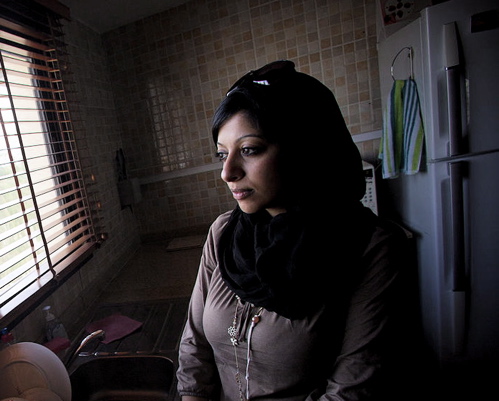
Zainab_Alkhawaja
Zainab Alkhawaja, Bahraini activist and daughter of human rights activist Abdulahadi al-Khawaja, has been in prison since August for tearing up a photo of Bahrain's king, taking part in an illegal demonstration, and entering a prohibited area. Photo: Conor McCabe, 2011.

Zanib Alkhawaja: Bahraini Twitter Activist and One-Woman Protester

IndexUNCUT. November 23 was the International Day to End Impunity; as part of their recognition of journalists and activist affected by impunity in their countries of operation, Index on Censorship presents a profile of 28 year-old Bahraini activist Zanib Alkhawaja, who has been imprisoned and harassed multiple times in the past two years. Read here.

The Legacy of Murderous Regimes

New York Review of Books. Hor Nam Hong, the Deputy Prime Minister and Foreign Minister of Cambodia speaks about the lasting effects of the Khmer Rouge and the country’s social, political, and historical recovery process. Read here.

India: Comment is not Free

The Hindu. A slideshow highlighting litigation taken against cartoons, investigation of government corruption, and comments on social media in India, where making a “comment is not free.” See here.

Watch: Julian Assange on Wikileaks, Bradley Manning, Cypherpunks, and the Surveillance State

Democracy Now. In this exclusive video interview Julian Assange speaks to Democracy Now! from inside the Ecuadorean embassy in London, where he has been holed up for nearly six months. Read the transcript here.

China: A Literary Genre with “Chinese Characteristics” ; State Meddling Stifles Film Industry

Words Without Borders. Chinese nonfiction writers are incorporating literary elements into journalistic works, and claiming their writings are pure fiction. In this way, they can skirt government censorship and get sensitive works published. Read here.
New York Times. In this week’s “Letter from China” Didi Kirsten Tatlow explains the financial impact that censorship and government intervention have had on the Chinese film industry, and how such regulations have stifled filmmakers’ creativity. Read here.

Leveson Urges New Independent Regulator for UK Press

CNN. In light of Rupert Murdoch’s recent wire tapping scandal, British Judge Brian Levinson suggested that the media industry set up a private press regulator. This regulator would be backed by legislation from the British parliament so that it meet standards that ensure independence and effectiveness. Read here.

Myanmar Author Explores New Literary Freedom

AFP. As Myanmar’s censors loosen their grip, acclaimed author Nu Nu Yi plans to republish her novel about two gay lovers next year, restoring sex-laced passages once deemed too risque for readers. Read here.

Anti-Censorship Manifesto

Huffington Post. In a new move to fight censorship around the world Reporters Without Borders has developed a new website, WeFightCensorship, for posting content that has been censored, banned, or has given rise to reprisals against the content creator. Read here.

Google exec rips Facebook as social net of the past | PCWorld

Google exec rips Facebook as social net of the past | PCWorld

Hacktivism draws attention, but little action | PCWorld

Hacktivism draws attention, but little action | PCWorld

Nov 29, 2012

New Test Could Revolutionize Malaria Treatment

New Test Could Revolutionize Malaria Treatment: A new diagnostic test could revolutionize the treatment of malaria, one of the world’s most persistent and deadly diseases, making it possible to diagnose the illness from a single drop of blood or saliva.

The test, developed by researchers at Aarhus University in Denmark, detects very low levels of an enzyme produced by the Plasmodium parasite, the organism that causes malaria. This could allow intervention before an outbreak develops, researchers say.

“The great advantage of our ...

Ranbaxy Halts Production of Generic Lipitor

Ranbaxy Halts Production of Generic Lipitor: Ranbaxy stopped production of its generic version of cholesterol-lowering drug Lipitor as the company investigates what caused tiny glass particles to appear in some bottles, triggering a large recall earlier this month.

Wikileaks’ Julian Assange Suffering from Chronic Lung Condition

Wikileaks’ Julian Assange Suffering from Chronic Lung Condition: Wikileaks founder Julian Assange, who has been living at the Ecuadorian embassy in London for more than 5 months, is believed to be suffering from “a chronic lung condition.” Ecuador’s ambassador to Britain, Ana Alban, told an Ecuadorian TV network on a recent trip to Quito that Assange’s condition “could lead to complications.” She explained that the cold, dark London winter and the fact Assange has not been outside in five months has been detrimental to his health, reports the Guardian. (MORE: Why is Ecuador Julian Assange’s Choice for Asylum?) Assange took refuge in the embassy in June in an attempt to avoid extradition to Sweden under the terms of a European Arrest warrant, notes Reuters. The founder of Wikileaks, an Internet clearinghouse for classified and sensitive information, he became famous for leaking thousands of U.S. diplomatic cables through the site. He is charged in Sweden with two counts of sexual molestation, one count of unlawful coercion and one count of rape. Assange has denied the allegations, calling Sweden “the Saudi Arabia of feminism,” as quoted by the New York Times. He fears if he is sent to Sweden he will be subject to subsequent extradition to the United States, where he could face imprisonment for his role in disseminating classified documents. Since June, Assange has been staying in a small room in the Ecuadorian embassy, living off take-away meals and relying on a treadmill for exercise. He uses a sunlamp to help compensate for nearly half a year without fresh air. Located in the posh London district of Knightsbridge, Ecuador’s diplomatic base is modest in comparison to other embassies and has no garden. “Imagine how well someone is in a space of 50 square meters [about 540 square feet], without much sun and poor air circulation,” Alban said. “It’s absolutely logical to think that a human being in these circumstances is not going to be living well.” Assange has had a number of visitors in recent months, including a dinner visit from popstar Lady Gaga. Fashion designer Vivienne Westwood also visited the Australian

Dutch Parliament Revokes Blasphemy Law

Dutch Parliament Revokes Blasphemy Law: The Dutch parliament has voted to eliminate a law making it a crime to insult God. The abolition of the blasphemy law in the Netherlands comes after a decade of fierce debate about the limits of free speech in the country.

House Dems make lineup official

House Dems make lineup official:
The leaders were chosen unanimously during a private caucus meeting.


National Journal to reorganize

National Journal to reorganize:
Its newsroom will split into two teams, and it will announce the elimination of 10 positions.


The Jihadis of Yemen

The Jihadis of Yemen: Robert F. Worth


The Last Refuge: Yemen, al-Qaeda, and America’s War in Arabia


by Gregory D. Johnsen


High-Value Target: Countering Al Qaeda in Yemen


by Edmund J. Hull


worth_1-120612.jpg
Marco Di Lauro/Getty Images
The market and Old City in Sanaa, Yemen, March 2011

Yemen is an ancient country on the southern heel of the Arabian peninsula, the crucible of many of the peoples and customs we now think of as Arab. But to most Westerners, it is little more than a code word for bizarre terror plots.

In Sinai: The Uprising of the Bedouin

In Sinai: The Uprising of the Bedouin: Nicolas Pelham


pelham_1-120612.jpg
Hossam Ali/AP/Corbis
Protesters in front of the North Sinai governorate headquarters, El Arish, November 4, 2012

The Bedouin have acquired real power across the peninsula. They have launched raids on Israel, hobbled and threatened to oust the multinational force that is supposed to protect the Egyptian–Israeli peace treaty, and disrupted the region’s supply of gas, which passes via pipeline through their terrain.

It's Time to Stop Killing in Secret

It's Time to Stop Killing in Secret: David Cole


Pete Souza/Official White House Photo
President Barack Obama telephoning Yemeni President Ali Abdullah Saleh, with counterterrorism adviser John Brennan at right, November 2, 2010


What would President Romney do with a drone? The New York Times reported Sunday that this question apparently haunted the White House so much that in the weeks before the election it raced to establish “explicit rules” and “clear standards and procedures” for the use of unmanned drones for targeted killings. It should not be surprising, I suppose, that the administration was less comfortable with someone else pushing buttons to kill people than with its own exercise of that authority. As one candid, though anonymous, official stated, “There was concern that the levers might no longer be in our hands.”

The content of the rules remains a tightly-held mystery. Apparently they are so secret that they are toted around from office to office in a single “playbook,” and not even shared on the government’s secure email reserved for classified material.

But what is most disturbing is the news that it took a possible transfer of power to push the White House to establish such rules. We’ve been assured by multiple Obama administration spokespersons over the years that its targeted killing program is fully lawful, and subject to “rigorous standards and process of review,” as Obama’s chief counterterrorism adviser John Brennan put it in a speech at the Woodrow Wilson Center in April. Yet only on the eve of a potential transition did the administration think to reduce these rigorous standards and procedures to writing?

So they work on deadline, you’re thinking. What else is new? After all, a looming presidential transition is one hell of a deadline. According to the Times story, the administration was shooting to complete the rules by January; now that it’s clear that there will be no transition for another four years, the “matter may have lost some urgency.”

But a possible transition from Obama to Romney was not the only, or even the most important, deadline in play. What about each and every decision over the past four years to authorize a remote-control execution, without trial, without charges, without a defense? Surely each of those actions presented the decision makers with an even more urgent deadline: one would think that before giving the green light to such a momentous act, you would want the “clear rules and procedures” to be in place. Yet the Obama administration has evidently seen fit to make hundreds of such life-or-death decisions, and to authorize more than three hundred strikes, without first developing “explicit rules” or “clear standards and procedures.”

To be fair, it’s not that there were no rules before. A 2011 New York Times story reported on a Justice Department memo, still secret to this day, that authorized the killing of US citizen Anwar al-Awlaki. And it seems likely that there have been many internal memos along the way; you don’t get one hundred people on a conference call every Tuesday to discuss the “kill list” without generating a paper trail.

The real problem is not that there are no guidelines written down—though the administration itself seems now to acknowledge that what it has is insufficient—but that we the people don’t know what they are. The idea that the president can authorize the killing of a human being far from any traditional battlefield without any publically accessible set of constraints, conditions, or requirements is unacceptable in a country committed to the rule of law. In his first and only speech on security and our national ideals, at the National Archives in May 2009, President Obama insisted that adherence to the rule of law is essential in the fight against terror, and to that end, promised to be transparent about his actions “so that [the people] can make informed judgments and hold us accountable.” Yet after four years and hundreds of killings authorized in secret, the most the president has been able to offer us about the scope of his most awesome power is a handful of vague paragraphs in a handful of administration officials’ speeches, which experts must then parse for clues as to what the rules might actually be. This is more akin to what law looked like in the Soviet Union than to what it should look like in the United States of America.

Apparently there is a battle within the administration about how public the president should be about his power. Some, not surprisingly at the CIA and the Defense Department, prefer to keep matters under wraps. Others, at the State Department and the Justice Department, are pushing for transparency. News reports suggest that John Brennan is on the side of transparency. As he told the Washington Post, “I think the rule should be that if we’re going to take actions overseas that result in the deaths of people, the United States should take responsibility for that.”

But taking responsibility would mean disclosing the rules of engagement, and reporting on the results of attacks. Targeted killing raises a number of difficult issues, all of which are made only more difficult by being shrouded in secrecy. Here are just four:


1. Critics claim that the attacks have resulted in hundreds of civilian casualties. The administration has suggested that these charges are exaggerated, and that the attacks are extraordinarily precise, generating only minimal collateral damage. But since the administration will not acknowledge even its decision to undertake any specific attack, it cannot give its side of the story in any credible way.


2. The administration claims it targets “imminent” threats to the United States, invoking the international law concept of self-defense. But as I have noted previously there are serious questions about how it defines “imminent.” The core idea of the imminence requirement is that a state should not attack unless there is no time left, so that lethal force is being used only as a last resort. Yet until now, we have yet to see a single report of a drone strike actually halting a truly imminent attack on the United States. Instead, the administration appears to have redefined imminence to be satisfied by the fact that an individual is a member of a group that seeks to attack the United States whenever it has the chance to do so. Thus, US citizen Anwar al-Awlaki was said to pose an imminent threat even though there was no claim he was engaged in any sort of attack or preparations for an attack when we killed him in Yemen with a drone. Without public rules, we don’t know what criteria the administration is using for its decisions; and without acknowledgement of the grounds for specific attacks, we can’t assess whether those criteria are being properly applied.


3. The Times reports that the drone strikes, initially justified as focused on the senior commanders of al-Qaeda, have more recently been deployed against militants who are not part of al-Qaeda and do not directly threaten the United States at all, but who are enemies of states with which we are seeking to curry favor, such as Pakistan and Yemen. If this is correct, this would be a dramatic expansion of drone policy, one that veers far from any justification in the law of war. But again, because the policy is secret, we don’t know why the administration feels such strikes are warranted.


4. Finally, the administration apparently authorizes not only “personality strikes” to target identified and known individuals who have been placed on a “kill list” by an advance review process, but also “signature strikes,” in which drones are used to kill unidentified individuals who are acting in ways that suggest that they are combatants, that they belong to a particular militant or terrorist group. Such attacks might well have a place on a hot battlefield, where the law of war has never required soldiers to identify their enemies before shooting at them. But the president has also reportedly authorized “signature strikes” in Yemen, far from any battlefield, where we are not at war, and where it is much more difficult to assign combatant status to individuals based on patterns of activity.

These are all difficult questions. The world is rightly concerned. The strikes have generated widespread and understandable resentment in those countries where people now have to live in fear of a US missile raining down upon them without notice. And the United Nations is set to open an investigation of American drone strikes.

But one question should not be difficult. In a democracy that rests on the rule of law, a policy of targeted killing demands public authority, public debate, and public accountability. It’s time to stop killing in secret. We don’t need to worry about President Romney, but we do need to worry about President Obama, and more importantly, about preserving our character as a nation under law.

President Obama told Jon Stewart on The Daily Show in October that “one of the things we’ve got to do is put a legal architecture in place, and we need Congressional help in order to do that, to make sure that not only am I reined in but any president’s reined in terms of the some of the decisions we’re making.” That’s absolutely right, and one can only hope that saying so on a comedy show doesn’t mean Obama doesn’t take it seriously. Even had the administration finished the playbook in time for a transition, Romney would have been under no obligation to follow his predecessor’s secret rules. The rules of the game need to be public, so that they can be debated and assessed, and so that we the people can hold our leaders accountable to the laws they claim to be following in secret.

In Silicon Valley, Technology Talent Gap Threatens G.O.P. Campaigns

In Silicon Valley, Technology Talent Gap Threatens G.O.P. Campaigns: It doesn't take an algorithm to deduce that those who would donate to a campaign might also be those who would consider working for it.

Authorities Confiscate Ri Photos

Authorities Confiscate Ri Photos:
North Korean authorities have ordered the public to hand over photos containing the image of a former military official who fell from political grace in a bid to purge him from the country’s historical record, according to sources in the country and in China.

The move comes amid reports that North Korean leader Kim Jong Un has named a hardliner general, Kim Kyok Sik, to the post of Armed Forces Minister as part of a broad reshuffle of the military.

North Korean sources say efforts are underway to tarnish the image of former Chief of the Army General Staff Ri Yong Ho, who was abruptly removed from all military duties in July.

A relatively new general, Hyon Yong Chol, was made vice marshal in the 1.2 million strong Korean People's Army—among the world's largest—to replace Ri.

The high-level political shuffle has led to widespread speculation of a possible power scramble in Pyongyang—a theory that has been bolstered by reports that it is now forbidden to own photos of the ex-military leader, which are considered treasured keepsakes by the public.

“There is a rumor that the regime has branded him an ‘anti-party reactionary’ since August,” a North Korean source who now lives in China told RFA’s Korean Service.

“The party council of the North Korean army first started to collect pictures of him [then],” the source said.

He said he was aware of at least one soldier in North Korea’s North Pyongan province, near the border with China, who had been told to submit a photo he had hung on his wall which included Ri’s image to local government officials and that it had not been returned.

“I don’t know if he will get the picture back with Ri Yong Ho’s face destroyed or if he will never get it back,” the source said.

The regime is not only confiscating photos of Ri from members of the army, but from regular civilians as well, he said.

“As Ri Yong Ho has participated in a lot of ceremonies, there are many pictures of him with ordinary people,” the source said.

The decision to destroy photos of the former army chief is similar to one taken by the North Korean regime in 1969 following the purge of Kim Chang Bong, then-minister of national defense, and Hue Bong Hak, general political director of the military at the time.

Following their removal, authorities collected photos containing images of the two disgraced officials and returned them with their faces blotted out by black ink.

The source in China said that he knew of workers from an ammunition factory that considered a photo of them with Ri “their treasure” who are now “feeling emptiness and fear” after it was seized by authorities.

“It will take considerable time and labor to remove all photos with Ri Young Ho’s face and the action will have a bad effect on [morale].”

Widespread confusion

Ri Yong Ho’s hasty removal from power has left North Koreans confused, the source said.

Once powerful enough to stand at the helm of former leader Kim Jong Il’s funeral cortege following his death last year, Ri was suddenly branded a reactionary and the public has little understanding of why.

“Residents of Pyongyang are saying that if Ri is a reactionary, he must have done something bad to [current leader] Kim Jong Un while he was close to him, but nothing happened, so they cannot understand why he was purged,” the source said.

The youngest of three children, Kim Jong Un—widely believed to be in his late 20’s—assumed power from his father Kim Jong Il in December after the elder Kim died of a suspected heart attack.

Another source in North Pyongan province, who also spoke to RFA on condition of anonymity, said that rumors were swirling about Ri’s fate.

“Even party officials don’t know where Ri Yong Ho is now. Some say that he was put to death and others say he is undergoing medical care for a cerebral hemorrhage,” he said.

“It seems there is no possibility that Ri Yong Ho will return.”

According to Kim Yong Hyun, a professor at Dongkuk University in South Korea, Kim Jong Un ordered the collection of Ri’s photos as part of increased public security measures meant to address the rumors surrounding the former military leader’s removal from power.

“The collection is related to making the Kim Jong Un system sturdy through strong internal unity and by minimizing any anti-government movements,” he said.

In late October, while addressing officials at Ri Yong Ho’s former school—Kim Il Sung Military University—Kim Jong Un said that North Korea has no need for people who are disloyal to the regime, regardless of their military aptitude.

Kim Kyok Sik's appointment, according to South Korea’s officials Thursday, is the latest move in a military reshuffle that began earlier in the year with the purge of Ri.

"It could be the most significant move after Ri's dismissal to strengthen [Kim Jong Un's] grip on the military," a South Korean official, speaking on the condition of anonymity, told Reuters news agency.

The post of the Minister of Armed Forces is considered subordinate to the Army Chief of General Staff and its head of the Political Department.

But the appointment is indication of a top army general being rewarded for loyalty to the new leader as he tries to cement his power, Reuters quoted South Korean officials as saying.

Reported by Young Jung for RFA’s Korean service. Translated by Ju Hyeon Park. Written in English by Joshua Lipes.

Selling Peace of Mind to Sell More Used Stuff

Selling Peace of Mind to Sell More Used Stuff: A boomlet of so-called re-commerce sites are making used goods more attractive for buyers and sellers

Donuts Tries a Domain Grab - Businessweek

Donuts Tries a Domain Grab - Businessweek

Singapore's Lee Hsien Loong Talks Global Economics - Businessweek

Singapore's Lee Hsien Loong Talks Global Economics - Businessweek

The Science Behind Those Obama Campaign E-Mails - Businessweek

The Science Behind Those Obama Campaign E-Mails - Businessweek

Gallup accused of bilking government - The Washington Post

Gallup accused of bilking government - The Washington Post

Afghan women caught between modernity, tradition - The Washington Post

Afghan women caught between modernity, tradition - The Washington Post

Qatar’s support for Islamists muddles its reputation as neutral broker in Mideast - The Washington Post

Qatar’s support for Islamists muddles its reputation as neutral broker in Mideast - The Washington Post

The three big questions on Syria’s Internet blackout

The three big questions on Syria’s Internet blackout