Jan 31, 2010

Can Bank-Bashing Help Obama?

Thursday, Jan. 28, 2010

Can Bashing the Banks Help Obama?

The no-drama law professor is going populist.

First President Obama proposed new taxes on big banks, blasting the "twisted logic" of Wall Street executives who keep awarding themselves giant bonuses while resisting government efforts to recoup the cost of their industry's bailouts. "Instead of sending a phalanx of lobbyists to fight this proposal or employing an army of lawyers and accountants to help evade the fee, I suggest you might want to consider simply meeting your responsibilities," the President warned.

A week later, Obama proposed new restrictions on big banks, aimed at limiting their size while prohibiting them from playing the markets with their own cash. "If these folks want a fight," he thundered, "it's a fight I'm ready to have." In case anyone missed the point, Obama used the word fight or fighting 22 times in a speech the next day in Ohio. (See judgments of Obama's first year, issue by issue.)

The new proposals were in the works long before Scott Brown rode his truck to victory in Massachusetts, and they reflect fairly modest shifts in the Administration's finance policies. Even the rhetoric is familiar: Obama took periodic swipes at "outrageous" bonuses and "fat-cat bankers" throughout his first year in office. But the latest bank-bashing does indicate a new strategic approach to his second year, inspired by the same public wrath that produced Brown's upset. As the White House shifts its top legislative priority from health care reform to financial reform, it is hoping to avoid the mistakes of the health effort that have left Obama and the Democratic Party on the wrong side of a grumpy public.

That means more populism and confrontation, less deference to Congress. It's a shift from an inside game to an outside game, from passive leader of a divided party to active agitator for change. The idea is to take an uncompromising stand, make a clear case to the public and then force lawmakers to choose sides — as opposed to announcing general principles, letting Congress hash out its own details at its own pace and then desperately cutting deals to try to cobble together 60 Senators.

That was a bumpy road even before Massachusetts left Democrats with only 59; months of bipartisan Senate negotiations over health care reform attracted zero Republican votes, as did the financial-reform package that passed the House in December. And White House officials admit they underestimated how ugly Capitol Hill's sausagemaking process would look in the spotlight, turning a debate about expanding health coverage, controlling costs and reining in the abuses of profit-obsessed insurers into a brawl over "death panels," taxpayer-funded abortions and congressional giveaways to Nebraska. (See the financial crisis after one year.)

So now they want to draw bright lines: Are you with us or Wall Street, with ordinary families or greedy titans? They figure that if they can't get a legislative victory, they'll get a potent political issue.

But Republicans are already accusing Obama of sacrificing reform on the altar of politics, and it's true that the bright-line strategy could scuttle whatever chances there might have been to build bipartisan consensus in the Senate. For example, the White House recently leaked word that it considers the creation of a new Consumer Financial Protection Agency "nonnegotiable," drawing a clear contrast with Republicans and financial lobbyists on a relatively simple issue that polls extremely well — but risking a stalemate in the Senate Banking Committee, where the GOP and several Democrats have expressed doubts about a new bureaucracy. After health care, that's a price the Administration is now willing to pay. It's no coincidence that the day before Obama announced his latest push to crack down on big banks, his confidants David Axelrod and Valerie Jarrett met with Troubled Asset Relief Program (TARP) watchdog Elizabeth Warren, the intellectual mother of the consumer agency and the most prominent populist advocate for financial reform. "They made it very clear that Wall Street needs to stop acting like nothing has changed," Warren told TIME.

It's also no coincidence that the President made his announcement while standing next to the unlikeliest populist advocate for financial reform, 82-year-old former Federal Reserve chairman Paul Volcker, a previously marginalized Obama adviser who had chastised the Administration for making insufficient efforts to limit the size and risk profiles of big banks. The White House is tired of complaints that its economic team — especially Treasury Secretary Timothy Geithner, the former New York Fed president who helped bail out AIG and other failing firms — is too close to Wall Street. Bringing the legendary gray eminence in from the cold — Obama called his plan to ban proprietary trading by commercial banks "the Volcker rule" — not only lent capitalist gravitas to populist bank-bashing but also reinforced the message that the Administration will not be outflanked in its assaults on Big Finance. That hasn't always been the case.

Allergic to Populism
Shortly after Obama unveiled a $117 billion plan to tax the riskier liabilities of larger financial firms, Geithner hosted a dinner for bankers. A few of them grumbled about Big Government, class warfare and the unfairness of scapegoating financial institutions that already repaid their bailout money while GM and Chrysler keep hemorrhaging taxpayer cash. But one midsize-bank CEO suggested the tax was a reasonable surcharge on too-big-to-fail conglomerates that benefit from an implicit guarantee of federal help in a crisis. "If I fail, the FDIC shuts me down," he said. Then he gestured at a big-bank CEO. "If he fails, the Fed asks how it can help."

Read "Bank CEOs Continue to Fight Financial Reform."

See pictures of TIME's Wall Street covers.

It's a telling story. For one thing, it's a reminder that Geithner is the kind of guy who hosts dinners for bankers. He's not a populist; he's allergic to populists, and so are his aides. Behind closed doors, Treasury officials can sound like their MoveOn.org caricatures, griping about "wacko populists" who use "anticapitalist rhetoric" to "extract their pound of flesh from the Street" — even making excuses for the megabankers who no-showed a recent White House meeting with Obama. ("I wouldn't say they blew him off," said one Treasury aide.) Geithner has opposed proposals to tax Wall Street bonuses as well as financial transactions, infuriating the left. And he made quite a few of those how-can-we-help calls to floundering bankers when he was at the Fed, providing a juicy target for the right.

And yet Obama's bank tax — designed not only to make taxpayers whole but also to discourage excessive risk-taking — came from Geithner. And so did most of the Administration's plans to address the too-big-to-fail problem, create an independent consumer agency for financial products and otherwise overhaul the regulatory system that failed so dramatically in 2008. Geithner sees big banks not as evil empires to be toppled but as moneymaking machines to be restrained, so that the panic and bailouts of two years ago are never repeated. Just because it's populist, he likes to say, doesn't mean it's wrong. (See award-winning pictures of the fallout from the financial meltdown.)

And as was conspicuously not the case with health care reform, the Administration has laid out specific changes it wants to see in financial oversight. In June, Geithner released an 88-page paper with proposals to address just about everything that went wrong before the meltdown, from unregulated brokers who peddled toxic subprime mortgages with brutal fine print to in-the-tank ratings agencies that vouched for house-of-cards financial instruments they didn't even understand. He proposed much tougher oversight of derivatives, hedge funds and nonbank financial firms like AIG, as well as so-called resolution authority to help public officials wind down failed behemoths like Lehman Brothers during a crisis without triggering a panic. Geithner then shipped hundreds of pages of legislative language to the Hill.

The bill the House passed in December closely tracks the Treasury proposals; Geithner's aides say they got at least 80% of what they wanted, including the stand-alone consumer agency, an easy-to-understand innovation for Americans who think mortgages and credit cards should be as safe as toasters. Many of the differences were technical or turf-based: how to structure the resolution authority and regulate systemic risks, a loophole exempting "industrial loan companies" from various regulations, more loopholes shielding community banks and auto dealers (known for their pull with local Congressmen) from the new consumer agency's direct oversight. House Financial Services Committee chairman Barney Frank points out that the Republican alternative to the bill consisted of ending TARP and otherwise maintaining the status quo; he's surprised the GOP hasn't paid a political price. "I'm disappointed with the zeitgeist," Frank says. "The Republicans are so extreme they couldn't help themselves; they actually proposed doing nothing. I would've thought refusing to fix a dysfunctional system would be unpopular." (See how Americans are spending now.)

Republicans say they haven't seen any downside yet to opposing reform. Brown actually stepped into Obama's populist trap by opposing the bank tax, and it didn't seem to help his opponent, Martha Coakley, even though internal polling gave her a 21-point advantage when it came to "taking on Wall Street." Why? "People thought Democrats in Washington would not deliver on these issues," says her pollster, Celinda Lake.

In fact, Democrats in Washington and even within the Administration were at odds over dozens of provisions. As with health care, there are serious differences on financial reform between the House and the Senate, and the Democratic caucus within the Senate is again divided. And as the House bill got watered down a bit, some reformers saw Treasury's fingerprints. For example, Michael Greenberger, a policy adviser to Americans for Financial Reform, a coalition of union, consumer and environmental groups, says Treasury lobbied "vigorously" for loopholes exempting certain over-the-counter derivatives from new regulations, a key objective of centrist New Democrats who took their concerns to Geithner — and one shared by the Chamber of Commerce, the National Association of Manufacturers and big banks.

But for critics who believed the Administration was reluctant to crack down on Wall Street, Volcker became the proof that wasn't in the pudding — the monetary version of the "most trusted name in news" who suddenly sounded like a Daily Kos blogger. If Obama really wanted to stop banks from getting too big to fail, why didn't he take Volcker's advice about how to stop them from getting too big? If Obama really wanted to stop Wall Street's excessive risk-taking, why didn't he take Volcker's advice to stop federally insured banks from gambling on their own accounts? And where was Volcker anyway?

Back in Vogue
Volcker was living in New York City, getting engaged to his longtime assistant, giving speeches around the world, making wry comments about the uselessness of financial innovation and the remorselessness of Wall Street. He was also making cagey references to his lack of influence with Obama, for whom he was chairing an obscure economic-recovery board. Congressman Paul Kanjorski says that last March, when he pitched Volcker on a plan to let regulators break up big banks that threatened the financial system, the former Fed chair said, "I'm out of vogue right now in the White House ... but I agree." Volcker secured his walk-on-water reputation by taming runaway inflation in the late 1970s, jacking up interest rates and ignoring intense public pressure to reverse course. His grandpa-in-the-attic status in Obamaworld seemed to suggest an Administration too cozy with the Street.

Read "Can Obama Profit from a Wall Street Crackdown?"

Read "Bank Earnings: Economic Woes Persist."

In fact, while Volcker did have some policy disagreements with Geithner and National Economic Council chairman Larry Summers — who were not eager to dismantle large banks and did not see how proprietary trading contributed to the crisis — those ideas had support from White House economists like Christina Romer and Austan Goolsbee of the Council of Economic Advisers and Jared Bernstein in Vice President Joe Biden's office. Volcker was never really persona non grata; he's friendly with Biden, and Goolsbee says Volcker spoke "extensively and repeatedly" with all the key players — including Obama. Still, White House officials were increasingly frustrated that they weren't getting credit for going after Wall Street. "It came up in every meeting: This bank stuff is killing us and killing us," a Treasury official told TIME.

The political aides were eager to adopt a more populist tone, urging Treasury to give them something they could use. The bank tax was already in the works, but after Volcker made his case at a White House meeting in October, the rest of the Administration started shifting his way. Giant firms like Goldman Sachs were raking in record profits, and financiers ranging from British central banker Mervyn King to former Citigroup chairman John Reed were endorsing the Volcker rule. (See the worst business deals of 2009.)

By late December, Obama's entire economic team agreed to support the rule, along with limits on the size and scope of banks that go beyond the amendment Kanjorski drew up. Geithner would have preferred to limit risk-taking through tougher rules on leverage and capital — and he's still planning a push on that front — but in an election year, it was easy to see the value of having Volcker inside the tent. "The narrative is changing," Warren says. "In 2010, Congress will have a basic choice between taking the side of banks and taking the side of families."

The question is: Does the new populism make reform more or less likely?

Fight or Fix?
"Your bosses are sociopaths! A bunch of Ted Bundys in $10,000 suits!" The words were hurled by an unnamed Democratic Congressman at a bank lobbyist who must also remain anonymous. Suffice it to say the lobbyist is getting used to hostile greetings. "We get it: we're al-Qaeda, and nobody wants to be seen with us," he says. "Obviously, we're going to take some abuse in 2010." Like most bank lobbyists, he says he supports financial reform — as long as it doesn't include a consumer agency or a bunch of other provisions that Obama supports — but that hasn't stopped his industry from spending millions of dollars to kill it. What's interesting is that now, for the first time, the lobbyist thinks reform is going to stall. "I'm not sure I see the path anymore," he says. (See 10 things that have and haven't changed during Obama's first year.)

The problem, as usual, is the Senate — and, in an election year, the calendar. Republicans are already suggesting that Obama's belated push for the Volcker rule and other add-ons will require new hearings and more delay, and that its line-in-the-sand approach to the consumer agency is a formula for gridlock. Meanwhile, in the post-Massachusetts political climate — and with so much industry cash sloshing around in Washington — centrist Democrats seem to fear getting tagged as Obama liberals more than they fear getting tagged as Wall Street water carriers. And the White House would rather see reform blocked by Republican recalcitrance it can exploit at the polls than watch another round of interminable horse-trading that will ultimately be blamed on Obama.

This is not to say the White House wants an issue rather than a bill. It wants both, especially if health care dies and leaves Democrats short on achievements to brag about in 2010. It's simply decided that the most plausible path to a bill is to warn the public that the financial system is still a ticking bomb, and to try to make opposition to strong reform tantamount to support for the terrorists in fancy suits. The problem is that on an issue this complex, with so many contentious provisions and alternative proposals floating around, naysayers are always going to be able to find a populist excuse to say nay. For example, some in both parties have turned to Fed-bashing, trying to strip the agency's regulatory powers and opposing Chairman Ben Bernanke's nomination for a second term. Who knows? In 2010, "Bailout Ben" could be just as potent a populist issue as "financial reform."

Financial reform, like health care reform, is truly complex. It's hard to explain controversies over pre-emption or end users or proprietary trading; as another Wall Street lobbyist puts it, "Americans don't care whether Morgan Stanley keeps its prop desk." Obama knows he has little chance to transform the system if regulatory reform gets bogged down over health-care-style intricacies. The good news for Obama is that nobody claims our financial oversight is the best in the world. He may have a chance for reform if he can boil it down to one simple question: yes or no.

Read "Is Obama's Financial-Reform Plan Bold Enough?"

See the best pictures of 2009.

Reblog this post [with Zemanta]

Muscling Latin America

By Greg Grandin

This article appeared in the February 8, 2010 edition of The Nation.

January 21, 2010


 LLOYD MILLER

LLOYD MILLER

In September Ecuador's president, Rafael Correa, delivered on an electoral promise and refused to renew Washington's decade-old, rent-free lease on an air base outside the Pacific coast town of Manta, which for the past ten years has served as the Pentagon's main South American outpost. The eviction was a serious effort to fulfill the call of Ecuador's new Constitution to promote "universal disarmament" and oppose the "imposition" of military bases of "some states in the territory of others." It was also one of the most important victories for the global demilitarization movement, loosely organized around the International Network for the Abolition of Foreign Military Bases, since protests forced the US Navy to withdraw from Vieques, Puerto Rico, in 2003. Correa, though, couldn't resist an easy joke. "We'll renew the lease," he quipped, "if the US lets us set up a base in Miami."

Funny. Then Washington answered with a show of force: take away one, we'll grab seven. In late October the United States and Colombia signed an agreement granting the Pentagon use of seven military bases, along with an unlimited number of as yet unspecified "facilities and locations." They add to Washington's already considerable military presence in Colombia, as well as in Central America and the Caribbean.

Responding to criticism from South America on the Colombian deal, the White House insists it merely formalizes existing military cooperation between the two countries under Plan Colombia and will not increase the offensive capabilities of the US Southern Command (Southcom). The Pentagon says otherwise, writing in its 2009 budget request that it needed funds to upgrade one of the bases to conduct "full spectrum operations throughout South America" to counter, among other threats, "anti-U.S. governments" and to "expand expeditionary warfare capability." That ominous language, since scrubbed from the budget document, might be a case of hyping the threat to justify spending during austere times. But the Obama administration's decision to go forward with the bases does accelerate a dangerous trend in US hemispheric policy.

In recent years, Washington has experienced a fast erosion of its influence in South America, driven by the rise of Brazil, the region's left turn, the growing influence of China and Venezuela's use of oil revenue to promote a multipolar diplomacy. Broad social movements have challenged efforts by US- and Canadian-based companies to expand extractive industries like mining, biofuels, petroleum and logging. Last year in Peru, massive indigenous protests forced the repeal of laws aimed at opening large swaths of the Amazon to foreign timber, mining and oil corporations, and throughout the region similar activism continues to place Latin America in the vanguard of the anti-corporate and anti-militarist global democracy movement.

Such challenges to US authority have led the Council on Foreign Relations to pronounce the Monroe Doctrine "obsolete." But that doctrine, which for nearly two centuries has been used to justify intervention from Patagonia to the Rio Grande, has not expired so much as slimmed down, with Barack Obama's administration disappointing potential regional allies by continuing to promote a volatile mix of militarism and free-trade orthodoxy in a corridor running from Mexico to Colombia.

The anchor of this condensed Monroe Doctrine is Plan Colombia. Heading into the eleventh year of what was planned to phase out after five, Washington's multibillion-dollar military aid package has failed to stem the flow of illegal narcotics into the United States. More Andean coca was synthesized into cocaine in 2008 than in 1998, and the drug's retail price is significantly lower today, adjusted for inflation, than it was a decade ago.

But Plan Colombia is not really about drugs; it is the Latin American edition of GCOIN, or Global Counterinsurgency, the current term used by strategists to downplay the religious and ideological associations of George W. Bush's bungled "global war on terror" and focus on a more modest program of extending state rule over "lawless" or "ungoverned spaces," in GCOIN parlance.

Starting around 2006, with the occupation of Iraq going badly, Plan Colombia became the counterinsurgent marquee, celebrated by strategists as a successful application of the "clear, hold and build" sequence favored by theorists like Gen. David Petraeus. Its lessons have been incorporated into the curriculums of many US military colleges and cited by the Joint Chiefs of Staff as a model for Afghanistan. Not only did the Colombian military, with support from Washington, weaken the Revolutionary Armed Forces (FARC), Latin America's oldest and strongest insurgency, but according to the Council on Foreign Relations, it secured a state presence in "many regions previously controlled by illegal armed groups, reestablishing elected governments, building and rebuilding public infrastructure, and affirming the rule of law." Plan Colombia, in other words, offered not just a road map to success but success itself. "Colombia is what Iraq should eventually look like," wrote Atlantic contributor Robert Kaplan, "in our best dreams."

Traditionally in most counterinsurgencies, the "clear" stage entails a plausibly deniable reliance on death-squad terror--think Operation Phoenix in Vietnam or the Mano Blanca in El Salvador. The Bush administration was in office by the time Plan Colombia became fully operational, and according to the Washington Post's Scott Wilson, it condoned the activities of right-wing paramilitaries, loosely organized as the United Self-Defense Forces, or AUC in Spanish. "The argument at the time, always made privately," Wilson writes, "was that the paramilitaries"--responsible for most of Colombia's political murders--"provided the force that the army did not yet have." This was followed by the "hold" phase, a massive paramilitary land grab. Fraud and force--"sell, or your widow will," goes many an opening bid--combined with indiscriminate fumigation, which poisoned farmlands, to turn millions of peasants into refugees. Paramilitaries, along with their narcotraficante allies, now control about 10 million acres, roughly half of the country's most fertile land.

After parts of the countryside had been pacified, it was time to "build" the state. Technically, the United States considers the AUC to be a terrorist organization, part of the narcoterrorist triptych, along with FARC and the narcos, that Southcom is pledged to fight. But Plan Colombia did not so much entail an assault on the paras--aside from the most recalcitrant and expendable--as create a venue through which, by defining public policy as perpetual war, they could become the state itself. Under the smokescreen of a government-brokered amnesty, condemned by national and international human rights groups for institutionalizing impunity, paras have taken control of hundreds of municipal governments, establishing what Colombian social scientist León Valencia calls "true local dictatorships," consolidating their property seizures and deepening their ties to narcos, landed elites and politicians. The country's sprawling intelligence apparatus is infiltrated by this death squad/narco combine, as is its judiciary and Congress, where more than forty deputies from the governing party are under investigation for ties to the AUC.

Plan Colombia, in other words, has financed the opposite of what is taking place in neighboring Ecuador, Bolivia and Venezuela, where progressive movements are fitfully trying to "refound" their societies along more inclusive lines. In place of the left's "participatory democracy," Colombian President Álvaro Uribe offers "democratic security," a social compact whereby those who submit to the new order are promised safe, even yuppified cities and secure highways, while oppositional civil society suffers intimidation and murder. Colombia remains the hands-down worst repressor in Latin America. More than 500 trade unionists have been executed since Uribe took office. In recent years 195 teachers have been assassinated, and not one arrest has been made for the killings. And the military stands accused of murdering more than 2,000 civilians and then dressing their bodies in guerrilla uniforms in order to prove progress against the FARC.

It also seems that many right-wing warriors are not cut out for the quiet life offered by the Paz Uribista. The Bogotá-based think tank Nuevo Arco Iris reports mini civil wars breaking out among "heirs of the AUC" for control of local spoils. Yet Plan Colombia continues to be hailed. Flying home from a recent Bogotá-hosted GCOIN conference, the former head of Southcom wrote on his blog that Colombia is a "must see" tourist spot, having "come a long, long way in controlling a deep-seated insurgency just over two hours flight from Miami--and we could learn a great deal from their success."

Seen in light of his escalation in Afghanistan, Obama's support for the Colombian base deal endorses the kind of elastic threat assessment that has turned the "long war" against radical Islam into a wide war where ultimate victory will be a world absent of crime--"counterinsurgen-
cies without end," as Andrew Bacevich recently put it.

Shortly after the fall of Baghdad, Washington tried to conscript all of Latin America in the fight. In October 2003 it pushed the Organization of American States to include corruption, undocumented migration, money laundering, natural and man-made disasters, AIDS, environmental degradation, poverty and computer hacking alongside terrorism and drugs as security threats. In 2004 an Army War College strategist proposed "exporting Plan Colombia" to all of Latin America, which Donald Rumsfeld tried to do later that year at a regional defense ministers meeting in Ecuador. He was rebuffed; countries like Chile and Brazil refuse to subordinate their militaries, as they did during the cold war, to US command.

So the United States retrenched, setting about to fight the wide war in a narrower place, creating a security corridor running from Colombia through Central America to Mexico. With a hodgepodge of treaties and projects, such as the International Law Enforcement Academy and the Merida Initiative, Obama is continuing the policies of his predecessors, spending millions to integrate the region's military, policy, intelligence and even, through Patriot Act-like legislation, judicial systems. This is best thought of as an effort to enlarge the radius of Plan Colombia to create a unified, supra-national counterinsurgent infrastructure. Since there is "fusion" among Latin American terrorists and criminals, goes a typical argument in a recent issue of the Pentagon's Joint Force Quarterly, "countering the threat will require fusion on our part."

At the same time, schemes like the Mesoamerican Integration and Development Project are using World Bank and Inter-American Development Bank financing to synchronize the highway, communication and energy networks of Mexico, Central America and Colombia, blending the North American and Central American free-trade treaties and, eventually, the pending Colombian Free Trade Agreement into a seamless whole. Thomas Shannon, Bush's top envoy to Latin America and Obama's ambassador to Brazil, called these initiatives "armoring NAFTA."

"Fusion" is a good word for this integration, since the melding of neoliberal economics and counterinsurgent diplomacy is explosive. One effect of Plan Colombia has been to diversify the violence and corruption endemic to the cocaine trade, with Central American and Mexican cartels and military factions taking over export of the drug to the United States. This cycle of violence is reinforced by the rapid spread of mining, hydroelectric, biofuel and petroleum operations, which wreak havoc on local ecosystems, poisoning land and water, and by the opening of national markets to US agroindustry, which destroys local economies. The ensuing displacement either creates the assorted criminal threats the wide war is waged to counter or provokes protest, which is dealt with by the avengers the wide war empowers.

Throughout Latin America, a new generation of community activists continues to advance the global democracy movement that was largely derailed in the United States by 9/11. They provide important leadership to US environmental, indigenous, religious and human rights organizations, working to develop a comprehensive and sustainable social-justice agenda. But in the Mexico-Colombia corridor, activists are confronting what might be called bio-paramilitarism, a revival of the old anticommunist death-squad/planter alliance, energized by the current intensification of extractive and agricultural industries. In Colombia, Afro-Colombian and indigenous communities fighting paras who have seized land to cultivate African palm for ethanol production have been evicted by mercenaries and the military [see Teo Ballvé, "The Dark Side of Plan Colombia," June 15, 2009]. From Panama to Mexico, rural protesters are likewise targeted. In the Salvadoran department of Cabañas, for instance, death squads have executed four leaders--three in December--who opposed the Vancouver-based Pacific Rim Mining Company's efforts to dig a gold mine in their community.

And in Honduras, human rights organizations say palm planters have recruited forty members of Colombia's AUC as private security following the June overthrow of President Manuel Zelaya. That coup was at least partly driven by Zelaya's alliance with liberation-theologian priests and other environmental activists protesting mining and biofuel-induced deforestation. Just a month before his overthrow, Zelaya--in response to an investigation that charged Goldcorp, another Vancouver-based company, with contaminating Honduras's Siria Valley--introduced a law that would have required community approval before new mining concessions were granted; it also banned open-pit mines and the use of cyanide and mercury. That legislation died with his ouster. Zelaya also tried to break the dependent relationship whereby the region exports oil to US refineries only to buy back gasoline and diesel at monopolistic prices; he joined Petrocaribe--the alliance that provides cheap Venezuelan oil to member countries--and signed a competitive contract with Conoco Phillips. This move earned him the ire of Exxon and Chevron, which dominate Central America's fuel market. Since the controversial November 29 presidential elections, Honduras has largely fallen off the media's radar, even as the pace of repression has accelerated. Since the State Department's recognition of that vote, about ten opposition leaders have been executed--roughly half of the number killed in the previous five months.

It didn't have to be this way. Latin America does not present a serious military danger. No country is trying to acquire a nuclear weapon or cut off access to vital resources. Venezuela continues to sell oil to the United States. Obama is popular in Latin America, and most governments, including those on the left, would have welcomed a demilitarized diplomacy that downplays terrorism and prioritizes reducing poverty and inequality--exactly the kind of "new multilateralism" Obama called for in his presidential campaign.

Yet because Latin America presents no real threat, there is no incentive to confront entrenched interests that oppose a modernization of hemispheric relations. "Obama," said a top-level Argentine diplomat despairingly, "has decided that Latin America isn't worth it. He gave it to the right."

The White House could have worked with the Organization of American States to restore democracy in Honduras. Instead, after months of mixed signals, Obama capitulated to Senate Republicans and endorsed a murderous regime. Washington could try to advance a new hemispheric economic policy, balancing Latin American calls for equity and development with corporate profits. But the Democratic Party remains Wall Street's party, and shortly after taking office Obama abandoned his pledge to renegotiate NAFTA. With Washington's blessing the IMF continues to push Latin American countries to liberalize their economies. In December Arturo Valenzuela, Obama's assistant secretary of state for the Western Hemisphere, caused a scandal in Argentina when he urged the country to return to the investment climate of 1996--which would be something like Buenos Aires calling on the United States to reinflate the recent Greenspan bubble.

The Obama administration could reconsider Plan Colombia and the Pentagon's base agreement. But that would mean rethinking a longer, multi-decade, bipartisan, trillion-dollars-and-counting "war on drugs," and Obama has other wars to extricate himself from--or not, as the case may be.

Unable or unwilling to make concessions on these and other issues important to Latin America--normalizing relations with Cuba, for instance, or advancing immigration reform--the White House is adopting an increasingly antagonistic posture. Hillary Clinton, following a visit to Brazil by Iranian President Mahmoud Ahmadinejad, warned Latin Americans to "think twice" about "the consequences" of engagement with Iran. Bolivia denounced the comments as a threat, Brazil canceled a scheduled meeting between its foreign minister and Valenzuela, and even Argentina, no friend of Iran, grew irritated. As the Argentine diplomat quoted above told me, "The Obama administration would never talk to European countries like that."

Insiders report that high-level State Department officials are furious at Brazilian president Luiz Inácio Lula da Silva, who in recent months has been as steadfast as Venezuela's Hugo Chávez in opposing Washington's ongoing militarism, particularly the White House's attempt to legitimize the Honduran coup. Having successfully thwarted a similar destabilization campaign against Bolivian president Evo Morales in 2008, Brazil, according to Lula's top foreign-policy adviser, Marco Aurélio Garcia, is worried that Obama's Honduras policy is "introducing the 'theory of the preventive coup' in Latin America"--by which Garcia means an extension of Bush's preventive war doctrine.

In a region that has not seen a major interstate war for more than seventy years, Brazil is concerned that the Pentagon's Colombian base deal is escalating tensions between Colombia and Venezuela. The US media have focused on Chávez's warning that the "winds of war" were blowing through the region, but Brazil's foreign minister, Celso Amorim, places blame for the crisis squarely on Washington. Chávez, Amorim said, "had backed away from that statement. To talk about war--a word which should never be uttered--is one thing. Another is the practical and objective issues of the Colombian bases.... If Iran or Russia were to establish a base in Venezuela, that would also worry us."

There are also indications that the White House is hoping an upcoming round of presidential elections in South America will restore pliable governments. On a recent trip to Buenos Aires, for instance, Valenzuela met with a number of extreme right-wing politicians but not with moderate opposition leaders, drawing criticism from center-left President Cristina Fernández's government. In January a right-wing billionaire, Sebastián Piñera, was elected president of Chile. And if Lula's Workers Party loses Brazil's October presidential vote, as polls indicate is a possibility, the Andean left will be increasingly isolated, caught between the Colombia-Mexico security corridor to the north and administrations more willing to accommodate Washington's interests to the south. Twenty-first-century containment for twenty-first-century socialism. Fidel Castro, normally an optimist, has recently speculated that before Obama finishes his presidency, "there will be six to eight rightist governments in Latin America."

Until that happens, the United States is left with a rump Monroe Doctrine and an increasingly threatening stance toward a region it used to call its own.

About Greg Grandin

Greg Grandin teaches at New York University and is the author of Empire's Workshop and, most recently, of Fordlandia: The Rise and Fall of Henry Ford's Forgotten Jungle City, a 2009 National Book Award finalist
Reblog this post [with Zemanta]

Circling the Lion's Den: A Source for Stats on Afghanistan

Emblem of AfghanistanImage via Wikipedia

Saturday, 30 January 2010

A source for stats on Afghanistan

For anyone with a bent for statistics, the Afghanistan Index: Tracking Variables of Reconstruction and Security in Post-9/11 Afghanistan, is a great resource. Published by the Brookings Institution, it contains detailed stats on security, governance and rule of law, economic and quality of life indicators and polling and public information.
It also complements similar sets of data for both Iraq and Pakistan.
So if you want to find out the cause of death of US troops in Afghanistan, annual recruitment figures for the Afghan Army, where Afghans choose to take different types of legal case, annual poppy cultivation, Afghanistan's rank in Transparency International's annual corruption perceptions index, annual inflation, the number of telephone users, the results of various public opinion surveys and a lot more besides, this is the place for you.
Reblog this post [with Zemanta]

Jan 30, 2010

Cambodia: Close Compulsory Drug Detention Centers

Respect Rights and Expand Voluntary, Community-Based Treatment
January 25, 2010

Individuals in these centers are not being treated or rehabilitated, they are being illegally detained and often tortured. These centers do not need to be revamped or modified; they need to be shut down.

Joseph Amon, director of the Health and Human Rights division at Human Rights Watch

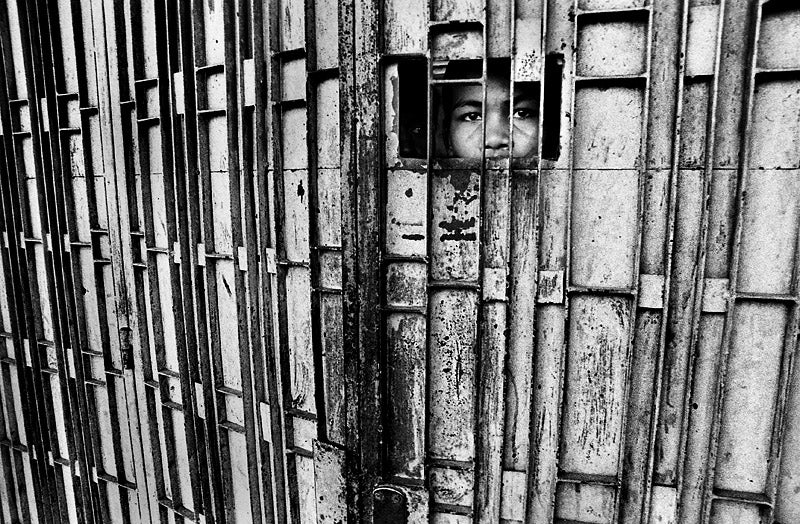
People who use drugs in Cambodia are at risk of arbitrary detention in centers where they suffer torture, physical and sexual violence, and other forms of cruel punishment, Human Rights Watch said in a report released today. Detention centers, mandated to treat and ‘rehabilitate' drug users, instead subject them to electric shocks, beatings with electrical wire, forced labor, and harsh military drills.

In the 93-page report, "Skin on the Cable," Human Rights Watch documents detainees being beaten, raped, forced to donate blood, and subjected to painful physical punishments such as "rolling like a barrel" and being chained while standing in the sun. Human Rights Watch also reported that a large number of detainees told of receiving rotten or insect-ridden food and symptoms of diseases consistent with nutritional deficiencies.

"Individuals in these centers are not being treated or rehabilitated, they are being illegally detained and often tortured," said Joseph Amon, director of the Health and Human Rights division at Human Rights Watch. "These centers do not need to be revamped or modified; they need to be shut down." According to the report, people are frequently arbitrarily arrested without a warrant or without reasonable cause, often on the request of a relative or as part of periodic police round-ups of people considered "undesirable." They are often lied to - or simply not informed - about the reasons of their arrest. They have no access to a lawyer during their period in police custody or during the subsequent period of detention in the centers. Military drills, sweating while exercising, and laboring are the most common means used to "cure" drug dependence in these centers, which are operated by various government entities, including military police and civilian police forces. "Vocational training" activities which take place in some centers appear motivated by benefits to the center staff as opposed to detainees. The report highlighted the large number of children and individuals with mental illnesses also detained within the centers. Both groups, according to the report, were subject to similar physical abuses.

Human Rights Watch called on the Royal Cambodian Government to permanently close its drug detention centers and conduct a thorough investigation of acts of torture, ill treatment, arbitrary detention, and other abuses occurring in them. Torture and inhuman treatment are prohibited by both the government's international human rights obligations and the Constitution of Cambodia.

"The government of Cambodia must stop the torture occurring in these centers" said Amon. "Drug dependency can be addressed through expanded voluntary, community-based, outpatient treatment that respects human rights and is consistent with international standards."

Selected accounts from individuals interviewed for "Skin on the Cable":

"I think this is not a rehab center but a torturing center." - Kakada, former detainee

"[A staff member] would use the cable to beat people...On each whip the person's skin would come off and stick on the cable..." - M'noh, age 16, describing whippings he witnessed in the Social Affairs "Youth Rehabilitation Center" in Choam Chao

"[After arrest] the police search my body, they take my money, they also keep my drugs...They say, ‘If you don't have money, why don't you go for a walk with me?...[The police] drove me to a guest house.... How can you refuse to give him sex? You must do it. There were two officers. [I had sex with] each one time. After that they let me go home." - Minea, a woman in her mid 20's who uses drugs, explaining how she was raped by two police officers

"[Shortly after arrival] I was knocked out. Other inmates beat me....They just covered me with a blanket and beat me...They beat me in the face, my chest, my side. I don't know how long it lasted...The staff had ordered the inmates to beat me. The staff said, ‘The new chicken has arrived, let's pluck its feathers and eat it!'" - Duongchem, former detainee

This press release also available in: Khmer

Reblog this post [with Zemanta]

Endangered Species

Librarians - The thin blue line between you an...Image by Travelin' Librarian via Flickr
News librarians are a dying breed

When it comes to the layoffs and buyouts that have hit newspapers over the last couple of years, copy editors seem to be the most at risk of losing their jobs. So it wasn’t too much of a shock when Leslie Norman’s husband was laid off from his copy editing position at The Wall Street Journal.
But then last year she was let go from her job as a news librarian at the Journal, and suddenly it seemed as though they were both working in at-risk, or perhaps even endangered, roles. (Her husband has since been brought back to work on contract for the paper.)
“We didn’t [think that way] until we were laid off,” she said. “I never saw my layoff coming—it was a total surprise.”
The loss of copy editors has been the subject of much lament and debate in this corner, as in other places. But the plight of librarians seems to attract less fanfare and hand wringing, as if we’ve all been shushed from saying something.
Norman doesn’t think things will ever be the same for news librarians.
“I see the news library as it once existed as probably dying,” she said. “But in many newspapers, it’s evolved into something else.”
According to data collected by Michelle Quigley, a researcher at the Palm Beach Post, over 250 news librarians (sometimes called news researchers) lost their jobs in the U.S. since 2007. Membership in the Special Libraries Association News Division, an organization for news librarians, has fallen to below 400 from over 1,000 in the 1990s. Entire news libraries have been shuttered and replaced by consultants or outside vendors.
Last year, the Detroit Free Press got rid of its last three librarians, eliminating the department entirely. Also in 2009, the Atlanta Journal-Constitution let go of fifteen librarians, which also resulted in the closure of its research department.
It’s not hard to see why newsroom budgeters cast an eye towards the library when cuts have to be made. Most news librarians are never given a byline, though some receive research credit at the bottom of articles. The perception is that they mostly help archive a paper, a task that can, to a certain degree, be automated. Just as copy editors get the hook because they don’t generate content and therefore can’t fill space or generate pageviews, news librarians are shown the door because they’re seen as a holdover from a time when newspapers kept detailed clipping files on major topics and personalities, and when the “morgue” was a critical part of a paper’s operations.
Now that every reporter and editor has access to Google and a wide range of search technologies and online databases, the thinking is that they don’t need to call upon the Boolean expertise of librarians. You can see how it makes sense—except then the facts start to get in the way. In fact, the modern news librarian seems in many ways more important than ever. Even those old clipping files still come in handy.
When I spoke with Amy Disch, chair of the Special Libraries Association News Division and library director of the Columbus Dispatch, she said her team had accessed clipping files and hard copy photo archives more than ten times that day alone. But that’s the least of what they do at the paper. In addition to providing research services to support reporters, the library runs a newsroom intranet and wiki, provides data analysis for investigations, and offers a range of other useful services.
Then there’s the reality that just because reporters can access Google or search Nexis and other databases, it doesn’t mean they know how to use them properly.
“Reporters are on deadline and they want to do things as quickly as possible,” Norman said. “Over years, they’ve come to feel, ‘I can do my own research, I don’t need an intermediary anymore.’ Some of the problem with that is they don’t have time to get the best research if they do it themselves. Also, because of the amount of information out there, they may not have the understanding or wherewithal to go through and filter out what’s good and what isn’t.”
True, reporters and editors often make mistakes because they couldn’t find the best information, or because they went with whatever came back on the first page of a Google query. At a time of information abundance, it’s essential that newsrooms have information experts on staff. That’s what news librarians are.
“We can find the information in a lot less time because we know how to drill down in a database,” Disch said. “We know good sources to go to where you can quickly find information, so we can cut a lot of time for [reporters] and leave them to do what they do best, which is interviewing and writing. I have my specialty, and they have theirs.”
Members of Disch’s four-person team are embedded within the newsroom. They sit with reporters and editors and take part in meetings and discussions. If someone needs to find a particular kind of information, they can do it right away. They also fill another increasingly important role: training.
“The paper holds a yearly editorial clinic, and this year our department is getting a featured spot,” she said. “We decided to call our presentation ‘Keeping Current and Paying it Forward’.”
The session will focus on “using RSS feeds and Web monitoring tools, and sharing content via Facebook and Twitter.” The librarians have also given seminars about using Excel, Facebook, and Twitter, and on how to create alerts in Nexis.
That’s not what they were trained to do—and all four Dispatch librarians have masters degrees in library sciences—but Disch said it’s essential they evolve their skills and knowledge to meet the needs of a modern newsroom. That’s true for every position in journalism: evolve or prepare to move on.
Disch makes an effort to keep her team front and center within the organization, rather than hiding away in a musty library. Recently, for the first time, librarian Julie Albert received a full byline in a major front page story about domestic violence. (Albert performed data analysis of court cases.)
The most famous story about a news librarian didn’t involve a full byline. Liz Donovan was working as a librarian at The Washington Post when two young reporters were hunting down a story about a burglary. Yes, I’m talking about that burglary.
At one point, later dramatized in All The President’s Men, Woodward and Bernstein were trying to track down information about a specific person. Off they went to the paper’s library to ask for the clipping file on one Kenneth Dahlberg. Here’s how the scene unfolded, according to a post on NPR’s As A Matter of Fact blog:
The long-haired librarian tells him they don’t have a clip file for Dahlberg. OK. But I checked the photo file, she said, and we do have a picture of him. The photo identified Dahlberg as a Republican fundraiser, and was an important early clue in the unraveling of the Watergate plot. Woodward didn’t ask her to check the photo file; but librarians don’t wait to be asked!
Donovan died in December, at the end of one of the worst years ever for news librarians. The tributes to her, relatively few though they were, reminded me of the obituaries for one of the last great newspaper proofreaders, Audrey Stubbart of the Examiner in Missouri. (Unlike today’s copy editors who often have to perform with pagination and other tasks, her role was to check grammar, spelling, and facts in every part of the paper.) She retired in 2000, and died not long after at the age of 105. Here’s an anecdote from a story about her retirement:
“When we first got computers in the newsroom, it was suggested that we wouldn’t need a copy editor,” said [former sports editor Tom] Dickson, now a professor of journalism at Southwest Missouri State University.

“Well, the first issue came out after that and we found out we needed one. It was a mess,” Dickson said with a chuckle. “Audrey was again asked to read stories.”
Desktop publishing and computers vanquished the newspaper proofreader. Let’s hope news librarians can evolve so they aren’t felled by the Internet and digital archives.

Reblog this post [with Zemanta]

Jan 28, 2010

Tell The Nation: Obama at One

watching the State of the Union speech last nightImage by daphne31 via Flickr

January 27, 2010

In response to our "Obama at One" forum, readers from across the country wrote to The Nation to share their thoughts on Obama's high and low points from his first year. For many readers, Obama's high point came during his inauguration. But now that the first year has passed, the hope and inspiration they once felt for Obama have turned to feelings of betrayal. Obama has sided with the corporate lawyers and the big banks instead of with the people. His slow progress is much too slow for a party that voted him in for change and reform. Still, there are some that are more forgiving, and hopeful for year number two. Below, read a selection of submissions to The Nation.

Nowhere to Go But Up

Our world outlook has gone leaps and bounds, but maybe it had nowhere to go but up. To me, the high point started with the healthcare issue. Although I do not fully agree with the bill up for discussion, it is still groundbreaking in nature, and we wouldn't have gotten this far without him. I think he will be one of the greatest presidents we have ever had and I can't wait to help him get elected again.

Kelsey Freeman, 25
Everett, WA

We Must All Have a Choice

I voted for Mr. Obama. Seems to be a likeable guy and all that, but I'm very disappointed that he has surrounded himself with advisors that seem unable to think outside the rut of their training/experiences--mainly, in the financial and healthcare sectors.

When the crisis is over, banks that didn't fail could buy up these loans that the government made. The big bad bankers will have been spanked, their toys taken away and grounded, or their banks will have failed. Take healthcare reform. Is expanding insurance coverage the only way? The British have satisfactory healthcare at one-third our per capita cost--apparently they are three times healthier (stronger, disease-resistant, less coddled) than we are. But we don't want to follow their success. Are our leaders nuts? Costs will never be contained by expanding coverage through private insurance, because the main culprit is the medical business, not insurance.

The problem is hospitals that bill our PPO fifteen times what they are entitled to, anesthesiologists that bill $88 more for the elderly, ambulance services that pad their mileage and services performed, doctors that bill $140-240 for a five-minute exam--under the twisted ethics that since the insurer is paying, they aren't stealing from the patient. To contain healthcare costs, we have to remove the profit incentive--which means government-owned clinics and hospitals staffed by civil servants. And since we must all have choice, let there be private networks (no subsidies direct or indirect) and charity networks (for those who don't want to or can't be in either of the other two networks). Seems like we are sheep following a billy goat.

Ray Kawano, 80
San Jose, CA

Start Pleasing the Citizens, Not the Banks

Let me start off by saying I am an avid fan of The Nation. The high point for Obama in my point of view has to be his demeanor. He always stays calm, cool and collected during the toughest of times. I like the fact that he takes time to understand the information inside and out. I like that fact that he doesn't just jump out in front of a camera. For instance, after the Christmas Day attempted bombing, he took the time, got all the information that he needed and then came out and spoke about what happened.

I think that he is trying to please too many people. The people he needs to worry about pleasing are the citizens, not the banks, not the insurance companies, not Congress, but the people. He needs to get that fire back in his belly. He needs to stand up for what he believes in.

I know that it is hard to get things accomplished in DC. I didn't expect him to have all his policies in place by first year's end. But I did expect him to fight for the average person. He still has time to turn things around, though. And I believe he will. I am the type of person who waits to judge somebody. So I am going to wait to judge this president until his term or terms is complete. I think that this healthcare bill was a start. I would have preferred that he started fighting for single-payer from the start instead of the public option, because maybe things might have been different. Maybe we would have a public option at this point, instead of no public option.

I think he needs to fight harder on financial regulation. We need to end TBTF and treat these bank CEOs as the criminals they are. What they have been doing over the years is a Ponzi scheme. All in all I give the president an A- because of the situation he came into. There is still a lot of time left in his presidency. JFK started off with the Bay of Pigs, he was starting to do great things until he was assassinated. I believe Obama can do the same.

Jason Edwards, 21
Philadelphia, PA

A Full House of Disappointments

The highest point was his inauguration. It was a moment I never thought I would see so soon. Unfortunately, much that transpired between election and inauguration days suggested that little good would follow.

His economic ignorance and the appallingly conservative appointments he made were, and have proven to be, huge deficiencies. His stimulus proposals and actions were woefully inadequate, and we are living with the results: few new or returned jobs and an economy really going nowhere. We also are faced with no consequential changes to our decades-old and disastrous trade policies.

Perhaps my biggest fundamental disappointment has been his adoption of many of the Bush policies regarding state secrets and discarding fundamental constitutional protections as well as his failure to rid himself of the politicized Bush US Attorneys (especially in Alabama). As he is supposed to be a professor of constitutional law, I am astonished by the actions of his seemingly clueless attorney general.

His lack of forceful leadership on healthcare reform is also deeply troubling. He had a significant majority of Americans on the side of serious reform. But he bailed on us. He let DLCers like Emanuel run the White House effort. He let himself be rolled by all concerned.

I no longer expect strong leadership from this man. His insight is hugely suspect. I never confused him with a dedicated progressive or liberal. But when you are dealt a hand full of aces, I do expect strong, intelligent action. He waffled instead and got bluffed out of winning hands on so many fronts. Unless he changes course (and there is still a little time to do so, as did FDR), his excessive caution and his retreaded Clinton administration advisors with all their lessons learned incorrectly will have doomed his presidency to failure.

Norm Conrad, 64
Seattle, WA

Obama Isn't a Fighter--He's a Liar

I contributed donations to his campaign and believed his rhetoric. I voted for him because I felt that he was a man who was trying to stand outside of the establishment and to see what Washington could do for America by looking at Washington from outside the boundaries of the capital from a citizen's perspective. Instead, he surrounded himself with the establishment. He has done everything to help out the corporations. Economically, he gives American tax money to Wall Street without conditions and does it through back channels.

I've heard a lot of people try to blame it on Geithner, but Geithner works for Obama. Obama picked him, and you can't tell me that Obama has no idea of the underhanded back channels that Geithner is using to funnel as much money as possible to Wall Street. If Obama is so smart, how can he not know this? He taxes the banks, which will just be pushed onto the customers, instead of taxing the bonuses like England and France did. He knows these options and purposely chooses against them.

With healthcare, he actively worked against the public option that he promised us. He gives American tax money to the pharmaceuticals so that they won't work against the bill. He is mandating that Americans purchase private insurance without regulating their prices. There are plenty of empty houses on the market. I have access to them. I don't go out and buy them all because I don't have access to them; they are on the open market. I don't buy them because I can't afford them.

He has shown no sign of being a champion of the people and hasn't fought for the people. He didn't even talk about "rolling up his sleeves" and working to get healthcare done until after the Senate came up with a bill. He isn't a fighter.

In hindsight, if I knew then what I know now, that I would be getting an establishment insider, I should have chosen one who was at least a fighter. If I could go back I would instead voted for Clinton. At least she has a pair.

Obama has shown that he is a "Blue Dog" and that he is more worried about helping the corporations than the American middle class. He isn't progressive at all. He hasn't even begun to set up the green jobs and change in industry that he promised us, and isn't giving the progressives anything because as Rahm Emanuel feels, we'll always be there for the Dems. who are we going to chose... a Republican?

Well, if this is what the next three years is going to be, in 2012, I have chosen. Since Obama isn't working for me, one of those that worked for him, then in 2012, he can do it himself.

Scott Jahner, 31
Jacksonville, FL

Some Advice from Europe: Do Not Compromise

Looking at Obama's first year from the viewpoint of an American who works in Europe much of the year, I can say that his marks are considerably higher from a European point of view than they are at home. This is remarkably similar to the situation when Bill Clinton was in office.

The willingness to have a meaningful dialogue with allies, to listen as well as lecture, especially when the American president has a full command of English, was a breath of fresh air. The shrill, hyperbolic tone of the Republican opposition struck a highly negative chord, especially in Germany, where so much of the rhetoric of the Republicans in Congress and their right-wing media arm of Fox "News" reminded the Germans so much of what happened to their country when such people were allowed to attain power almost eighty years ago. This, in itself, is not an assessment of Obama, but his willingness to stand up to it did not go unnoticed.

Indeed, if there has so far been any kind of low point to Obama's first year, it is the disappointment that he appeared to bend over backwards as a gesture to an opposition that was clearly not in the slightest inclined to compromise on its hard-line positions. Obama is not at fault for extending a hand to his opposition, but he is expected to cease extending that hand when fingers start getting bitten off. Bush (i.e., Cheney) used every trick in the book, whether legal or merely questionable, to run roughshod over a minority Democratic opposition.

Obama, on the other hand, seems reluctant to use powers at his disposal to act in accordance with a large Democratic majority in both houses in Congress. There is great hope that he will use these powers decisively in the next year, not only to shore up his own support but also to underpin those members of his own party up for re-election this November.

The healthcare reform movement seems to have gotten stuck in some kind of mire, with special interests practically lining up at some proverbial cashier to buy off those legislators they deem susceptible to such sway. Their willingness to be so brazen about it, along with their apparent success, is troublesome, to say the least. On the other hand, the economic stimulus seems to be bearing fruit, and although this will never be fast enough to those out of work and without benefits or stricken by catastrophic illness, it is slowly but surely proving its detractors wrong.

The biggest disappointment was allowing White House Chief of Staff Rahm Emanuel's personal animosity for Howard Dean to exile Dean from his coveted position as secretary of health and human services. The country had perhaps no one else with the perfect combination of dedication, expertise and experience to fill this position. Obama, fairly or unfairly, and though he owed Dean his fairly smooth sail into office in 2008, owed Dean no obligation to appoint him to HHS, but he certainly owed it to the people of the United States to have such a uniquely suited individual in that position. That Dean was shut out of that position for what seems to be a petty vendetta is a black mark on Obama's record that is in no way mitigated by the fact that Emanuel is most likely the guilty party. If Obama is the place where the buck stops, then this was ultimately his call, and I think he blew it.

Other than that, I think that if Obama would pay a little less attention to the shrill extremes of his opposition, and a little more to the kind of people that worked tirelessly, and for free, to get him into the Oval Office, I think he'll be fine. Still, that is one big "if."

Marc Emory, 57
Dallas, TX/Duesseldorf, Germany

No Policy Reform? Buena Suerte, Obama

Obama's election was a signal of hope within moments of great despair. The neoliberal economy was resulting in a social quagmire for the great majorities of the US population. The highest moment is yet to come, but healthcare reform is a step in the right direction.

The greatest disappointment is how slow this administration has moved to get rid of the most infamous policies of the past administration, especially in foreign policy. For example, it seems a cold-blooded attitude--their silence over the Gaza Massacre and their veto over the Crimes of War report in the UN.

Policy toward Cuba, Haiti, Honduras and Puerto Rico are stagnated in the cold war era, which is preposterous. Obama is slightly to the left of Clinton, but far right to Jimmy Carter's era. It appears that those who worked so hard to get Obama elected--organized labor, center-left grassroots organizations, etc.--have been paid with a cold shoulder when advancing their principal political objectives. Buena suerte, Obama.

Rafael Arroyo Mercado

You Are Either With Us or Without the Will to Change

The high point has been that he and his family are actually occupying the White House. I think it made many black Americans proud and simultaneously shocked that such a thing could happen in a racist country like America. Hopefully, the longer they are there, the more it will serve to unite us.

However, I'm sharply disappointed that any one of us Americans is subject to become "disappeared" according to the way the Bush administration ruled over the country. Yet President Obama has done absolutely nothing to roll back the dictatorial, subversive and militaristic way in which law enforcement is encroaching upon our freedoms.

We're going down the wrong road and not even a man of Obama's integrity can make it right. I know that most Americans understand what integrity is, yet the ruling minority attempts to obfuscate the majority by using Joe the Plumber, Sarah Palin etc. to foil such extremely important qualities. That's where Obama needs to use some audacity of the type Bush brandished when he declared that you are either with us or with them. For example: you are either with the majority of Americans, 70 percent of whom want single-payer healthcare, or you are with them, the minority who don't want change.

Thomas Davey

A Gifted President with a Dysfunctional Congress

Even a gifted president with national support cannot cancel out a dysfunctional Congress that is bought and sold by corporate and other special interests. They have special privileges and little accountability since few are removed. They forget that they are elected to represent us, not to make fortunes, to get re-elected or for other sundry purposes that are generally labeled "self-interest."

What has happened this year reveals how the system works and how it uses power. Perhaps the phrase "common good" is not understood. The high points include hope of something different as well as a nominee for the Supreme Court; Obama's willingness to take his time and think, not just react (for the most part); his openness; his insistence on healthcare. I see Copenhagen as starting the conversation.

Low points include his bowing to military solutions and allowing detention centers, military bases, etc.; not using the bully pulpit when needed with Congress and corporate and financial enterprises.

Lisa Smith, 66
San Diego, CA

The People in This Country Need a Voice

In my opinion, the highest point of President Obama's first year in office was his receipt of the Nobel Peace Prize, despite his reluctance to accept it because of his rather meager record and contribution on the world's political stage. It is amazing to me that the mere utterance of his aspirations for a more equitable world garnered him this most prestigious prize. He received a lot of flak for this and he took the high road instead of firing back to his critics, especially on the right.

The sharpest moment of disappointment for me was President Obama's relenting to omit the public option from the current healthcare bill, which is now being negotiated by the House and Senate for final passage. This option should never have been taken out of the bill. It would have made the lives of millions of poverty-stricken Americans much better. And it would have made President Obama a more respected political figure. Political expediency is often not a good thing for people in this country who have no voice whatsoever in Congress. Too bad. It speaks volumes for how our political system can be a detriment to Americans.

Antonio T. Pangelinan, 56
Castro Valley, CA

Media Madness

I think President Obama's high points are many. He has provided changes to actions made by George Bush that hurt mankind, both physically and environmentally. He has worked hard to repair relationships with countries we need in our corner. Do we hear about these things? No! which brings me to my sharpest moments of disappointment, and who perpetuates them:

The media! Who continually promote those who wish to harm hard-working middle-class families by sucking the tits of Wall Street. The media persistantly giving an open mike to "birthers," "deathers," reporting BS like Sara Palin's death panels, the ex-vice president (who should be in jail) and all the other factless morons who invade our living rooms every damn day. They are allowed to spread unfounded rumors and down right lies, without question.

In his first year President Obama has done more for this country than any other in recent history. Those who are truly uninformed will always be uninformed and we can't change that, unfortunately, but why do we allow our media to be the ones who perpetuate the lies?

Fran Balasquez

20 Points

Here are the high points:

1) Healthcare reform, including children (CHIRP)
2) Establishing a national electric grid.
3) Funding electric car development
4) Funding green jobs development
5) Allowing state medical marijuana
6) Restoring Community Block Grants to fight poverty
7) International consensus before action
8) Ending missile defense in Eastern Europe
9) Scrapping F-22 funding
10) Ending no-bid contracting for defense
11) Withdrawing from Iraq
12) Closing Guantánamo
13) Ending CIA secret prisons
14) Re-affirming Geneva Conventions
15) Appointing first Latina to Supreme Court
16) Appointing first openly transgendered person
17) Lifting global gag rule on abortion
18) Ending twenty-year ban on neededl exchange to combat AIDS
19) Authorizing the EPA to enforce the Clean Air Act against Big Coal

Here is the low point:

20) Failed to rein in moneyed special interest groups and their lobbyists, which weakens all progressive reform efforts.

Metteyya Brahmana, 47
Santa Cruz, CA

Highs and Lows of a Nobel Prize

Lowest moment: accepting the Nobel Peace Prize.
Highest moment: winning the Nobel Peace Prize.

Without a doubt, in my mind, the Nobel Prize event is both his highest and lowest moment. It's high because it shows how much faith or perhaps desperation the world has for a potentially strong leader like Obama. Winning was a culmination of at least his foreign policy rhetoric, positively marking his one year of presidency. However, the fact he accepted a prize symbolic of humankind's most formal aspiration of peace, and that much of the world went along with it, is a very low point during his time in office and for all of us.

Joe Sabet, 28
Garden Grove, CA

A Smile and Stiletto

The high point was his election and inauguration and his seeming willingness to try to extend the New Deal and Great Society. Knowing full well our history, I still shudder with profound emotion upon thinking of that election night and the gathering in Chicago (I'm a middle-aged white guy, by the way). My major disappointments are two: the capitulation to the bankers, the hiring of Geithner and Summers (although great credit must be given to the hiring of Elizabeth Warren), and turning a deaf ear to the likes of Paul Krugman and Stiglitz. I was astounded that Obama did not see that we needed (and need now) an FDR-style works program. I was and am astounded that Obama put his complete faith in Reaganomics and nothing in Keynesian economics. This is gonna bite him hard and may well make him a mediocre one-term president.

Second, and in regards to healthcare, the "Tea Party," etc., his timidity to call people out; his lack of fight; his lack of passion (when people are dying); his innate diplomatic impulses to immediately compromise and concede. I didn't expect this or see it prior. I am still somewhat understanding because I suspect his handlers--one in particular--have been busy playing politics (Clinton era) and not encouraging true leadership.

Someone said recently that FDR carried a smile and a stiletto in his pocket---Obama needs to go beyond the love affair with his smile (which is fantastic) and learn how to use that stiletto--he has to learn how to kill; because his opposition knows and does it as easily as first morning's breath over a cup of coffee.

John Lawrence, 55
Key Largo, FL

Won't Get Fooled Again

The high points of Obama's first year in office was the fact that he won the election, that the nation once again had reason to hope, that change was possible. I should have known better. That's what a charismatic public speaker can do. Damn! Hoodwinked again!

In his first year in office our semi-black corporate shill of a president has been just a continuation of Wall Street business as usual. Even more spending on militarism, habeas corpus denial, healthcare in an even worse quagmire. At every step he's played the hand of corporate America. And the military-industrial complex marches on under a new banner. I'm sorry I wasted my vote on Obama, and now you must excuse me, for reverse peristalsis is setting in. I won't be fooled again.

John R. Hall

Obama Brings Some Relief

I hit a high point every time the media covers President Obama, negative and positive. The eight years preceding last year I could hardly read or watch without feeling deeply embarrassed (and worried!) for the United States--in regards to terrorism, economics, baseball, substance abuse, education, etc. I essentially breathe a sigh of relief every time President Obama is brought up as a topic of interest. Because no matter what our president's critics say, they can't accuse him of being illogical, unintelligent or poorly spoken.

I suppose my biggest regret is that the Republican Party has so rallied itself around opposing President Obama that they have alienated a man who has more closely aligned himself with professed Republican policy interests than with his own Democratic party. Then again, of course the people, the independents and the pundits cry for a moderate candidate to unite Congress, only to cry louder to protest said moderate candidate after they elect him!

Natalie Morris

Nice Swing, but No Follow-Through

President Obama's high point is his well-crafted speeches. The president's low point is his follow-through. From the start it seems that those who would ignore him knew that they could get away with it. Nut-and-yahoo refused to stop new settlements at the request of the president but was more than pleased that the US vetoed the UN resolution calling Israel guilty of some war crimes in the Gaza invasion almost immediately thereafter. This was the start. Since then everybody realized that Obama may be "disappointed" in them, but that would be the extent of his reaction. Oh, and by the way, he is still talking about a bipartisan solution to our problems.

Norman Buchanan

A Failed Promise

The high point? That's easy: his election. Such promise, such potential, such hope. I felt proud to be a citizen. It appeared as if we had irretrievably rounded the corner of racial biases, as if we finally had someone in the White House who reflected our progressive dreams.

The low point? That's a little tougher because there's so many of them. It started with his appointment of Summers and Geithner and the bank bailout. But I was willing to give him the benefit of doubt. Maybe it was better to put the foxes in charge of the chickens. Maybe he knew something I didn't. Then he escalated the war in Afghanistan and my confidence was seriously shaken. And all the while he failed to lead the healthcare effort, despite his campaign promises. By the time Lieberman, Nelson and their ilk had dictated their terms on a pliant Senate, I had lost all faith in him. And lets not forget his failure to act on "don't ask, don't tell" and to bring the war criminals of the Bush years to account.

But I guess the absolute low point would be his statement two days ago that Congress should not "jam" the healthcare bill until Scott Brown was seated. That takes real gall! The Democrats control two branches but legislating in accord with the majority of the voting public is considered "jamming." He is either delusional or just another paid front man. I'm done with him and his stooges. He'll be a one-term president, and good riddance. Let's hope a real populist rises from the ashes of Obama's failed promise.

Stefan Athanasiadis, 57
Milan, IN

We Want a Pitcher, Not a Glass of Water

No question, Obama's first year has been a disappointment. Not because of the economy; nobody could have fixed that right away. But because he doesn't stand up for what he believes. Instead of taking a lead on everything from the ineffective way or "war on terrorism" is being waged to the drive for real healthcare reform, he has either kept the status quo ante or hid behind Congress. As we used to chant in Little League, we want a pitcher not a glass of water. Obama seems barely even to be a glass, with no water in sight.

Tom Hutton

Beneficial Bo

The high point: Obama selects the family dog.

The low point: Everything else.

Alex Hendrick, 47
Los Angeles, CA

Desperate, Not Disappointed

"Disappointment." How typically American to choose such a limp and measly word to use in light of the truly frightening point in history that our country, and the world, finds itself in. But since that is the word you have chosen: I have no "disappointments" because Mr. Obama has performed exactly as I expected him to, which is why I didn't vote for him.

My "disappointment "continues to be with the woefully and willfully uninformed, ignorant, arrogant and childish American people who allow themselves to be lulled into submission by increasingly astute spin doctors who function at the behest of powerful corporations, to the detriment of us all (and by "us," I mean the world). One can only hope that our national somnambulism will end and true leaders like Dennis Kucinich, Russ Feingold, Cynthia McKinney, Alan Grayson and a handful of others will leave the confines of our corrupt political system and start a new party that is truly democratic, that they will enlist the aid of some of our own, and other countries', great thinkers (Howard Zinn, Ralph Nader, Noam Chomsky, Joseph Stiglitz, Tariq Ali, Arundhati Roy), and that they will promote an intelligent, free and independent press (Amy Goodman, Glenn Greenwald, Laura Flanders, Al Jazeera News, Mosaic News, LinkTV).

Our country, as it stands now, is an imperialistic bully that squanders trillions of dollars for a military budget that brings no security, but instead endangers our own citizens and slaughters millions around the world. Meanwhile, thousands of Americans are dying from lack of adequate healthcare, our children are woefully uneducated, our economy continues its steep downslide and our infrastructure is crumbling. Those are the facts, and we'd better face up to them very, very quickly. Disappointed? I think we're desperate.

Terri Tafreshi, 57
San Rafael, CA

Still Holding on to Hope

The sharpest moment of disappointment is obviously the Massachusetts election. But even before that I was dismayed to see that the Obama administration was choosing to ignore its base and any kind of progressive change in this country. The healthcare thing was a horrible experience for everyone, Democrat and Republican alike. The polls were showing that the public wanted the public option. They got it when the president and the Congress didn't. The easiest thing would have been to enact Medicare for everyone. It would have been long done and moved on down the line. Obama has dithered and waffled and used too many words and not enough action. Wall Street and the Banks continue to run amok. People are still getting screwed and they know it.

Right now is our lowest moment, I hope. There is nowhere to go but up. The president's reaching out to other nations has been the high point. Also, he and his wife are a class act. For those two things we can be proud.

Sharon Rasey

Downhill Since Election Night

My high point was being part of the ecstatic crowd in Times Square election night. It has been downhill since.

My biggest disappointment was how Obama did not start off with a strong, symbolic step that he could have easily and unilaterally done, such as ordering the Joint Chiefs of Staff to end discrimination against gays in the military. Disappointment has continued unabated, especially with his healthcare betrayal and bank sellout.

Steve Juniper, 71
Berkeley, CA

Reblog this post [with Zemanta]