Jul 1, 2009

China Delays Order for Green Dam Web-Censoring Software

BEIJING — Facing strong resistance at home and abroad, China on Tuesday delayed enforcement of a new rule requiring manufacturers to install Internet filtering software on all new computers.

The delay by the Ministry of Industry and Information Technology was announced through Xinhua, the official news agency, one day before the July 1 deadline for the software to be installed on all computers sold in China.

The software, called Green Dam-Youth Escort, has caused a torrent of protests from both Chinese computer users and global computer makers, including many in the United States, since the government order became public in early June.

The Obama administration has officially warned China that the requirement could violate free-trade agreements, and sent trade officials to Beijing recently to press the government to rescind the decision. In Beijing on Tuesday, a United States Embassy spokesman said Washington welcomed the announcement.

China has said the software is designed to filter out pornography and violence to protect minors, but many experts say it can also block any other content that the authorities deem subversive.

The ministry said the mandatory installation would be delayed for an indefinite period to give computer producers more time to put the order into effect.

As a practical matter, the abrupt postponement bows to reality because most of China’s computer retailers have large stocks of machines, manufactured months before the decree was announced, that have yet to be sold. Many global computer makers have declined to say how they would comply with the requirement, apparently hoping that the government would delay or reverse its decision under international pressure.

The filtering software has been the object of furious online debate since the requirement to install it was disclosed. The Ministry of Industry and Information Technology, which licensed the technology from two Chinese developers, says the software automatically blocks Web surfers from seeing “unhealthy Internet content.” Updated lists of banned content are automatically downloaded onto users’ computers from the developers’ servers.

But the software’s current list of banned words, posted online by Chinese hackers, is laced with political topics. Businesses have complained that the software is so poorly designed that it opens computers not just to government snooping, but also to hacker attacks by vandals and criminals.

On Friday, the leaders of 22 international business organizations delivered a letter to Prime Minister Wen Jiabao arguing that Green Dam flouted China’s professed goal of building an information-based society, and that it threatened security, privacy and free speech. A day earlier, the European Union protested that the software was clearly designed to limit free speech.

Global computer makers have contended that they are being forced to install untested software for purposes that they may regard as objectionable.

In Washington, the Business Software Alliance, a group representing software makers worldwide, said Tuesday that it was encouraged by the government’s delay and hoped for “a thorough examination of the related technology issues.”

Green Dam works only on computers that use Microsoft’s Windows operating system. So far, no version has been released for Linux and Apple’s Macintosh systems. Nor would the software be required in Hong Kong or Macao, said one expert familiar with the government’s requirement.

The Chinese government has said little about the requirement. Zhang Chenmin, the founder of one Green Dam developer, Jinhui Computer System Engineering, has frequently described the software order as voluntary and innocuous, but he did not respond Tuesday to telephone calls and text messages seeking comment.

It appeared that many computer makers had yet to comply with the directive, not only in the hope that the government would alter its plans, but also because the order gave them scant time to test Green Dam with their machines.

Some did comply. Acer, a Taiwan manufacturer that assembles many of its products in China, has said that it will install Green Dam on its machines. A spokesman for Lenovo, China’s best-selling computer brand, did not respond to a question about its Green Dam policies, although some Beijing vendors said the software had been installed on some Lenovo models.

Hewlett-Packard — the No. 2 computer brand in China, according to IDC, a market-intelligence company — has been silent on its plans, as has Dell, the third-best-selling brand. According to the Web site Rconversation, which has published leaked documents regarding Green Dam, Sony has packaged a Green Dam software CD with some of its computers, along with a warning that it is not responsible for any problems the program may cause.

Major Beijing computer retailers said most computers being sold lacked the software. One of China’s biggest electronics chains, Suning, insisted Tuesday that the order applied only to computers made after July 1, not to those manufactured before that date but sold later at retail.

“Suning is an outlet, so we’re also playing the role of monitor” to ensure that the computers have the required software, said a company spokesman, Min Juanqing. “If the computer doesn’t meet the requirement, we won’t purchase it.”

Several other vendors said Tuesday that their existing stocks of computers were manufactured in April or May, and that computers with Green Dam were unlikely to reach their shelves for several weeks.

One vendor, identifying himself only as Mr. Wu, said some buyers saw little but trouble in the government’s order. “Some of our clients are concerned about the security of the software,” he said. “I myself haven’t tried it yet, but we’ve been paying attention to it. I personally don’t want to install this software, but the government has asked us to install it for our kids’ good.

“But we can help you uninstall it if you want,” he said. “It could be easy to erase it completely from your computer.”

Huang Yuanxi and Zhang Jing contributed research. Sharon Otterman contributed reporting from New York.

Hello from Havana

by Jorge I. Dominguez

Photograph by Stu Rosner

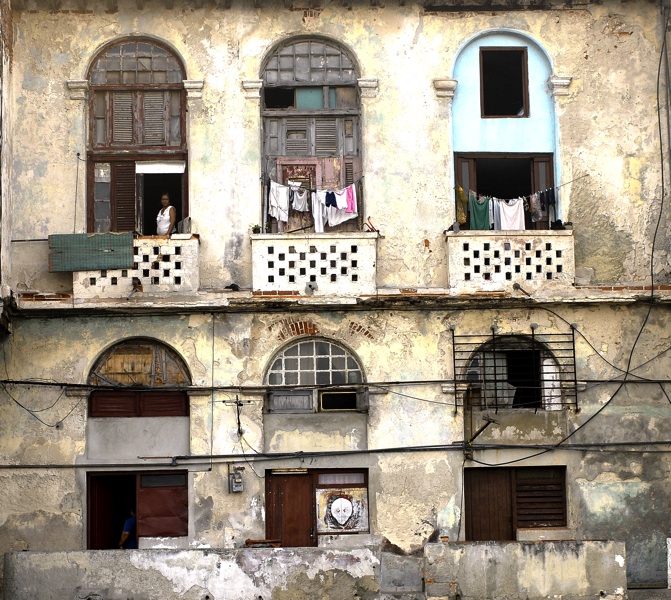
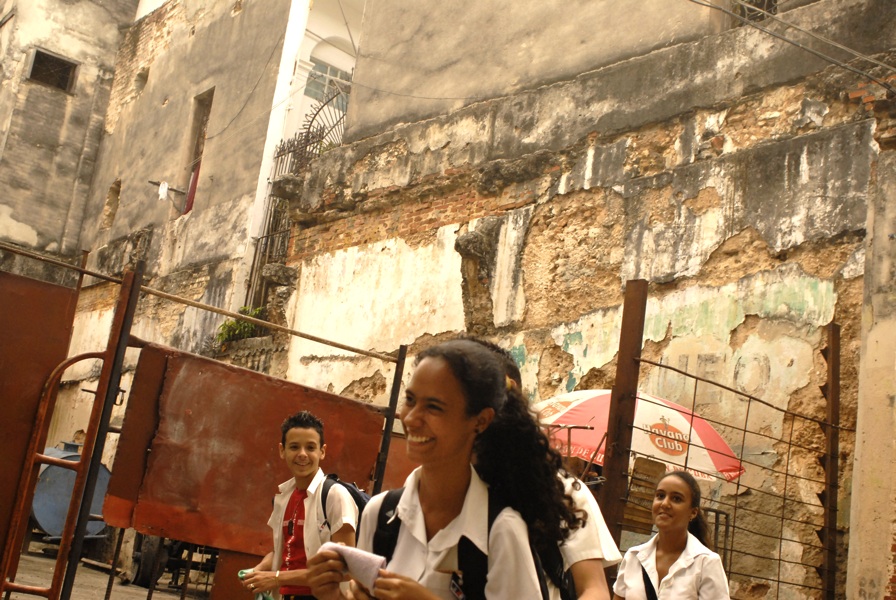
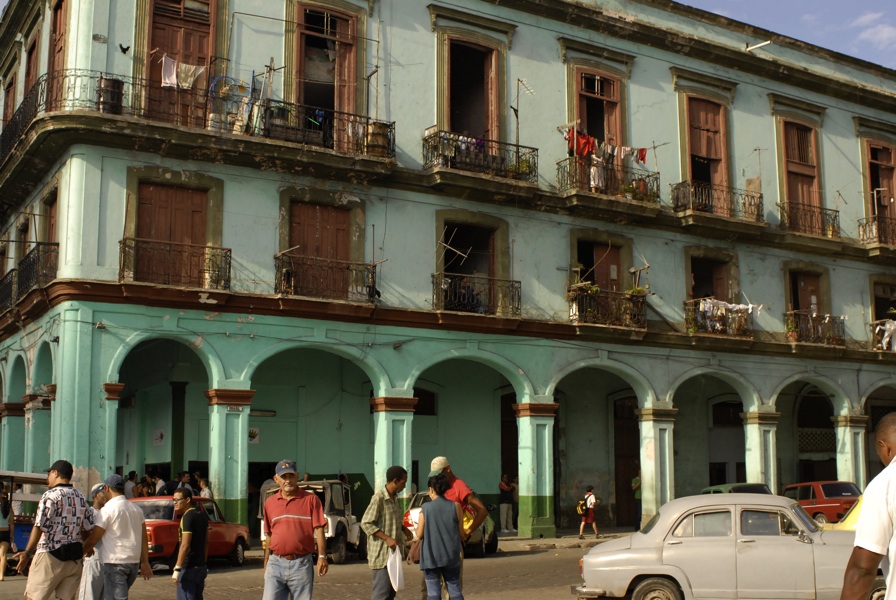
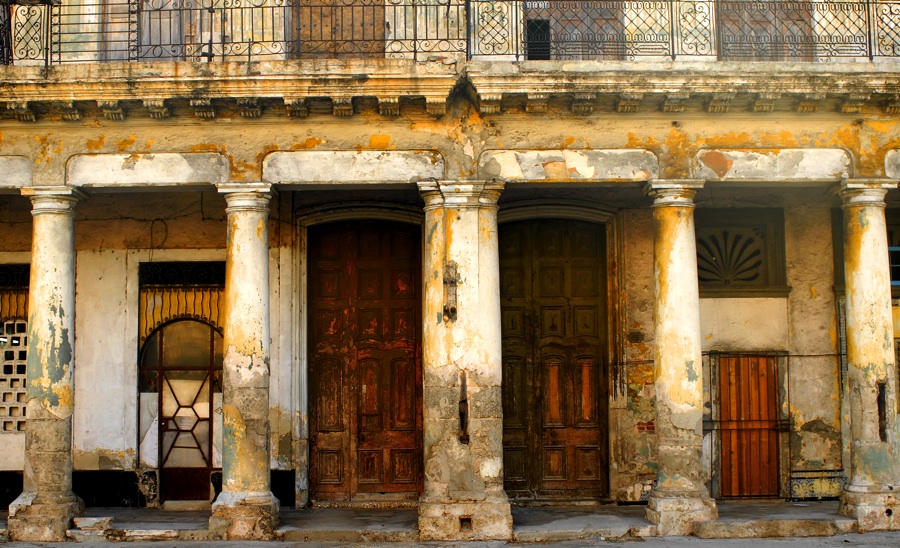
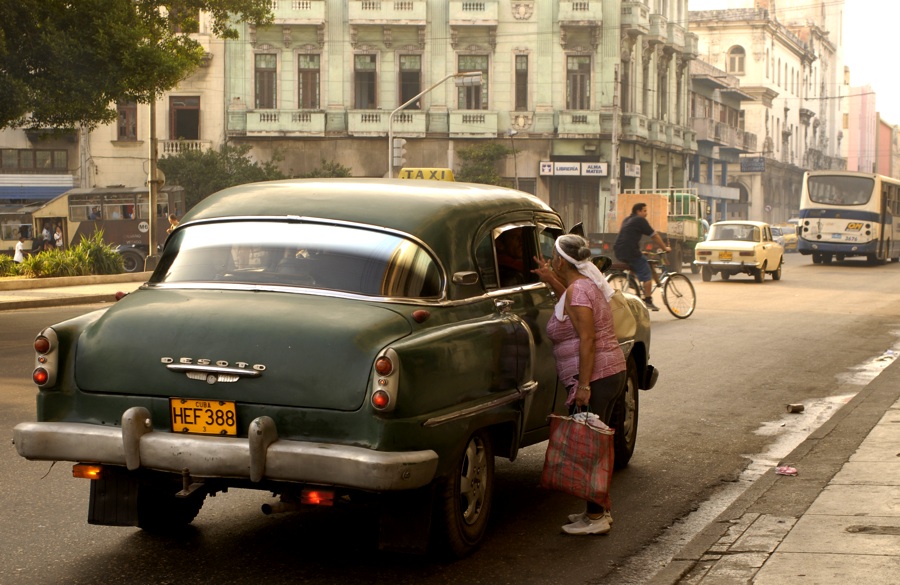
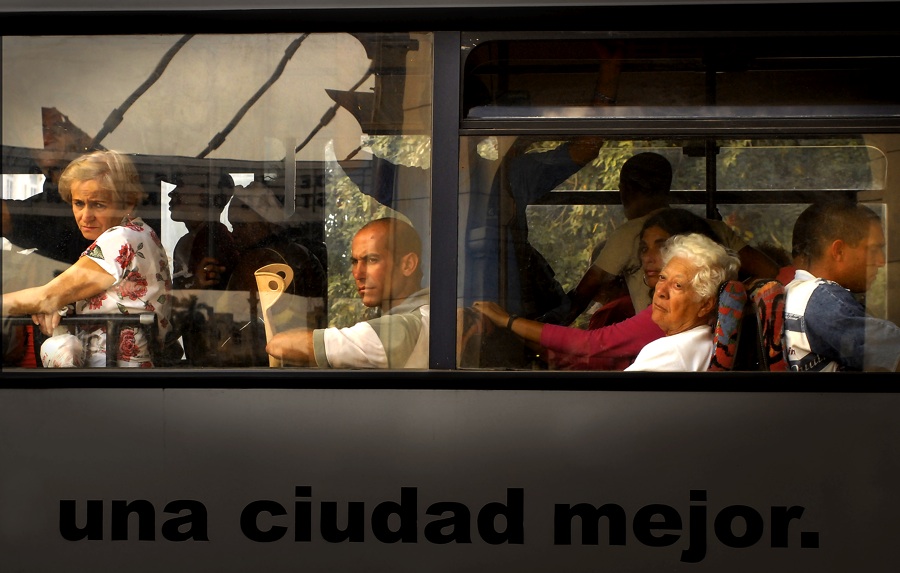
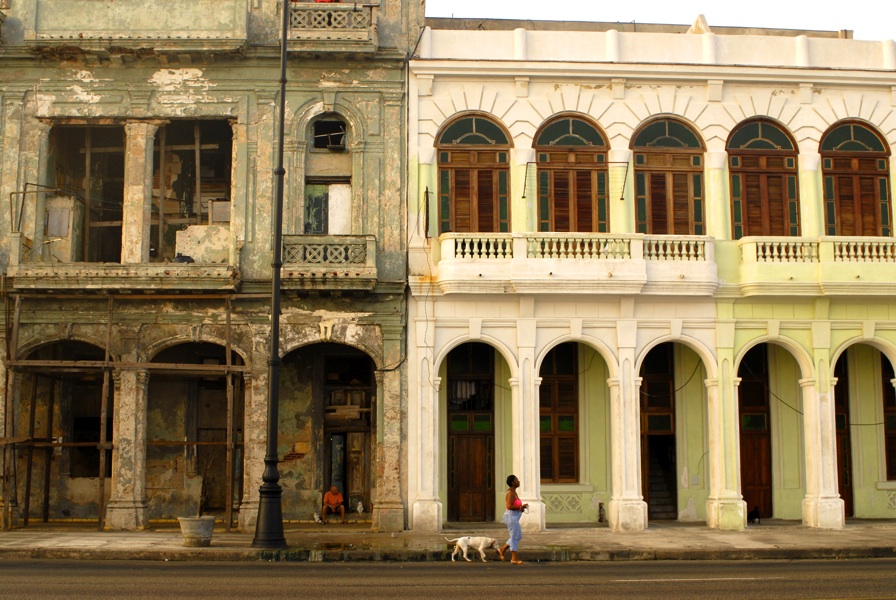
Scenes from Havana, taken in March 2007

President Raúl Castro’s principal contribution thus far to the lives of ordinary Cubans has been that television soap operas now start on time. He often reminds his fellow citizens of this seemingly impossible accomplishment, after decades during which his elder brother commanded the airwaves and disrupted all public and personal schedules. But he alluded to this achievement most cleverly last December, prompting laughter with the opening sentence of his remarks before a summit meeting of the presidents of the Latin American countries in Bahia, Brazil, hosted by Brazilian president Luiz Inácio Lula da Silva. According to Cuba’s official press reports, Castro began, “I hope that our colleague and dear friend Lula will not complain because I give shorter speeches than Chávez’s.”

The presidential summit was one stop on Raúl Castro’s first international trip since becoming Cuba’s acting president in August 2006 (when Fidel Castro was rushed to the hospital), and in that one sentence, he made several points. To most of the Latin American presidents, who did not know him well, and indeed to his fellow Cubans, he demonstrated that even a 78-year-old General of the Army could have a sense of humor. To the same audiences, but also to the incoming Obama administration, he demonstrated some distance and independence from Venezuela’s president, Hugo Chávez, notwithstanding the tight economic and political bonds between their two countries. This was only the most recent and most public instance of Raúl Castro’s reiterated mocking comparison between Chávez’s propensity to speak forever and his own much shorter and self-disciplined speeches. (Of course, all those in the audience also knew that he was poking fun not just at Chávez but at his brother, who never met a time limit he did not despise.) And, finally, he highlighted, especially for his own people, that he honors and respects the time of others.

Raúl Castro’s military style of life cherishes punctuality and efficiency. Schedules, all schedules, even those for TV telenovelas, should be observed. Even during the waning moments of Fidel Castro’s rule, the time of Cubans was frequently occupied by marches, mobilizations, and the need to listen to the logorrheic Maximum Leader. There was even a cabinet minister in charge of what Fidel Castro called the “Battle of Ideas.” Now, marches occur on designated public holidays. And the minister in charge of the Battle of Ideas lost his job in March--and his ministry was disbanded.

Economic Evolution

The nuances in Cuban public life since Raúl became president in his own right in February 2008 are evident as well in the enactment of economic-policy reforms that were rolled out immediately following his formal installation. Consider some examples. Previously, Cubans had not been able to stay at hotels or eat at restaurants designed for international tourists, even if they had the funds to pay, unless they were on official business; now they were given access to all these facilities, so long as they could pay. Cubans had also been prohibited from purchasing cell phones and subscribing to such services unless officially authorized to do so. They were not allowed to purchase computers or DVD players. Now they were able to purchase such products so long as they had the funds.

How the Cuban government adopted these changes is important. It could simply have announced a general deregulation of prohibitions regarding purchases of consumer durables, for example. Instead, the government made each of these announcements separately: one week you could stay at tourist hotels, the next week you could purchase a computer, the following week you could obtain cell-phone services, and so forth. The government even announced that some products would be deregulated for purchase in 2009 (air conditioners) or 2010 (toasters).

This method of deregulating implied a desire to win political support over time, not all at once. It communicated that the government retained the right to micromanage the economy, deregulating product by product and service by service. The government also signaled that it expected to remain in office for years to come, behaving in the same way. Finally, most Cubans knew that they could have been purchasing these same consumer durables all along, albeit only on the black market. Thus the policy of postponed deregulation implied an official tolerance of some current criminality (knowing that some Cubans would buy toasters illegally in 2008, instead of waiting for 2010), because the government valued its economic micromanagement more.

Whom the government sought to benefit was equally newsworthy. In its most revolutionary phase, during the 1960s, the Cuban government adopted strongly egalitarian policies. Many Cubans came to believe in egalitarian values and resented the widening of inequalities in the 1990s. Consider, then, Raúl’s reforms. Hotels and restaurants designed for international tourist markets are expensive; so, too, are computers and DVD players. When these economic changes were announced in 2008, the median monthly salary of Cubans amounted to about $17: that is, the average monthly salary was below the World Bank’s worldwide standard for poverty, which is one dollar per day. To be sure, Cubans had free access to education and healthcare and subsidized access to some other goods and services. Nevertheless, only a small fraction of Cubans could take advantage of these new economic policies, because the purchases of such consumer durables and the access to such tourist services had to be paid for in dollar-equivalent Cuban currency at dollar-equivalent international prices. (Cuba has two currencies; the peso convertible is a close equivalent to the dollar, whereas the peso is worth about $0.04.) Raúl’s government was appealing to the upper-middle-class professionals.

Making Difficult Decisions

I have emphasized Raúl’s penchant for humor and nuance because Washington and Miami have not taken much notice of these traits. At the same time, no one should underestimate his capacity for decisiveness. A salient feature in his biography is his long-standing role as Cuba’s equivalent of a chief operating officer. President Fidel Castro made the decision to dispatch some 300,000 Cuban troops to two wars in Angola and one in Ethiopia from the mid 1970s to the early 1990s, but it was Minister of the Revolutionary Armed Forces and General of the Army Raúl Castro whose officers recruited, trained, promoted, equipped, and steeled these armies for battle. The United States lost the war in Vietnam. The Soviet Union lost the war in Afghanistan. Cuban troops won the three African wars in which they fought. Cuba’s was the only communist government during the entire Cold War that successfully deployed its armed forces across the oceans. And the “worker bee” for those victories was Raúl.

Within the first calendar year of his presidency, Raúl gave another example of this decisiveness: the reform of Cuba’s pension laws. Cuban law authorized and funded the retirement of women at age 55 and of men at age 60. In December 2008, the retirement ages were raised to 60 and 65 respectively. The speed of the change signaled as well a key difference between the Castro brothers.

It had long been a matter of public record that Cuban life expectancy had lengthened to reach the levels of the North Atlantic countries. Cuban demographers had also faithfully recorded that Cuba has been below the population replacement rate since 1978. They had developed various forecasts that showed that its population would age rapidly, creating a vast problem of pension liabilities, and then decline. The demographers committed only one error: they expected the demographic decline to set in near the year 2020, but the population has already declined (net of emigration) in two of the last three years.

Notwithstanding this abundance of information, Fidel chose not to act. The fiscal crisis of the state was much less fun than leading street marches to denounce U.S. imperialism. But Raúl’s prompt and effective change of the pension laws, making use of information supplied by social scientists, is yet another illustration of the difference between the brothers as rulers. And, of course, the one obvious change that was not made to the pension laws demonstrates as well that even a powerful government senses some limits to its power: although the life expectancy of women is longer, the pension reform retained the lower retirement age for them. Raúl Castro doesn’t dare take a perk like early retirement away from Cuban women.

Political Authoritarianism

The Castro brothers’ styles of rule of course show important similarities on matters that do and should matter in assessing their political regime. Cuba remains a single-party state that bans opposition political parties and independent associations that may advance political causes. The government owns and operates all television and radio stations, daily newspapers, and publishing houses. The number of candidates equals the number of seats to be filled in elections for the National Assembly. The constraints on civil society remain severe, even if there has been since the early 1990s a somewhat greater margin of autonomy for communities of faith, some of which (including Roman Catholic archdioceses) are permitted to publish magazines.

The two brothers have also demonstrated a strong preference for ruling with a small number of associates whom they have known for many years. For example, when Raúl became president formally in February 2008, he had the right to make wholesale changes in the top leadership. Instead, the president and his seven vice presidents had a median birth year of 1936. Raúl went a step further. He created a small steering committee within the larger Political Bureau of the Communist Party--and the members of the new committee were the exact same seven. Raúl’s buddies are the gerontocrats with whom he chooses to govern.

Yet there are stirrings of change. Although National Assembly elections are uncompetitive, they provide a means to express some opposition to the government. The official candidates are presented in party lists; each voting district elects two to five deputies from those lists and the number of candidates equals the number of posts to be filled in that district. The government urges voters to vote for the entire list, but voters have been free to vote for some but not all candidates on the list, thereby expressing some displeasure. The number of nonconforming voters (voted blank, null, or selectively) exceeded 13.4 percent of the votes cast in the most recent (January 2008) National Assembly elections--1.1 million voters. Both the percentage and the number of nonconforming voters were slightly larger than in the 2003 election, with the largest expression of nonconformity recorded in the province named City of Havana.

Yet another sign of change arises from Raúl’s own family. His daughter, Mariela Castro, has been for some years the director of Cuba’s center for the study of sexuality. This center has been principally known, however, for its advocacy for, and defense of, the rights of homosexuals, including special training for Cuban police officers, formulating changes in regulations, and disseminating information designed to create safer spaces for homosexuals.

From the 1960s to the 1980s, the Cuban government pursued very harsh policies toward homosexuals. In the early stages of the HIV/AIDS epidemic in the 1980s, those who tested HIV-positive were automatically compelled to enter a quarantined facility at the cost of their jobs and family lives. At the time of the Mariel emigration crisis in 1980, the government activated its affiliated mass organizations to make life impossible for homosexuals, fostering their emigration under duress. And in the mid 1960s, the government had established the “military units to aid production” (UMAP). These were concentration camps to which “social deviants,” mainly but not exclusively male homosexuals, were sent to be turned, somehow, into “real men.” The commander in chief of the UMAP was, of course, Armed Forces Minister Raúl Castro.

It is unlikely that Raúl is a closet liberal, though there is evidence that he has been a loving father. It is not impossible, however, that he regrets having served as an architect of repression over the lives of many Cubans--not just homosexuals--especially in the 1960s, but also at other times. His daughter’s work during the current decade may be an instrument for elements of social liberalism.

U.S.-Cuban Relations

Raúl Castro understood earlier than his brother that the collapse of the Soviet Union and European communist regimes implied that Cuba had to change more and faster than Fidel wanted. In 1994, in the most public difference yet between the brothers, Raúl favored liberalizing agricultural markets, allowing producers to sell at market prices, even though Fidel remained opposed. Raúl showed more sustained interest in the economic reforms of China and Vietnam than did Fidel. And by the late 1990s, Raúl began to give the speech that he has now repeated many times, most notably this April in response to the Obama administration’s beginning of changes in U.S.-Cuba policies (authorizing Cuban Americans to travel and send remittances to Cuba): his government is ready to discuss anything on the U.S. government agenda.

In January 2002, Raúl even praised the Bush administration for having given advance notice of the incarceration of Taliban prisoners at the U.S. base at Guantánamo Bay. He also praised the professional military-to-military cooperation between the two countries’ officers along the U.S. base’s boundary perimeter, as well as between the coast guards in the Straits of Florida. In August 2006, his first public remarks upon becoming acting president made just two points: he did not much like to speak in public, and he was ready to negotiate with the United States. And this April, he took the time to make it clear that negotiating with the United States about any topic did, indeed, include discussion about political prisoners in Cuban jails. He made a specific proposal to exchange such political prisoners (estimated by Cuban human-rights groups as between 200 and 300 people) for five Cuban spies in U.S. prisons.

The Context for Change

The pace of political and economic change in Cuba has been slow by world standards. But the pace of social change has been very fast. Cuba’s people live long lives, thanks in part to good, albeit frayed, healthcare services--free of charge. Cuban children go to school and many become professionals. Indeed, Cuba’s principal area of export growth is the provision of healthcare services to the people of other countries. Until this most recent development, however, Cuba had exemplified how a half-century of investment in human capital could generate very poor economic-growth returns. Yet Cubans since the early 1990s have demonstrated entrepreneurial capacities in creating small businesses, whenever the government has permitted them, suggesting that with better economic incentives there could be a productive combination that would lead to economic growth. Cubans can talk seemingly endlessly at officially sponsored meetings, yet they demonstrate in other settings a capacity for insight, criticism, and imagination that could readily contribute as well to much faster political transformation.

U.S. policy toward Cuba for the bulk of this past decade has assisted the Castro government’s state security in shutting out information from the outside world: the United States banned the shipment of information-technology products, instead of facilitating Cuban electronic access to the world, and allowed Cuban Americans to visit their relatives only once every three years, instead of enabling cousins from both sides of the Straits of Florida to speak face to face about how a different, better Cuba might be constructed. (The United States has even protected ordinary Cubans from the Harvard Alumni Association, which could not lead tour groups there.) Perhaps the United States will stop being an obstacle to change in Cuba during the century’s second decade.

Iran Crisis: Can Obama and U.S. Deal with a Divided Iran?

"The most treacherous government is Britain," Ayatullah Ali Khamenei, the Supreme Leader of the Islamic Republic of Iran, intoned at Friday prayers on June 19, and I had to laugh. The Supreme Leader, in the midst of announcing a crackdown on the Green Revolution demonstrators, was sounding like the lead character in the most famous contemporary Iranian novel, My Uncle Napoleon, a huge hit as a television series in the 1970s. Uncle Napoleon is a beloved paranoid curmudgeon, the Iranian Archie Bunker. He blames everything — the weather, the economy, the moral vagaries of his family — on the British. This has been a constant theme in Iranian public life for at least 100 years, although the U.S. has supplanted Britain as the Great Satan, the source of all Iranian miseries, since the revolution of 1979. (See pictures of Neda Agha-Soltan, the young woman whose death has rallied the opposition.)

Suddenly, now, the Brits were back, and you had to wonder why. Certainly the BBC's Persian service, the most popular source of news for better-educated Iranians, was a real problem for the regime. Khamenei and various flunkies also blamed the U.S., especially the CIA, for the unrest, but the attacks on the Great Satan were muted — a curious development. Was it due to Barack Obama's initial, temperate response to the rigged election results? Was it a recognition that Obama's Cairo speech and New Year's greeting to the Iranian people had made him popular across the Persian political spectrum, a less convincing Satan than George W. Bush had been? Was it a pragmatic recognition that one way for the regime to regain credibility with its own people would be to open negotiations with the Obama Administration, thereby demonstrating that it had credibility with the most powerful country in the world? These questions, which roiled Obama's foreign policy team and the international community as the Iranian crisis ended its second week, reflected a growing sense that the Khamenei-Ahmadinejad regime would prevail against the demonstrators, but had seriously wounded itself in the process. (See the top 10 players in Iran's power struggle.)

Of course, Uncle Napoleon had a point. Iran has been a long-standing target of foreign meddling. It was not just the CIA-assisted coup in 1953 against the popular democratic Prime Minister Mohammed Mossadegh, which Obama mentioned in his Cairo speech. It was also the Western support for the Shah and, worst of all in the minds of Iranians, the U.S. support for Saddam Hussein in the Iran-Iraq war of the 1980s, including the provision of chemicals that Saddam used to concoct poison gas. This remains an open wound in Iran. (See "In Tehran, Terror in Plain Clothes.")

On election day, I interviewed a woman in southern Tehran whose husband was a chemical victim of the war. There are thousands and thousands of such people among the estimated 1 million Iranian casualties of the conflict. Indeed, the war defines the current division at the top of the Iranian establishment: the breach is between the generation that made the revolution of 1979 — leaders like Mir-Hossein Mousavi, the former Presidents Ali Akbar Hashemi Rafsanjani and Mohammed Khatami, among others — and the generation that fought the Iran-Iraq war, led by Mahmoud Ahmadinejad and his cohort among the battle-hardened leadership of the Revolutionary Guards Corps. The war led to a significant militarization of Iranian society, and the Supreme Leader, a member of the 1970s generation, has drifted away from his contemporaries toward the military. Among the rumors and major questions emerging from the election was whether the rigging was a quiet coup, staged by the Ahmadinejad generation against its revolutionary elders. "It is an open question whether the Supreme Leader is really in charge or is just a front for the military, led by Ahmadinejad," an Iranian analyst speculated. But the point is moot: Khamenei, who had attempted to stand above the Iranian factions, is now yoked to Ahmadinejad. (Read "The Turbulent Aftermath of Iran's Election.")

Khamenei's old colleagues consider this a perversion of the role of Supreme Leader — and perhaps the last best hope of the Green Revolution demonstrators was that Rafsanjani, the most powerful of the dissidents, could persuade the Assembly of Experts, which appoints and can dismiss Supreme Leaders, to take action against Khamenei. Various U.S. government sources told me they believe that the Experts are divided: one-third supporting Rafsanjani, one-third supporting the Supreme Leader, one-third undecided. It is likely that the Experts will follow the wind, unwilling to challenge the government unless the situation in the streets becomes decisively more brutal and chaotic. Rafsanjani's fate — whether he is able to hold on to his posts as chairman of the Assembly of Experts and of the Expediency Council, or perhaps get himself named the next Supreme Leader — may be the clearest barometer of the Green Revolution's success.

It seems clear that Obama's carefully calibrated remarks about the events in Iran were intended to address the Uncle Napoleon factor, and also to keep the door open for negotiations with the Khamenei-Ahmadinejad regime. It seems equally clear that the criticism from Senator John McCain and other neoconservatives was, in part, an emotional response to the events in the streets, but also an effort to score political points against a popular President and, long term, an attempt to prevent any negotiations with Iran from taking place. McCain won and lost during the course of the battle: the terrible events in the streets — especially the public death of young Neda Agha-Soltan, recorded on a cell-phone video — made it necessary, and appropriate, for the President to move in McCain's direction and use tougher language condemning the Iranian security forces, even if Obama continued to refuse to question the legitimacy of the Iranian government.

But McCain also lost, because of the bluster and false analogies of his comments. He compared Obama's diffidence to Ronald Reagan's forcefulness in proclaiming the Soviet Union an "evil empire" in the 1980s — but even the most pro-American Iranians were infuriated by George W. Bush's attempt to lash their country into an "axis of evil" with their mortal enemy Iraq and North Korea. The situations in Iran and the Soviet Union were nowhere near analogous. Iranians in the streets were looking for greater freedom, not the overthrow of the regime. The neocon effort to turn the Iranians into East European rebels against the Soviet Union was as crudely misleading as Benjamin Netanyahu's fantasy that the Iranian government is a "messianic apocalyptic cult" led by mad mullahs likely to nuke Israel. The truth is, Iran's government is a conservative, defensive, rational military dictatorship that manages to subdue its working-class majority softly, by distributing oil revenues downward. (On June 23, Ahmadinejad announced that doctors' salaries would be doubled, for example.)

"The Iranian government has been weakened and tainted by the events," an Arab diplomat told me. The international implications of that weakness are unknowable, for now. "I could give you very convincing arguments either way," an Obama Administration official told me, speaking of the prospects for negotiations with the regime. The prevailing view was that the Iranians would withdraw for a time and attempt to get their house in order. But it is also possible that the regime will move aggressively toward negotiations with the U.S., in order to convey the impression of stability and international legitimacy to its people. If that happens, the Obama Administration may be in position to gain concessions from the Iranians in the area where the Khamenei-Ahmadinejad forces were least willing to negotiate — Iran's nuclear program. "Under the Nuclear Non-Proliferation Treaty, they have to reveal all their nuclear activities, which they haven't done," a senior Administration official told me.

It is not impossible that a weakened Iranian regime might be willing to engage on these issues — especially if, as the Iranians insist, they are not attempting to weaponize the uranium they are enriching. Such negotiations would be a diplomatic risk worth taking. They would be a significant political risk, however — with McCain and others screaming appeasement. Whether or not to negotiate, now that the Iranian government has disgraced itself in the eyes of the world, is sure to be a defining moment for the Obama Administration.

Price Squabbles, Security Concerns Lead Oil Giants to Pass On Iraq Fields

By Ernesto Londoño, K.I. Ibrahim and Steven Mufson
Washington Post Foreign Service
Wednesday, July 1, 2009

BAGHDAD, June 29 -- Iraq's effort to woo foreign energy companies to help resurrect its ailing oil fields fell flat Tuesday, as most companies balked at the financial terms offered by the government despite the lure of the country's vast reserves.

The impasse on deals for all but one field was a setback for the oil firms eager to gain access to the largest reserves in the world outside Saudi Arabia, and for Iraq, for which oil revenue could hold the key to prosperity. The impasse was also a setback for the United States, which has encouraged Iraq to make use of foreign investment and expertise to help bring stability to the most important sector of the country's economy.

During a day-long live auction for eight 20-year service contracts, the Iraqi Oil Ministry was able to nail down just one deal -- for the giant Rumaila field in southern Iraq. The Iraqi Oil Ministry reached an agreement with British Petroleum and China National Petroleum Corp. only after BP and CNPC accepted a much lower fee than they originally sought in return for raising the field's output beyond current levels. Rumaila, Iraq's biggest oil field, has an estimated 17 billion barrels of oil reserves, an amount equivalent to more than half the reserves of the entire United States.

"It's tough to walk away from the opportunity to get your foot in the door in Iraq," said Robert E. Ebel, an expert on Iraqi oil at the Center for Strategic and International Studies. "When you look at all the oil in the ground, you figure 'I better be here.' But when you think about all the above-ground problems, you might think that 'I better strike a better deal.' "

In the current bidding round, Iraq said it would reimburse companies for costs and pay them a per-barrel fee for increases in production from the country's abundant but long-neglected fields. But it did not offer the companies an ownership stake in the crude, which would have been a more attractive type of contract. It also demanded nearly $3 billion in "signing bonus" loans for the six oil fields, which are active but underproducing, and two largely undeveloped gas fields.

BP and China's national oil company submitted a joint bid to raise output at Rumaila from about 1 million barrels a day to 2.85 million barrels a day for a $3.99-per-barrel fee. The ministry said it would pay a maximum of $2 a barrel. In the end, the companies agreed to that price. "We're pleased with the process so far and look forward to concluding the contract in due course," said BP spokesman Toby Odone.

But the bids on other fields came nowhere close to the government's offers. The televised session at the al-Rasheed Hotel, near Baghdad's Green Zone, ended shortly before the clock struck 5 p.m. in the Iraqi capital.

Oil Ministry spokesman Asim Jihad said the ministry was satisfied with the outcome of the auction. He said that Prime Minister Nouri al-Maliki's cabinet would review the bids and that further negotiations with the companies were not out of the question. Oil industry sources yesterday said the situation remained "fluid." A major European company said it expected further word today.

"This is an important step to develop the oil industry, and it's a good sign that this type of event took place in Iraq," Jihad said. "It was transparent and it sent a good message about stability in Iraq."

But some oil experts said it would be hard to bridge the large gap between oil company bids and the Iraqi oil ministry's expectations. In recent days, several Iraqi lawmakers and some veterans of its oil sector criticized the service contracts as giveaways to Big Oil. For Maliki, the controversy became a political liability just as he was proudly proclaiming Iraq to be sovereign. Awkwardly, the auction coincided with a national holiday declared to mark that sovereignty.

Iraq not only possesses huge proven reserves, it also holds the world's best oil prospects. Because its reservoirs are large and tend to be relatively shallow, drilling is relatively easy and cheap. Little exploration has been done since 1980 and much of the western part of the country remains unexplored. Moreover, many other oil-rich countries have nationalized or otherwise maintained tight control of their energy sectors.

The auction yesterday represented the first opportunity for major oil companies to return to Iraq since they were expelled in 1972 amid a regional move toward nationalization. For half a century before that, the Iraq Petroleum Co. was run by the precursors of Exxon Mobil, Royal Dutch Shell, BP and Total. BP has information dating to the 1920s on Iraq's oil reservoirs.

Many of the companies have already been informally advising Iraq's government on how to keep up production in existing fields. Iraq is currently producing about 2.4 million barrels a day, well below its peak output. Many of the fields have been damaged or neglected during three decades of war and sanctions.

Oil Minister Hussain Shahristani has said that the goal of the bidding was to raise the country's output to 4 million barrels a day. Oil industry executives say that Iraq could eventually produce 6 million barrels a day.

While eager to tap into Iraq's fields, oil executives were apprehensive about injecting themselves into a country with volatile politics and an active insurgency.

"The security issue is a very serious question," said James Placke, a senior associate at Cambridge Energy Research Associates. "It introduces an uncertainty that is just irresolvable because you just don't know what the security situation is going to be like five years from now."

Another disincentive for oil firms has been Iraq's failure to enact a hydrocarbons law. But in the end, price was a key issue.

In the Kirkuk field, for example, which was discovered in 1927, a consortium led by Royal Dutch Shell said it could double current production to about 800,000 barrels a day for a fee of $7.90 a barrel. Iraq's Oil Ministry wanted to pay only $2 a barrel in that field.

A consortium led by Exxon Mobil said it could boost production in the West Qurna field alone to 2.35 million barrels a day for $4 a barrel. The Iraqi government wants to pay $1.90 a barrel there. No company bid on the Mansuriya field in the violent Diyala province.

The biggest gap between bid and Oil Ministry targets came from a Conoco Phillips-led consortium. The oil firms offered to develop the Bai Hassan field for a fee of $26.70 a barrel; Iraq's target was $4.

Other bids were closer to the Iraq government's targets.

Mufson reported from Washington.

U.N. General Assembly, OAS Back Honduran Zelaya

By Mary Beth Sheridan and Colum Lynch
Washington Post Staff Writers
Wednesday, July 1, 2009

Scrambling to hold on to his presidency, deposed Honduran leader Manuel Zelaya pleaded his case in the United States yesterday, winning a rare unanimous vote of support from the U.N. General Assembly but failing to get an audience with top Obama administration officials.

Zelaya also gained crucial support at the Organization of American States, whose members debated into the night on launching a diplomatic initiative to resolve the crisis. They were also considering calling on the World Bank, the International Monetary Fund and the Inter-American Development Bank to cut off all loans to the Honduran government.

In New York, Zelaya told the General Assembly that Honduras was "reverting to the age of dictatorship. Repression has now been established in the country."

After the meeting, he vowed to return to Honduras on Thursday with a delegation of dignitaries, including the presidents of Argentina and Ecuador, the secretary general of the OAS and the president of the General Assembly.

Diplomats last night tried to persuade Zelaya not to make the trip. Some analysts worried that the crisis could be escalating.

"If he [Zelaya] goes back with no one laying the groundwork . . . it's going to be a huge clash," said Jennifer McCoy, director of the Carter Center's Americas program, who attended an urgent OAS general assembly last night on the matter.

Zelaya was detained by soldiers Sunday morning and expelled from the country. A close ally of populist President Hugo Chávez of Venezuela, Zelaya had clashed with the Honduran Congress, the military and the Supreme Court over his plans for a referendum that many alleged was an effort to change the constitution in order to gain another term as president.

The U.S. government continues to recognize Zelaya as president, rather than a replacement sworn in by the Honduran Congress, Roberto Micheletti. But the Obama administration did not grant Zelaya a high-level meeting at the White House or State Department.

State Department spokesman Ian Kelly said Secretary Hillary Rodham Clinton could not meet with Zelaya because she was away from work recuperating from a fractured elbow. "This is just something that came up today," he said of the Honduran's decision to fly to Washington.

But the low-key treatment of Zelaya appeared to reflect an effort by the Obama administration to preserve some room for diplomatic maneuver. The U.S. government is working with regional leaders to resolve the crisis, but it has outsize influence with the Honduran elite because of its close military ties and its economic clout.

Zelaya was expected to meet with the assistant secretary of state for Western Hemisphere affairs, Thomas A. Shannon Jr., and the top Latin America official on the National Security Council, Dan Restrepo, during his stay in Washington.

If Zelaya felt slighted, he didn't show it. Asked about allegations from some leftist politicians that the United States favored the coup, he said: "I have listened to President Obama. It is not only that he condemns the event, but he has demanded the restoration of the president. I have also heard the ambassador of the U.S. in Tegucigalpa. He has taken the same position against the coup powers."

The U.N. General Assembly unanimously condemned the coup yesterday afternoon and demanded the "immediate and unconditional restoration of the legitimate and constitutional government" of Zelaya.

The action, while not legally binding, provided a show of unity at the United Nations in responding to an international crisis, bringing the United States together with stridently anti-American governments in Latin America such as Cuba, Venezuela and Nicaragua.

Zelaya took to the General Assembly podium to condemn the coup as an act of "barbarity" by a "small group of usurpers."

In a lengthy address, he portrayed himself as a champion of the poor who had been brought down by a clique of conservative military and economic elites who resented his attempts to improve the living standards for impoverished Hondurans.

He denied allegations that he had prepared the referendum to pave the way for another run for president, saying he planned to step down after his mandate ends in January.

He added that the new government's allegation that he had engaged in wrongdoing was unfounded. "I have been accused of being a populist. I've been accused of being a communist," he said, but added that he had not had an opportunity to defend himself.

"Nobody has told me what my crime is, what my error is," he said.

Zelaya presented a detailed account of the army raid on his home, saying he had been rousted from his sleep by gunfire and confronted by soldiers as he sought to alert a local reporter and others on his cellphone.

Lynch reported from the United Nations.

Showdown Looms in Honduras: Rival Vows to Arrest Ousted President on His Return

By William Booth
Washington Post Foreign Service
Wednesday, July 1, 2009

TEGUCIGALPA, Honduras, June 30 -- The two presidents of Honduras were headed on a collision course Tuesday, as the president ousted by a coup vowed to return and his replacement threatened to arrest him the minute he lands.

Neither side seemed willing to bend in a looming confrontation that is the first test of the Obama administration's diplomacy and clout in the hemisphere.

Honduran President Manuel Zelaya, removed from office Sunday in a military-led coup, addressed the U.N. General Assembly in New York on Tuesday and said he would fly back to Honduras on Thursday, accompanied by the head of the Organization of American States.

But the newly appointed interim president of Honduras, Roberto Micheletti, warned that if Zelaya returns, he will be arrested, tried and sent to prison for years. Micheletti's claim on the presidency is seen as illegitimate by the international community.

"If he comes back to our country, he would have to face our tribunals and our trials and our laws," Micheletti said in an interview with The Washington Post at his residence in the hills overlooking the capital. "He would be sent to jail. For sure, he would go to prison."

Micheletti said he did not see any way to negotiate with the Obama administration and international diplomats seeking a return of Zelaya to power because, Micheletti insisted, Zelaya was guilty of crimes against the country.

"No, no compromise, because if he tries to come back or anyone tries to bring him back, he will be arrested," Micheletti said.

At the United Nations, Zelaya told the assembly, "I'm going back to calm people down. I'm going to try to open a dialogue and put things in order."

Zelaya, whose politics moved to the left during his three years in office, has become close to Venezuelan President Hugo Chávez, who has been the most vocal and belligerent critic of the coup, threatening to "overthrow" the new government.

"When I'm back, people are going to say, 'Commander, we're at your service,' and the army will have to correct itself," Zelaya told the assembly. "There's no other possibility."

Yet other possibilities do exist. Thousands of Hondurans rallied Tuesday in the central plaza of the capital, Tegucigalpa, to support the forced removal of Zelaya and to shout their support for the armed forces.

"It would be a disgrace to have him back in the country," said Emilio Larach, owner of a large building materials company here, who attended the rally to denounce Zelaya. "He created hate among the Honduran people. Everyone in the government was against him."

As the rally was underway, a small, anxious but growing group of Honduran lawmakers sought to build a coalition to endorse a compromise measure to allow for Zelaya's return. According to one participant in the talks, who spoke on the condition of anonymity for fear of derailing the negotiations, the compromise would include a general amnesty for everyone involved, including the coup leaders and members of the military, while Zelaya would have to abandon his plan to hold a referendum that could lead to a change in the Honduran constitution.

Critics have charged that Zelaya in his nonbinding referendum was seeking a change in the constitution that would allow him to serve for more than one term as president.

The lawmakers seeking a compromise, however, have not yet begun to work with U.S. diplomats here, according to U.S. Embassy press officer Chantal Dalton. "They haven't been in contact with us," Dalton said. "This is smoke and signals. Nobody here has heard anything."

At the United Nations, Zelaya said he would agree not to push his referendum. "I'm not going to hold a constitutional assembly," he said. "And if I'm offered the chance to stay in power, I won't. I'm going to serve my four years."

Zelaya, a wealthy rancher and timber baron, said he would go back to his farm after his term ends in January. "I come from the countryside, and I'm going to go back to the countryside," he said.

The streets of Tegucigalpa were calm Tuesday, though the city is awash in rumors that Venezuela is marshaling forces for a possible invasion.

Micheletti cautioned the world that his army was on alert and prepared to defend the country. Honduran reservists have been called to their barracks to donate blood.

"Our army also consists of 7.5 million people prepared to defend freedom and liberty," said Micheletti, who stressed that Hondurans are a peaceful people.

Media outlets friendly to Zelaya have been shut down, and some reporters are hiding -- as are a dozen members of Zelaya's former cabinet. Most Hondurans must rely on newspapers and television stations that support the coup. Cable news outlets such as CNN en Español have occasionally been blacked out, though it is still possible to get outside news via satellite.

Micheletti and his supporters insist that the world does not understand what happened here. They say that Zelaya was found guilty by a Supreme Court tribunal, that his arrest by the military was legal and that Zelaya was attempting to circumvent Honduras's Congress and courts by staging the referendum.

The interim president said he thought his country could hold out long enough for world opinion to turn its way. Venezuela has said it would suspend oil shipments, and Honduras's neighbors -- El Salvador, Guatemala and Nicaragua -- announced that they would stop overland trade.

"That is why I want to make a call to our allies in the United States, that they should stick with us at this very important moment in the life of the country," Micheletti said. "The economy of our country is completely destroyed -- because of the acts of the former government. If aid [from the United States and Europe] keeps coming, we will show that every little penny that we borrowed will be spent for the people of this country."

Micheletti promised that Honduras would hold presidential elections in November and that a new president would take office in January. Micheletti, who is a leader of the Liberal Party, the same party that Zelaya belongs to, vowed that he would not run for president.

Micheletti also said that Zelaya is a master at bending world opinion his way. Another source in the government here said that Zelaya actually was wearing a crisply ironed dress shirt when he was sent into exile in Costa Rica, but that he changed to a white T-shirt to show how he was hustled out of his official residence at dawn while still in his pajamas.

Senior Obama officials said that an overthrow of the Zelaya government had been brewing for days and that they worked behind the scenes to stop the military and its conservative, wealthy backers from pushing Zelaya out. That the United States failed to stop the coup gives anti-U.S. leaders such as Chávez room to use events in Honduras to push their vision for the region.

Zelaya is an unlikely hero for the left, coming from Honduras's wealthy classes and joining a leftist bloc of Latin American countries several years after he had been elected president. But his ouster has changed the dynamics.

"Zelaya didn't have a strong constituency," said Larry Birns, director of the Washington-based Council on Hemispheric Affairs, a policy group. "And this has become a recruiting mechanism for Zelaya. It's the best thing that could have happened to Zelaya because it's allowed him to generate support."

Carlos Sosa, Honduras's ambassador to the OAS, said in a telephone interview that on Thursday he would likely join Zelaya on a flight that would leave from a U.S. airport -- he wouldn't say which one -- and land in Tegucigalpa. "Everyone wants to go," he said, noting that the secretary general of the OAS, José Miguel Insulza, and other leaders would be on that flight.

Correspondent Juan Forero in Caracas, Venezuela, contributed to this report.

Decisions Indicate Supreme Court Moved Rightward This Term

By Robert Barnes
Washington Post Staff Writer
Wednesday, July 1, 2009

For the Supreme Court, it was the year of living on the verge.

On the verge of declaring the key provision of the Voting Rights Act unconstitutional, but then stepping back. Looking hard at whether some protections of minorities amount to violations of the Constitution, then leaving the topic for another day. Appearing sympathetic to school officials for their decision to strip-search a 13-year-old student, but shielding them only from any liability for their actions.

The court's term avoided the blockbuster decisions that at one point seemed inevitable. But its path was clear: a patient and steady move to the right led by Chief Justice John G. Roberts Jr., one that is likely to continue even if President Obama is successful in adding Judge Sonia Sotomayor to the high court -- and perhaps two others like her.

The court's conservatives made it harder for those pressing civil rights claims to get into court, and the same for environmentalists. Conservative justices raised the bar for those alleging age discrimination, a decision that liberal Justice John Paul Stevens called "an unabashed display of judicial lawmaking." They declined to find a constitutional right to DNA testing for prisoners who say the tests could prove their innocence.

While there were lopsided majorities on some high-profile cases near the end of the term, the court remained extremely divided, deciding nearly a third of its cases by 5 to 4 votes. Liberals won a few, although sometimes in cases where ideology seemed it should not matter.

Over Roberts's strenuous dissent, for instance, the court decided that excessive campaign contributions to a judge create an unconstitutional threat to a fair trial. And justices said drugmakers could not rely on federal regulation to shield them from lawsuits brought under state consumer-protection laws.

The justices' seemingly genial relations -- retiring Justice David H. Souter received a warm send-off Monday, and Justice Ruth Bader Ginsburg has spoken of their concern after her successful cancer surgery -- come in spite of passionate disagreements.

"It's more divided now than at any point in its modern history -- by far," lawyer Thomas C. Goldstein, founder of the popular Scotusblog.com, said at a briefing yesterday at the Washington Legal Foundation.

It is a familiar ideological split: Roberts, Antonin Scalia, Clarence Thomas and Samuel A. Alito Jr. on one side; Stevens, Ginsburg, Stephen G. Breyer and Souter on the other. Justice Anthony M. Kennedy remains in the role of the decider, finding himself in the majority more than any other justice and siding twice as often in 5 to 4 votes with conservatives as he did with liberals.

Ilya Shapiro, a senior fellow at the Cato Institute, sees the incrementalism that marked this term's decisions as a sign of respect from Roberts.

"One thing I think is going on is that the chief justice has a devotion to the institution of the Supreme Court, and not wanting to get it out on a limb in front of public opinion," Shapiro said.

"But Roberts is, after all, a conservative," Shapiro said. "You know what his instincts are."

Roberts received praise from more than his usual supporters this term for the court's decision on the Voting Rights Act. It concerned Section 5, which requires political jurisdictions in nine mostly Southern states, and parts of seven others, to have any changes in their electoral procedures and laws approved in advance by federal authorities. It is an unprecedented intrusion into state sovereignty that is also widely acknowledged as the key to the political advancement of minorities since the civil rights movement.

From oral arguments, it seemed clear that the court's conservatives thought that Congress's reauthorization of the law in 2006 was so broad as to violate the Constitution. But a showdown was averted when the court ruled 8 to 1 to make it easier for local jurisdictions to exempt themselves from the law, with only a stern warning to Congress that it was likely to find Section 5 unconstitutional if it was not changed before the next challenge.

Yale law professor Jack M. Balkin, who runs a popular liberal blog on the court, wrote that the court's decision to stop short of finding the provision unconstitutional -- as well as its decision to put aside equal-protection questions about Title VII of the Civil Rights Act -- was due to the country's changing political climate.

"If I am correct, what put the conservative Justices (and especially Justice Kennedy) on the defensive was the assumption that they would risk sacrificing the Court's legitimacy in a climate in which neither the President nor the Congress would support their gambit and would in fact do everything possible to undermine their legitimacy," he wrote.

Roberts's supporters were disappointed that the court did not go further -- especially in the Voting Rights Act case -- but attributed the decision to the chief justice's stated belief in minimalism, the theory that cases should be decided as narrowly as possible, avoiding constitutional questions when possible.

And others see the court's conservatives as merely patient. Roberts is 54, Alito 59, Thomas 61, Kennedy 72, Scalia 73. Stevens, however, will turn 90 during the court's next term; Ginsburg is 76. "The jurisprudence of actuarialism," Goldstein calls it. Even if Obama serves two terms, he may not be able to replace one of the conservative justices with a liberal, the move that would really change the court's dynamic.

"This court can afford to be quite patient," Goldstein said. "It will get there eventually."

And maybe sooner rather than later.

On the last day of decisions, Roberts announced that the court was delaying its ruling about whether a film about former senator and Democratic presidential candidate Hillary Rodham Clinton produced by the conservative group Citizens United ran afoul of the McCain-Feingold campaign finance reform act. Instead, the court will take the highly unusual step of hearing oral arguments in September about whether the act's restrictions on corporate and union spending on electioneering in advance of an election is constitutional, as well as revisiting a 1990 decision that upheld a ban on corporate spending on federal elections.

It was a differently composed Supreme Court that decided in 2003 that the McCain-Feingold legislation, known formally as the Bipartisan Campaign Reform Act, met constitutional standards. Scalia, Kennedy and Thomas disagreed at the time.

Since they have joined the court, Roberts and Alito have endorsed each challenge to the act that the court has considered. But they have resisted deciding the broader question until now.

"I think the court will keep going in the same direction," Shapiro said, "and Citizens United will be a good first test of that."

U.S. Says Key to Success in Afghanistan Is Economy, Not Military

By Bob Woodward
Washington Post Staff Writer
Wednesday, July 1, 2009

CAMP LEATHERNECK, Afghanistan -- National security adviser James L. Jones told U.S. military commanders here last week that the Obama administration wants to hold troop levels here flat for now, and focus instead on carrying out the previously approved strategy of increased economic development, improved governance and participation by the Afghan military and civilians in the conflict.

The message seems designed to cap expectations that more troops might be coming, though the administration has not ruled out additional deployments in the future. Jones was carrying out directions from President Obama, who said recently, "My strong view is that we are not going to succeed simply by piling on more and more troops."

"This will not be won by the military alone," Jones said in an interview during his trip. "We tried that for six years." He also said: "The piece of the strategy that has to work in the next year is economic development. If that is not done right, there are not enough troops in the world to succeed."

Jones delivered his message after a 30-minute briefing by Marine Brig. Gen. Lawrence D. Nicholson, who commands 9,000 Marines here, nearly half the new deployments Obama has sent to Afghanistan.

The day before in Kabul, Jones delivered the same message to Gen. Stanley A. McChrystal, the new overall commander in Afghanistan. McChrystal has undertaken a 60-day review designed to address all the issues in the war. In addition, Jones has told Secretary of Defense Robert M. Gates and Adm. Michael Mullen, the chairman of the Joint Chiefs of Staff, that they should focus on implementing the current strategy, completing the review and getting more Afghan forces involved in the fight before requesting additional U.S. troops for Afghanistan.

The question of the force level for Afghanistan, however, is not settled and will probably be hotly debated over the next year. One senior military officer said privately that the United States would have to deploy a force of more than 100,000 to execute the counterinsurgency strategy of holding areas and towns after clearing out the Taliban insurgents. That is at least 32,000 more than the 68,000 currently authorized.

Nicholson and his senior staff, 20 Marine colonels and lieutenant colonels, sat around a table made of unfinished plywood the size of at least three ping-pong tables in a command headquarters that stands where there had been nothing but desert six months ago. The headquarters is located in Helmand province in southern Afghanistan, 370 miles from the capital, Kabul, in a region known as the Desert of Death because of its scorching heat and choking fine, dustlike sand. The province is facing a rising and lethal Taliban insurgency.

During the briefing, Nicholson had told Jones that he was "a little light," more than hinting that he could use more forces, probably thousands more. "We don't have enough force to go everywhere," Nicholson said.

But Jones recalled how Obama had initially decided to deploy additional forces this year. "At a table much like this," Jones said, referring to the polished wood table in the White House Situation Room, "the president's principals met and agreed to recommend 17,000 more troops for Afghanistan." The principals -- Secretary of State Hillary Rodham Clinton; Gates; Mullen; and the director of national intelligence, Dennis C. Blair -- made this recommendation in February during the first full month of the Obama administration. The president approved the deployments, which included Nicholson's Marines.

Soon after that, Jones said, the principals told the president, "oops," we need an additional 4,000 to help train the Afghan army.

"They then said, 'If you do all that, we think we can turn this around,' " Jones said, reminding the Marines here that the president had quickly approved and publicly announced the additional 4,000.

Now suppose you're the president, Jones told them, and the requests come into the White House for yet more force. How do you think Obama might look at this? Jones asked, casting his eyes around the colonels. How do you think he might feel?

Jones let the question hang in the air-conditioned, fluorescent-lighted room. Nicholson and the colonels said nothing.

Well, Jones went on, after all those additional troops, 17,000 plus 4,000 more, if there were new requests for force now, the president would quite likely have "a Whiskey Tango Foxtrot moment." Everyone in the room caught the phonetic reference to WTF -- which in the military and elsewhere means "What the [expletive]?"

Nicholson and his colonels -- all or nearly all veterans of Iraq -- seemed to blanch at the unambiguous message that this might be all the troops they were going to get.

Jones, speaking with great emphasis to this group of Iraq veterans, said Afghanistan is not Iraq. "We are not going to build that empire again," he said flatly.

A Question Not Settled

Obama sent Jones last week to Afghanistan, Pakistan and India to make an assessment and explain the president's thinking.

As a presidential candidate and as president, Obama stressed that the Afghan war was neglected in the Bush administration. In announcing the first additional 17,000 troops on Feb. 17, Obama said that "the Taliban is resurgent in Afghanistan" and that al-Qaeda "threatens America from its safe haven" in neighboring Pakistan.

"We don't need more U.S. forces," Nicholson finally told Jones. "We need more Afghan forces." It is a complaint Jones heard repeatedly. Jones and other officials said Afghanistan, and particularly its president, Hamid Karzai, have not mobilized sufficiently for their own war. Karzai has said Afghanistan is making a major effort in the war and is increasing its own forces as fast as possible.

In an interview, Nicholson said that in the six months he has been building Camp Leatherneck and brought 9,000 Marines to the base, not a single additional member of the Afghanistan National Army (ANA) has been assigned to assist him. He said he needed "Afghanistan security forces -- all flavors," including soldiers, police, border patrol and other specialists.

The evening before the Jones meeting, a Marine was killed during a patrol in Now Zad, a town in Helmand where people had fled the fighting.

"If we had several ANA in Now Zad, we might not have lost that Marine," said one civilian official, noting that the Afghan army could supply the "eyes and ears" that were badly needed to sound warnings and scout on patrols. One senior U.S. diplomat in Afghanistan estimated that the military needs one member of the Afghan security forces for every 10 U.S. troops to operate safely and stabilize the area. That would mean Nicholson should have approximately 900 Afghans, and he effectively has none.

At the briefing for Jones, Nicholson pointed to the mission statement, which said that "killing the enemy is secondary." His campaign plan states, "Protect the populace by, with and through the ANSF," the Afghanistan National Security Forces, which makes the absence of the additional Afghans particularly galling to Nicholson.

Though the United States supplies most of the funding for the Afghan army, the force is controlled by the Defense Ministry. Jones said he would press Karzai and others to deploy more of the Afghan soldiers to work here in Helmand.

'The Razor's Edge'

Jones said repeatedly on this trip that the new strategy has three legs, all of which he said had to be dramatically improved: security; economic development and reconstruction; and governance by the Afghans under the rule of law.

"The president realizes it's on the razor's edge," Jones said, suggesting not only a difficult, dangerous time but also a situation that could cut either way. "And he's worried that others don't."

The National Security Council is developing a series of measurements to assess the effectiveness of the strategy and the capability of the Afghan government and Afghan security forces. This is expected to be presented to Congress soon.

Jones made it clear in his visit to Afghanistan that it is a new era and that Obama will not automatically give the military commanders whatever force levels they request -- the frequent practice of President George W. Bush in the Iraq war.

"This is a decisive moment," Jones told U.S. military leaders, diplomats and the presidents of Afghanistan and Pakistan, "a strategic moment, and we better get it right."

In early 2007, when Gen. David H. Petraeus took command in Iraq, he declared that the situation, nearly four years into the war, was "hard" but "not hopeless." Jones and his staff use similar words to describe Afghanistan today.

The U.S. military and the 32,000 other NATO troops are engaged in a robust effort to improve security in Afghanistan, but insurgent attacks have escalated, reaching an all-time high of more than 400 attacks during one week in May.

Though that does not rival the violence in Iraq, which peaked at 1,600 attacks in one week during the summer of 2007, it represents a trend that has alarmed U.S. military leaders.

'The Golden 500'

It is a 25-minute helicopter ride from Camp Leatherneck to Lashkar Gah, the capital of Helmand, where Jones met with the leaders of a provincial reconstruction team, a unit of about 160 British, U.S., Afghan and other civilians and military officers working to rebuild the economy, improve security and increase effective government.

In a meeting, the reconstruction team leaders told Jones that there had been 58 makeshift-bomb attacks in the past week in the province. They stressed that the biggest problem was "Afghan capacity" because the government had not provided sufficient Afghan military, police and civilians.

The British, who lead the team, said the key to progress in Helmand, the largest Afghan province with 1.2 million people, has been provincial Gov. Gulab Mangal. They said that in the past 15 months, he had moved on nearly all fronts to modernize, improve governance and launch a war on corruption.

The British have identified what they call "the golden 500" -- government and other officials beginning with Mangal whom they want to stay in their positions in Helmand so progress can continue.

U.S. and British officials believe that Karzai, who is running for reelection in August, plans to replace Mangal. To ensure his reelection, one official said, Karzai is making deals with a number of Afghan politicians.

Jones and the British voiced their distress at the possibility that Mangal would be ousted, and Jones promised to intervene personally with Karzai. As a first step, Jones called in about a dozen Afghan reporters and sat down on a couch next to Mangal for a news conference at team headquarters. Mangal, 52, is a soft-spoken leader with black hair and a neatly trimmed beard.

First, Jones publicly embraced Mangal's leadership and said he was there "on behalf of the president, who is committed to a new strategy. I know of no place in Afghanistan that has more potential."

He said "the cornerstone is the Afghan people, the Afghan military and the Afghan police," adding, "We want to make sure Afghans control their own destiny."

Jones noted that he had been coming to Afghanistan since 2003. He was NATO commander when the alliance took over the Afghanistan war. "I know what to do," Jones said glancing at Mangal.

In a brief interview, Mangal said of Karzai, "He sent me as a soldier to Helmand province." Mangal noted that he had previously been a governor in two other provinces. Did he hope to continue? Mangal nodded yes.

After retiring as NATO commander in 2007, Jones became co-chairman of the Atlantic Council, a Washington think tank. In 2008, the council issued a report that began, "Make no mistake, the international community is not winning in Afghanistan."

Flying back from his three-country trip Friday night, Jones cited the report and said most of its bleak conclusions still apply -- insufficient reconstruction, weak economic development, the continuing "epidemic in opium production" and "disorganized, uncoordinated and at present insufficient" international efforts.

"We are doing the same things well and the same things poorly," he said. It was not mission impossible, he said, causing him to feel "urgency but not panic."

Researcher Evelyn Duffy contributed to this report.

Minnesota Supreme Court Declares Franken Winner in U.S. Senate Race

By Perry Bacon Jr.
Washington Post Staff Writer
Wednesday, July 1, 2009

The Minnesota Supreme Court yesterday declared comedian-turned-politician Al Franken the winner of the state's U.S. Senate race, ending an eight-month-long election saga and giving Democrats a 60-seat majority that theoretically would allow them to block GOP filibusters.

In a unanimous ruling, the court rejected Republican Norm Coleman's legal arguments that some absentee ballots had been improperly counted and that some localities had used inconsistent standards in counting votes. The ruling led Coleman to concede his Senate seat to Franken, who could be sworn in as soon as next week, when the Senate returns from a recess.

"The Supreme Court has spoken. We have a United States senator," Coleman said in a news conference outside his home in St. Paul. "It's time to move forward."

Gov. Tim Pawlenty (R) signed the election certificate declaring Franken the winner yesterday evening.

The Democrats now have their largest majority in the Senate since 1978, but their ability to prevent filibusters as they attempt to push President Obama's agenda is likely to prove illusory. A pair of prominent Democrats, Sens. Edward M. Kennedy (Mass.) and Robert C. Byrd (W.Va.), have missed a raft of votes this year because of illness and, although Byrd was released from a Washington area hospital yesterday, it is unclear how often either will be present in the chamber.

Efforts to maintain party unity are also hampered by the presence of a clutch of centrist Democrats, such as Sen. Mary Landrieu (La.), who have said they oppose the public option in health-care reform legislation that would seek to create a government program to compete with private insurers. A number of Senate Democrats representing states that rely heavily on manufacturing jobs have also expressed concern about the climate-change bill, another Obama priority, that passed the House last week.

"The idea that you've got 60 reliable Democrats for votes for sweeping policy change simply doesn't work; it's not the reality of it," said Norman J. Ornstein, a congressional expert at the American Enterprise Institute. "The larger challenge for [Senate Majority Leader] Harry Reid or Barack Obama is managing expectations of people who are thinking: When you get 60 votes, you get do to whatever you want. And they most assuredly do not."

In a statement, the White House said Obama looks "forward to working with Senator-Elect Franken to build a new foundation for growth and prosperity by lowering health care costs and investing in the kind of clean energy jobs and industries that will help America lead in the 21st century."

Franken, joined by wife Franni at a news conference in front of their home in Minneapolis, said, "I can't wait to get started." But he played down the importance of his becoming the 60th Democrat in the chamber.

"Sixty is a magic number, but it isn't," Franken said, "because we know that we have senators who -- Republicans who are going to vote with the Democrats, with a majority of Democrats on certain votes, and Democrats that are going to vote with majority Republicans on others. So it's not quite a magic number as some people may say. But I hope we do get President Obama's agenda through."

Although he will be a backbencher in his caucus, he will be thrust almost immediately into one of the summer's highest-profile pieces of political theater, the confirmation hearings for Supreme Court nominee Sonia Sotomayor. Democrats have been holding a seat on the Judiciary Committee for the Harvard-educated Franken, who will also serve on the Health, Education, Labor and Pensions Committee, a prime perch in the health-care debate.

The longtime Democratic activist is likely to be a reliable vote for the party on nearly every issue and has largely praised Obama's performance thus far. But beyond the Sotomayor hearings, Franken has indicated that he will attempt to keep a low profile in Washington. In an interview this year, he said he would seek to replicate the model of former senator Hillary Rodham Clinton (D-N.Y.), who generally eschewed major speeches in her first few years on Capitol Hill to focus on learning the internal dynamics of the Senate and tried to avoid upstaging her colleagues.

"A lot of people have been sort of saying, 'You should really study Hillary's model of being a senator,' " Franken said. "She worked across party lines, wasn't grabbing the microphone."

Before his Senate bid, Franken had gained a reputation as a sharply partisan and acerbic Democrat who mocked Republicans but sometimes worried Democrats with his fiery commentaries on television and radio. After leaving "Saturday Night Live" in 1995, he wrote books, including "Rush Limbaugh Is a Big Fat Idiot" and "Lies and the Lying Liars Who Tell Them: A Fair and Balanced Look at the Right," and hosted a show on the liberal Air America network.

But he largely downplayed his humor, temper and partisan background in his two-year campaign against Coleman, whom he repeatedly linked to President George W. Bush. Franken said little publicly during the post-election legal process, with an eye toward winning over the 57 percent of Minnesota voters who backed either Coleman or independent candidate Dean Barkley in the Nov. 4 vote.

A few days after the election, Coleman led the race by 206 votes out of almost 3 million cast, but a statewide recount that lasted until January found that after counting absentee ballots that had been improperly excluded, Franken was ahead by 225 votes.

Coleman filed a formal contest of the election in January, resulting in a two-month-long trial at which more absentee ballots were counted, and Franken emerged with a 312-vote lead. Coleman appealed the district court's decision in April.

Yesterday, Coleman acknowledged that Minnesotans were ready to move past the drama.

"The election of November, that was a long time ago; 2008 is over," he said.

Singapore Dissident: Goh Chock Tong's Fear Is Real

Ladies and Gentlemen,

Yesterday, I had written about Goh Chock Tong's disappointment over the serious brain drain of young educated Singaporeans to Western Countries. In fact the numbers that leave are not just every 2 out of 3 graduates of Singapore high schools going abroad to study. There is ten fold multiplier effect which causes the relatives, families and friends of the overseas Singaporean to join him abroad, thereby swelling the figures that leave ten fold.

This huge brain drain of the talented from Singapore must be quite obvious to Goh Chock Tong and his friend Lee Kuan Yew.

Students born brought up and educated in Singapore would know nothing other than Singapore, a place where they have to cram for their studies, where they fear to speak openly against the government, where their Asian culture of submission to authority makes them incapable of questioning authority and where on the whole they live a cowardly introverted fearful submissive lives.

But when they go to Australia for instance, they suddenly begin breathing a whiff of fresh air. The country is open, the people speak openly without fear of anyone, the newspapers are free to publish the truth, they are free to publicly protest and criticize and where the people are generally happier and more contented. Suddenly, the Singaporean export, falls in love with Australia. If only he had known earlier, he says, he would have left Singapore long ago. But, sadly, he did not know. But better late than never, now he knows. And he begins to hate Singapore for what it is, he begins to hate the tyrant Lee Kuan Yew who made him live like the dummy all these years, and he is glad he is free of that steamy intolerant crowded island.

And he transmits this message to all his relative and friends in Singapore. He tells his parents in Singapore to join him in Australia, he tells this to his brothers and sisters, to his relatives and friends. And then the family, the relatives, their friends tell it to theirs and so on, and the chain cumulative effect gets under way.

From the initial student who had gone abroad to study, you now have scores of others who have similarly left Singapore thanks to him.

This is what we call the multiplier effect. And this is what is happening. And this is draining Singapore of it's talent. And this is something Goh Chock Tong or his master Lee Kuan Yew can do nothing to stop.

Lee Kuan Yew can of course turn Singapore into another Cuba or North Korea sealing it's borders to prevent escape. Unfortunately for him if were to do that, it will only precipitate the calamity even further.

He did appear dejected in the picture in the Straits Times. It is quite clear that he has reason to be. This is what happens to all dictatorships. Their arrogance catches up to them.

Gopalan Nair
39737 Paseo Padre Parkway, Suite A1
Fremont, CA 94538, USA
Tel: 510 657 6107
Fax: 510 657 6914
Email: nair.gopalan@yahoo.com
Blog: http://singaporedissident.blogspot.com/

Singapore Promotes First Muslim Malay Army General

Associated Press
June 26, 2009
Singapore

By ALEX KENNEDY


SINGAPORE'S military promoted a Muslim Malay to the rank of general for the first time since the predominantly Chinese city-state broke away from Malaysia 44 years ago.

Army Colonel Ishak Ismail, 46, will become a one-star brigadier general on July 1, the Defense Ministry said in a statement late Thursday, June 25, Ismail is currently commander of the 6th Division.

The government strictly regulates public speech on race and religion, fearing any hint of sectarian conflict could undermine stability and prosperity in the tiny, multiethnic island and strain relations with neighboring Malaysia, where Malays are a majority. Political parties based on race or religion are not allowed.

Malays, who comprise about 14 percent of the 4.8 million population, trail ethnic Chinese in education and income. About 5.4 percent of Malays attend public university compared to 30 percent of Chinese, and Malay households earn a median monthly income of S$3050 (US$2093), a third less than the S$4570 average that Chinese families make, according to the Education Ministry and Statistics Department.

Muslim Affairs Minister-in-charge Yaacob Ibrahim, who is also Environment and Water Resources Minister, told the state-owned Straits Times that the promotion showed that hard work and playing by the rules would bring rewards in a meritocratic society, the newspaper reported.

"No Malays should now feel like they can't do it," Ibrahim said, according to the paper.

Ibrahim declined further comment on the promotion through his spokesman Peer Akbur.

Malays are making strides in the security, education and health care sectors, said Jufferie Rashid, a spokesman for leading Malay association Yayasan MENDAKI.

"The promotion is the armed forces' recognition of his contributions," he said. "We are confident that with the improving educational profile, we will see even more Malay Muslim professionals in the future."

Jitters Over Religion Hard Sell in Singapore

Star, Malaysia
June 20, 2009

INSIGHT: BY SEAH CHIANG NEE


STEREOTYPED as a society that only worships money, Singapore is surprisingly seeing a surge of religiosity – or simply put, too much religion.

This exuberance is, however, confined to a small segment of fundamentalist Christians, and appears out of line with most materialistic Singaporeans.

The Christian community makes up 17% of the people, while Buddhists and Taoists form a majority 51%, and Muslims, 16%.

But in recent years there has been a surge of born-again Christianity. These include bible-quoting evangelists who gather in city squares and MRT stations, persistently striving to convert the public, including followers of other faiths.

Others work in schools, polytechnics and hospitals, even among patients.

A major concern, however, is their targeting of schools, a melting pot of different cultures, races and religions, trying to convert impressionable teenagers.

Young men in their 30s, usually working in pairs, would approach students outside the school compound to talk about God.

The kids would be asked for their cell-phone numbers, and those who comply may find themselves harassed by persistent SMS invitations to attend services.

Another worry is the belittling of other religions, which could spark off friction.

A university lecturer who accompanied her mother, a dementia victim, received more than a blood test at a hospital, when the evangelising nurse asked about her mother’s religion.

When she replied “Buddhist” she was told to go to church because “it’ll be good for you”.

In a recent high profile trial, a Christian couple were jailed eight weeks under the Sedition Act for distributing and possessing anti-Muslim and anti-Catholic tracts.

The two – SingTel technical officer Ong Kian Cheong, 50, and a Swiss bank associate director, Dorothy Chan Hien Leng, 46 – have appealed against conviction.

The intent was to convince Muslims to convert to Christianity by using inflammatory and misleading information, the court heard.

Bizarrely, they hit Catholics even harder, describing the Pope as Satan.

Prime Minister Lee Hsien Loong has named religious divide as potentially one of the biggest threats to social order.

“Don’t mix religion with politics”, warned Home Affairs Minister Wong Kan Seng. He said that the Government would intervene if any activism threatens Singapore’s social fabric.

Deputy Prime Minister Teo Chee Hean has advised people to manage their differences, saying: “If you push your argument too hard, there’ll be others who push back.”

These comments came as emotions ran high over the failed takeover of AWARE, a social body, by members of a small fundamentalist church apparently in pursuit of their religious beliefs.

The vast majority of Christians work within the framework of this multi-religious society, conscious and tolerant of other ancient religions.

They attend church once a week and return home to their families without trying to convert followers of other faiths.

The increasing reports of insensitive evangelism have irked many Singaporeans and have worried the majority of non-activist Christians about a possible backlash.

Evangelism notwithstanding, Singapore remains a stable, tolerant society where any hint of extremism is deeply resented.

Some 85% of Singaporeans profess having a religion, probably including many nominal believers, while atheists make up the other 15%.

There is, however, an anomaly among the younger set.

Singapore is a tightly competitive society and a rat race for its citizens, from a very young age. The result is the emergence of youths who know very little about religion.

From comments in a survey, prominent educator Phyllis Chew said she was surprised to hear such comments about Islam – “their marriages take place in the void deck” – and Buddhism – “it’s about filial piety”.

It was conducted among 2800 students, aged 12-18. Chew said it showed that while 76% were tolerant of other religions, their idea of tolerance was “not talking about it”.

“A lack of knowledge of different faiths is a potentially unstable situation,” she said, calling for a revival of religious teaching in schools.

The recession, one of the worst in Singapore’s history, appears to be making Singaporeans a little bit more religious, too.

“I pray harder in these times, although my job is not affected this time,” said a 25-year-old Singaporean as unemployment rose to the highest in three years.

“I’m praying for my fiance, that his job is safe,” she said. They were planning to wed and feared retrenchment.

Attendance in churches, temples and mosques has generally risen as Singaporeans turn more to religion for comfort.

“People might experience depression and socio-psychological problems worrying about work, Alexius Pereira, sociologist at the National University of Singapore,” told Reuters.

“It is through such worries that they turn to religion.”

How effective is modern evangelism? When it comes to numbers, it is the born again Christians who are proportionately the biggest gainers.

The reason is less their aggressive evangelism than the lure of educated youths by their glitz and modern church operations. The gain has, however, been slow and gradual.

Occasionally followers do switch, and it has nothing to do with educational levels. Neither are changes one-sided.

Chinese have switched to become Muslims, and Hindus to Buddhists. Only the Malays stay largely with their faith.

There is another reason why many adult Singaporeans – especially those who are ageing – turn to religion.

After accumulating sufficient money for retirement, Singaporeans – however materialistic – often begin to turn their thoughts to the after-life.

A bit is kiasuism may be at work, too.

I once asked a housewife who likes to play the jackpot machine, why she had not embraced a religion. Her reply: “I’m waiting till I am older and closer to death.”

o Seah Chiang Nee is a veteran journalist and editor of the information website littlespeck.com