Feb 27, 2010

Int’l peace monitors return to Mindanao

By Cynthia Balana
Philippine Daily Inquirer
First Posted 01:52:00 02/28/2010

MANILA--THE 60-MAN INTERNATIONal Monitoring Team (IMT) overseeing the ceasefire between the government and the Moro Islamic Liberation Front (MILF) is expected to return to Mindanao Sunday after both sides resumed peace talks last month.

Foreign Affairs Undersecretary Rafael Seguis, chief government negotiator, said in a recent interview the IMT members would come from Brunei, Libya, Japan and Malaysia.

The European Union, Qatar, Indonesia and Norway had also been invited to join the team, Seguis said.

The IMT, which has a one-year renewable mandate, would be redeployed on the first week of March, he added.

The Japanese Embassy in Manila said two Japanese development experts—Tomonori Kikuchi, first secretary of the Japanese Embassy in the Philippines, and Yusuke Mori, second secretary of the embassy, would be sent to IMT headquarters in Cotabato City Sunday.

Both experts would be working on the socioeconomic development aspect of the IMT, including assessment of the needs for reconstruction and development, monitoring of development projects in the former conflict-affected areas, and the formulation of a comprehensive development plan.

“Japan has recognized the significance of the Mindanao peace process and contributed to its progress through various assistance projects called J-BIRD and participation in the International Contact Group among others,” the Japanese Embassy said in a statement.

Seguis said a 20-man team from Malaysia was also expected to arrive today.

On Feb. 17, an eight-man IMT advance team headed by Lt. Gen. Datuk Raja Mohammed Affendi bin Raja Mohamed, chief of staff of the Malaysian Armed Forces headquarters, arrived in Manila before proceeding to Mindanao to conduct an ocular inspection.

Reblog this post [with Zemanta]

Malaysia: Banning of Books Alarms Freedom Advocates

By Baradan Kuppusamy

KUALA LUMPUR, Feb 24 (Asia Media Forum) — The confiscation and banning of books by Malaysian authorities is sending alarm bells ringing among activists, who want the repeal of laws that the government is using to suppress freedom of expression.

Home Ministry officials last week continued to raid numerous bookstores to confiscate books and publications by ‘Malaysiakini’, an independent news website that has been critical of government policies.

The ministry says it needs to “study and review” these books for content deemed to be against national security. But for ‘Malaysiakini’ chief editor Steven Gan, the action amounts to harassment of writers and booksellers.

Two publications by Malaysiakini, ‘1Funny Malaysia’ and ‘Where is Justice’, have virtually been banned because bookstores are afraid to sell them and people are afraid to buy because of official harassment, he said. Thus far, a dozen bookstores across this South-east Asian country have had their stocks of the two publications seized for “study and review.”

“According to Home Ministry officials, the books were suspected to cause harm to public order, morality, public safety and international relations,” Gan told IPS. “The books are not banned, but they want to seize the books for review purposes.”

“They can get the books from us,” he said. “There is no need to harass the bookstores.”

This follows the banning by the publication division of the Home Ministry of books that include works written by human rights activists and Muslim feminist academics.

Even the use of particular phrases like the word Allah, the Arabic word for God, is banned in some publications, with officials arguing that these words are exclusive to Islam.

“These works (Malaysiakini publications) are about current issues and written to arouse critical thinking and encourage healthy debates,” said political humourist Zunar, author of ‘1Funny Malaysia’, a collection of his best-known political cartoons that lambast the ruling power elites.

The title is a pun on the ‘1Malaysia campaign’ by Prime Minister Najib Razak, who is hoping to recoup political losses by convincing the public that the government is for all of them and not just for the ruling elite.

“It is a violation of press freedom, freedom of expression and the principles of democracy,” Zunar told IPS.
The spate of raids and confiscations is being done under the Printing Presses and Publications Act, a law enacted to defeat a communist insurrection in the late 1940s.

While it remains in the books, opposition lawmaker Murugesan Kulasegaran said: “The law is outdated. It has no place in a liberal and progressive county. It should be repealed entirely.”

The mere possession of a banned book can lead to a jail term and fine of 5,000 Malaysian ringgit (1,470 U.S. dollars).

Meantime, the judiciary, which media and civil society hope to turn to for redress, has given mixed signals on the issue.

While some judges have ordered the government to lift the ban on books, others have supported the home minister in their judgements, arguing that the minister knows better and has the power to use his discretion to preserve “public safety and national security”.

In two conflicting judgements in the first two months of 2010, one judge lifted a ban on the book ‘Muslim Women and the Challenges of Islamic Extremism’ by Muslim feminist academic Noraini Othman and another confirmed a ban on ‘March 8’, a book by lawyer K Arumugam about the origins of a 2001 riot between Hindus and Muslims in the city.

Deputy Home Minister Fu Ah Kiow justified the ban as “just ordinary procedure”.
“We have to act to because some books are unfavourable for the public, cause ill feelings among the races,” the English-language daily ‘The Star’ quoted him as saying.

Discussions of race and ethnicity are sensitive in this country, where racial tensions have simmered under its multi-ethnic surface since independence in 1957 and where laws discourage inflammatory statements and publications.

Some 55 percent of Malaysia’s more than 28 million people are Malay, most of them Muslim, while 25 percent are Chinese, 12 percent indigenous peoples, and nearly 8 percent Indians.

Records in the past two decades show that some 7,000 books have been banned, the bulk of them from abroad. “Most of these books never enter the bookstores because they are vetted first on arrival,” said a senior manager of a leading publishing company, requesting anonymity. “We simply follow the Home Ministry orders.”

The current crackdown on books and publications comes after a lull during the 2003-2008 tenure of Prime Minister Abdullah Badawi. During that time, there was greater tolerance for dissent, arbitrary arrests were suspended and media enjoyed greater freedom although none of the repressive laws that curb free speech and assembly were repealed.

The Kuala-Lumpur based Centre for Independent Journalism says the government is abusing the Printing Presses and Publication Act to harass the legitimate political opposition.

“Publications that challenge views propagated by the government are targeted. Writers whose books are banned are often not informed,” said the centre’s executive director Gayathry Venkiteswaran. “Publishers are vulnerable and the public and civil society are kept in the dark over what can be read and what is banned. This law needs to be repealed entirely.”

But the government has no plans to repeal the law and is in fact tightening its clauses administratively, political analysts said.

“Free speech and freedom of expression are under attack,” Kulasegaran said, adding that the government is more insecure following the massive losses that the ruling party Barisan Nasional suffered in the 2008 polls. “They are shaken and hope to recover political losses by curbing free speech. Intolerance is on the rise and they want everyone to toe the line. Alternative views that can undermine their status are strongly discouraged,” he said.

Often, books stay in limbo for months or even years and are officially classified as “being evaluated” by the Home Ministry until it is no longer economical to place them in bookstores.

One such book under ‘evaluation’ is ‘Malaysian Maverick: Mahathir Mohamad in Turbulent Times’, written by Australian journalist Barry Wain.

The book arrived at the customs’ warehouse on Dec. 24, 2009 and is still “under evaluation”, even though former prime minister Mahathir himself has appealed to the authorities to release it. He has said he is not “afraid” of anything in the book, which accuses him of mismanagement on a grand scale during his 22 years as prime minister.

Mahathir’s own book, the controversial ‘The Malay Dilemma’, was banned in 1968. The ban was only lifted years later, after he became prime minister.
Reblog this post [with Zemanta]

UMNO/BN betrayed its pledge of power-sharing by rotation of Sabah Chief Minister’s post - Lim Kit Siang

It is coming to a year since Datuk Seri Najib Razak became the sixth Prime Minister of Malaysia bombarding Malaysians with his multi-million ringgit “1Malaysia” slogan and campaign.

It is sad and ironical that despite such high-intensity 1Malaysia publicity campaign in the past 11 months, Malaysians have never been more polarized both on race and religion, reminding Malaysians that they are even further from the goal of a united Malaysian nation, as illustrated by issues such as the Allah controversy, the burning of churches and attack of mosques and other places of religious worship, the cow-head and pig-head incidents; irresponsible politicking of race and religion as the mischievous attempt by Umno leaders and Umno-controlled media to paint the Penang Chief Minister Lim Guan Eng and Penang Pakatan Rakyat state government as anti-Malay and anti-Islam; the racist brain-washing courses conducted by Biro Tata Negara of the Prime Minister’s Department, resulting in “ultra” statements like dismissing the Chinese and Indians as “pendatang” and defaming the Indians as coming to Malaysia as beggars and Chinese women coming as prostitutes; the rise of what UMNO elder statesman Tengku Razaleigh has described as “rabid racism” like the surfacing of organizations like Perkasa, etc.

Everywhere and everyday in Malaysia, there are more evidence of the absence of 1Malaysia rather than its presence.

In Kota Kinabalu today, I saw new evidence of the absence rather than the presence of 1Malaysia – with two conflicting and competing sets of billboards, banners and advertisements of Chinese New Year greetings by MCA in Sabah.

There is one set of Chinese New Year greetings by the “stand-alone” Sabah MCA Chairman Edward Khoo, Assistant Minister to the Chief Minister competing with another set of Chinese New Year greetings featuring the lame-duck MCA President Datuk Seri Ong Tee Keat accompanied by his Sabah MCA claque of supporters.

When under his leadership, the Barisan Nasional and its component parties cannot present a united front, like having 1MCA, 1Umno, 1Gerakan, 1Barisan Nasional, what credence and credibility can there be for Najib’s 1Malaysia?
Is there 1Sabah?

2013 in three years’ time mark Sabah’s 50th anniversary in the formation of Malaysia. It is appropriate in preparing for the occasion to seriously assess whether the dreams of Sabahans in 1963 to form Malaysia together with Sarawak and Peninsular Malaysia had been fulfilled or betrayed.

Have the people of Sabah been granted their full citizenship rights as Malaysians in the past five decades?

Let the debate and soul-searching begin as to how one of the richest states in Sabah had been reduced in five decades to become the poorest state in the federation.

In the nineties, the Barisan Nasional promised Sabahans that poverty in Sabah would be eradicated in the year 2,000. However, instead of abolishing poverty in 2000, Sabah’s poverty rate became the worst in the whole of the country.

Barisan Nasional next promised that hard-core poverty in Sabah would be abolished in 2010. This is another candidate heading for the mountainous dump heap of Barisan Nasional broken promises, in Sabah and in Malaysia!

Sabahans and Malaysians remember that to topple the PBS Sabah government, Umno and Barisan Nasional pledged that if they come to power in Sabah, they would be genuine power-sharing through the rotation of the post of Sabah Chief Minister among the three major communities in the state.

What is the Umno/Barisan Nasional record of their rule of Sabah in the past 16 years since 1994?

UMNO/BN had betrayed their pledge of power-sharing by rotation of Sabah Chief Minister’s post as in the past 16 years, the Chief Minister’s post was held by a Kadazan native for 9 months, Chinese for 4 years and Umno for more than 11 years!

Nothing could be more eloquent than this episode to highlight the enormity of the breach of faith and betrayal of pledge of Umno/Barisan Nasional to the people of Sabah in the past 16 years of their rule of Sabah.

This is a far cry from the great promises shared by Sabahans in the early decades of nationhood.

Earlier today, together with DAP MPs Hiew King Cheu (Kota Kinabalu), Teo Nie Ching (Serdang), Lim Lip Eng (Segambut) and DAP Kadazan leaders Edward Muji and Jeffrey Kumin, I revisited the “Double Six” Mausoleum to pay respects to the great Sabah sons who perished in the Triple Six tragedy of June 6, 1976 – Chief Minister Tun Fuad Stephens and State Ministers, Datuk Salleh Sulong, Datuk Peter Mojuntin and Chong Thien Vun.

Almost exactly 32 years ago on February 25, 1978, I had first visited the “Double Six” Mausoleum as well as the grave of Peter Mojuntin at St. Michael’s Church, Penampang.

Sabah history would be very different today if not for the tragic air crash of June 6, 1976 wiping out the core of the Sabah cabinet.

It is time that Kadazans and Sabahans reflect what went wrong that the rights of Kadazans and ordinary Sabahans had become so emasculated and marginalized while the vast rich resources had been monopolized by a few.

In this connection, the time has also come for the Federal Government to lift the ban on the biography of Peter Mojuntin, “The Golden Son of the Kadazans”, written by my old friend and DAP comrade, Bernard Sta Maria, who was Malacca State Assemblyman.

The book was banned on June 22 1978 on grounds of public security and order. This is utterly unacceptable. Those who disagree with the interpretation of events in the life of Peter Mojuntin can write a rebuttal or come out with their own publications – but there can be no justification or excuse for the ban of the book “The Golden Son of the Kadazans”.

[Speech at the dinner with Kadazan representatives at Windbelll Restaurant, Kota Kinabalu on Friday, 26th February 2010 at 9 pm]

Reblog this post [with Zemanta]

Chaos in the National Parliament as Democratic Party followers attack Fretilin MP's in the Chamber

ETLJB 27/02/2010 - In the wake of a fracas in the East Timor National Parliament, President Jose Ramos Horta has called on members of the Parliament to control themselves during Parliamentary debates.

President Horta made the call following the recent quarrel between the Fretilin and Democratic Party MPs in the Parliament while it was in Plenary Session. Followers of the Democratic Party stormed the Fretilin Bancada and threatened Fretilin members.

President Horta stressed that the MPs should use proper words in the Parliamentary debate recalling that the country is still in a fragile condition and should stop physical confrontation and engage in constructive debate to better develop the country.

Fretilin MP Osorio Florindo demanded that the President of the Parliament, Fernando Lasama de Araujo, who is also the President of the Democratic Party and former student resistance leader , to take the Democratic Party followers involved in the attack in Parliament to the court.

Mr. Florindo said that the attack in the Parliament against Fretilin MP is a crime and should be tried in the court.

Mr. Florindo also said that the constitution guaranteed the right of the MPs to discuss issues faced by the country and people should not wrongfully interfere with the Parliamentary debate.


Sources: Radio Timor Leste 26/02/2010 and Suara Timor Lorosa’e, February 25, 2010 language source: Tetun
Reblog this post [with Zemanta]

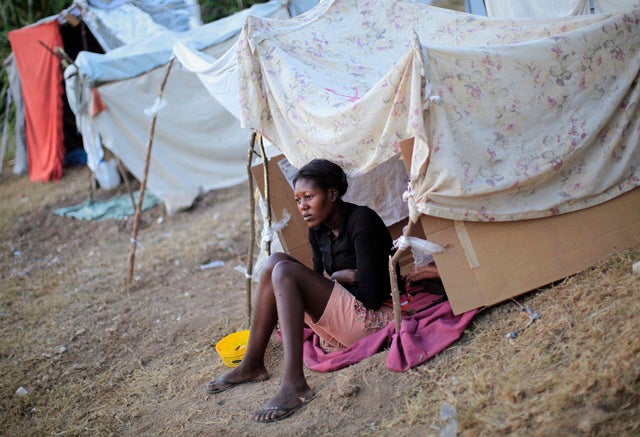
Haiti: Quake Victims Vulnerable as Rainy Season Looms

February 25, 2010

The earthquake in Haiti has created a humanitarian disaster of immense complexity that brought a massive humanitarian response. However, integrating human rights concerns into the relief operations is essential to protecting the well-being of Haitian victims, especially women, children, and other vulnerable groups.

The vast majority of settlements sheltering earthquake victims have zero security, Human Rights Watch learned while visiting 15 camps in Port au Prince and Jacmel. Even though these settlements hold between 5,000 and 35,000 people each, no one has formal responsibility for what happens inside or around them, and security officers are conspicuously absent.

The majority of these camps have no proper latrines or areas to wash. Women wanting privacy to bathe seek out isolated, dark areas, leaving them vulnerable to attack. Most camps are completely dark after sunset, making them unsafe.

Two women told of us of gang rapes and of being raped when returning from bathing in hidden areas of the camp. One girl was raped in her tent. But with no one in authority running the camps, they had nowhere to report the assaults. No one is investigating these cases.

Many children live in camps without their families. While other organizations are looking closely into this issue, trafficking should be a serious concern as cars and trucks stream - unchecked -- from Haiti into the Dominican Republic after dark.

Conditions for everyone living in the settlements, where many shelters are made of sticks and pieces of cloth, will only worsen once the rainy season starts in March. Camps built on hillsides are in danger of being washed away by heavy rains and mudslides. Only 23,000 proper tents have been distributed, according to the United Nations Office for Coordination of Humanitarian Assistance. At least 1.2 million people are homeless.

Access to food is another major problem. The World Food Program's two-week "food surge" did not reach some of the largest camps. Some of the issues include the location of distribution points far from the camps, the absence of security arrangements that would allow on-site distributions, and the reliance on local officials - some of whom, Human Rights Watch found, were involved in selling or otherwise interfering with fair distribution of the food coupons.

A key step in stemming most of these problems will be building safe camps that have basic sanitation and can protect people from bad weather. To establish these camps, the Haitian government needs land. But most of the land around Port au Prince is privately owned. That means that the government needs either to expropriate or to buy the land to allow the international community to create proper camps. These settlements need to be built quickly so that they can provide shelter during the rainy season.

Acquiring the land lawfully and building proper, well-monitored camps can keep the squalid and unsafe conditions experienced by hundreds of thousands of quake survivors from becoming deadly as rain arrives.

Reblog this post [with Zemanta]

Pacific nations gear for tsunami after Chile quake

Nations around the Pacific Ocean are on full alert for a possible tsunami following the devastating earthquake that hit Chile on Saturday morning.

Tsunami warnings have been sounded in an area affecting about a quarter of the globe.

Waves will spread from the epicentre of the 8.8 quake in central Chile and may strike land bordering the Pacific in the next 24 hours.

People in the Galapagos and on Easter Island have already taken refuge.

Large waves are already reported to have struck Chile's Juan Fernandez island group, reaching halfway into one inhabited area. Three people there are missing, local media say. Two aid ships are reported to be on their way.

Nations affected by the Pacific "Rim of Fire" have all sounded alerts, trying to estimate the anticipated time of arrival of any tsunami.

Tsunami warning systems have been improved since December 2004 when an earthquake in Sumatra, Indonesia, sparked a tsunami that killed nearly 250,000 people.

'Urgent action'

The Pacific Tsunami Warning Center has said there may be "widespread damage" from high waves.

"Authorities should take appropriate action in response to this threat," it said.

Parts of French Polynesia's coast were hit by waves of up to 6ft (2m) at 1630 GMT, but there was no damage immediately reported.

It has been difficult to estimate the possible wave heights of any tsunami - the waves may not arrive at all or could be as high as 10 metres above normal sea level.

In Tahiti, traffic was banned on roads less than 500m from sea, and residents on low-lying land were told to get to higher ground.

American Samoa has urged residents to seek shelter, calling on coastal villagers to seek higher ground.

Sirens were sounded in Hawaii to alert residents to the tsunami threat several hours before waves were expected.

The first waves in Hawaii are expected about 1100 local time on Saturday (2100 GMT) and measure about 8ft (2.5m).

John Cummings, Oahu civil defence spokesman, said: "Get off the shoreline. We are closing all the beaches and telling people to drive out of the area."

New Zealand has warned waves up to 3m could hit the South Island and outlying islands. It set a time of 1805 GMT for a possible strike on the Chatham Islands.

Australian officials warned of "possible dangerous waves, strong ocean currents and foreshore flooding" from Sydney to Brisbane.

Japan may be hit at 0300 GMT on Sunday, the country's meteorological agency said, calling for people to be fully alert.

California has also warned its coastal cities to prepare for possible tsunami waves, the first strike possibly around San Diego.

The Cook Islands, Kiribati, Niue, Tonga, the Solomon Islands, Fiji and Vanuatu could also all be at risk.

Reblog this post [with Zemanta]

US 'plans to oust Taliban from Kandahar'

The US has said it is planning a new offensive later this year to drive the Taliban from the southern Afghanistan city of Kandahar.

The current action against the Taliban stronghold of Marjah was a "prelude" to a bigger operation, a US official said.

The US general in charge of Nato forces in Afghanistan has said the local population in Kandahar is at risk.

Kandahar is Afghanistan's second largest city, and was once a Taliban stronghold.

'Reversing momentum'

A major offensive there would follow the current military operation in neighbouring Helmand province.

"If the goal in Afghanistan is to reverse the momentum of the Taliban... then we think we have to get to Kandahar this year," an official in the White House told reporters.

The US goal was to bring "comprehensive population security" to the city.

Suicide attacks are frequently carried out in Kandahar, with one at the beginning on February killing three people.

He described Marjah as "a tactical prelude to a comprehensive operation in Kandahar City."

The Marjah offensive by Nato forces began in mid-February, and has several more weeks to go.

It was "pretty much on track", the official said.

Kabul attack

In Kabul on Friday, explosions and shooting took place in an area of hotels and guesthouses popular with foreigners. Up to nine Indians, a Frenchman and an Italian were killed.

Three gunmen and two policemen died in a gun battle that lasted several hours. Taliban militants said they had carried it out.

President Hamid Karzai condemned the violence. India called it "barbaric".

Kabul has been relatively quiet since 18 January, when Taliban bombers and gunmen attacked government targets and shopping malls, killing 12 people.

Friday's attack is also the Taliban's first major raid since the arrest of key leader Mullah Abdul Ghani Baradar in Pakistan this month.

Reblog this post [with Zemanta]

Abu Sayyaf militants raid Philippine village

Islamist militants have attacked a village in the southern Philippines, killing at least 11 people, military officials have said.

About 70 members of Abu Sayyaf, a group linked to al-Qaeda, raided Tubigan village on the southern island of Basilan, an army spokeswoman said.

Lt Steffani Cacho said homes had been raked with gunfire and set ablaze in a pre-dawn attack.

Philippines army reinforcements have been sent to the area, she added.

The militants were believed to have been avenging the death of a senior leader on nearby Jolo island, an Abu Sayyaf stronghold, Lt Cacho said.

However, Basilan police chief Antonio Mendoza said the attack had been motivated by a personal grudge with the village chairman.

'Victims asleep'

Seventeen people were wounded in the attack with nine in a critical condition, four of them children, said regional health chief Dr Kadil Jojo Sinolinding.

"Most of the victims were still asleep when they were strafed and then their houses were torched," he said.

Abu Sayyaf is the smallest and most radical of the Islamic separatist groups in the southern Philippines.

Last weekend, Abu Sayyaf commander Albader Parad was killed in an attack by Philippines troops on a rebel camp on Jolo.

Reblog this post [with Zemanta]

The Jihad Against the Jihadis

IslamImage by rogiro via Flickr

How moderate Muslim leaders waged war on extremists—and won.

Published Feb 12, 2010

From the magazine issue dated Feb 22, 2010

September 11, 2001, was gruesome enough on its own terms, but for many of us, the real fear was of what might follow. Not only had Al Qaeda shown it was capable of sophisticated and ruthless attacks, but a far greater concern was that the group had or could establish a powerful hold on the hearts and minds of Muslims. And if Muslims sympathized with Al Qaeda's cause, we were in for a herculean struggle. There are more than 1.5 billion Muslims living in more than 150 countries across the world. If jihadist ideology became attractive to a significant part of this population, the West faced a clash of civilizations without end, one marked by blood and tears.

These fears were well founded. The 9/11 attacks opened the curtain on a world of radical and violent Islam that had been festering in the Arab lands and had been exported across the globe, from London to Jakarta. Polls all over the Muslim world revealed deep anger against America and the West and a surprising degree of support for Osama bin Laden. Governments in most of these countries were ambivalent about this phenomenon, assuming that the Islamists' wrath would focus on the United States and not themselves. Large, important countries like Saudi Arabia and Indonesia seemed vulnerable.

More than eight eventful years have passed, but in some ways it still feels like 2001. Republicans have clearly decided that fanning the public's fears of rampant jihadism continues to be a winning strategy. Commentators furnish examples of backwardness and brutality from various parts of the Muslim world—and there are many—to highlight the grave threat we face.

But, in fact, the entire terrain of the war on terror has evolved dramatically. Put simply, the moderates are fighting back and the tide is turning. We no longer fear the possibility of a major country succumbing to jihadist ideology. In most Muslim nations, mainstream rulers have stabilized their regimes and their societies, and extremists have been isolated. This has not led to the flowering of Jeffersonian democracy or liberalism. But modern, somewhat secular forces are clearly in control and widely supported across the Muslim world. Polls, elections, and in-depth studies all confirm this trend.

The focus of our concern now is not a broad political movement but a handful of fanatics scattered across the globe. Yet Washington's vast nation-building machinery continues to spend tens of billions of dollars in Iraq and Afghanistan, and there are calls to do more in Yemen and Somalia. What we have to ask ourselves is whether any of that really will deter these small bands of extremists. Some of them come out of the established democracies of the West, hardly places where nation building will help. We have to understand the changes in the landscape of Islam if we are going to effectively fight the enemy on the ground, rather than the enemy in our minds.

Once, no country was more worrying than bin Laden's homeland. The Kingdom of Saudi Arabia, steward of the holy cities of Mecca and Medina, had surpassed Egypt as the de facto leader of the Arab world because of the vast sums of money it doled out to Islamic causes—usually those consonant with its puritanical Wahhabi doctrines. Since 1979 the Saudi regime had openly appeased its homegrown Islamists, handing over key ministries and funds to reactionary mullahs. Visitors to Saudi Arabia after 9/11 were shocked by what they heard there. Educated Saudis—including senior members of the government—publicly endorsed wild conspiracy theories and denied that any Saudis had been involved in the 9/11 attacks. Even those who accepted reality argued that the fury of some Arabs was inevitable, given America's one-sided foreign policy on the Arab-Israeli issue.

America's initial reaction to 9/11 was to focus on Al Qaeda. The group was driven out of its base in Afghanistan and was pursued wherever it went. Its money was tracked and blocked, its fighters arrested and killed. Many other nations joined in, from France to Malaysia. After all, no government wanted to let terrorists run loose in its land.

But a broader conversation also began, one that asked, "Why is this happening, and what can we do about it?" The most influential statement on Islam to come out of the post-9/11 era was not a presidential speech or an intellectual's essay. It was, believe it or not, a United Nations report. In 2002 the U.N. Development Program published a detailed study of the Arab world. The paper made plain that in an era of globalization, openness, diversity, and tolerance, the Arabs were the world's great laggards. Using hard data, the report painted a picture of political, social, and intellectual stagnation in countries from the Maghreb to the Gulf. And it was written by a team of Arab scholars. This was not paternalism or imperialism. It was truth.

The report, and many essays and speeches by political figures and intellectuals in the West, launched a process of reflection in the Arab world. The debate did not take the form that many in the West wanted—no one said, "You're right, we are backward." But still, leaders in Arab countries were forced to advocate modernity and moderation openly rather than hoping that they could quietly reap its fruits by day while palling around with the mullahs at night. The Bush administration launched a series of programs across the Muslim world to strengthen moderates, shore up civil society, and build forces of tolerance and pluralism. All this has had an effect. From Dubai to Amman to Cairo, in some form or another, authorities have begun opening up economic and political systems that had been tightly closed. The changes have sometimes been small, but the arrows are finally moving in the right direction.

Ultimately, the catalyst for change was something more lethal than a report. After 9/11, Al Qaeda was full of bluster: recall the videotapes of bin Laden and his deputy, Ayman al-Zawahiri, boasting of their plans. Yet they confronted a far less permissive environment. Moving money, people, and materials had all become much more difficult. So they, and local groups inspired by them, began attacking where they could—striking local targets rather than global ones, including a nightclub and hotel in Indonesia, a wedding party in Jordan, cafés in Casablanca and Istanbul, and resorts in Egypt. They threatened the regimes that, either by accident or design, had allowed them to live and breathe.

Over the course of 2003 and 2004, Saudi Arabia was rocked by a series of such terrorist attacks, some directed against foreigners, but others at the heart of the Saudi regime—the Ministry of the Interior and compounds within the oil industry. The monarchy recognized that it had spawned dark forces that were now endangering its very existence. In 2005 a man of wisdom and moderation, King Abdullah, formally ascended to the throne and inaugurated a large-scale political and intellectual effort aimed at discrediting the ideology of jihadism. Mullahs were ordered to denounce suicide bombings, and violence more generally. Education was pried out of the hands of the clerics. Terrorists and terror suspects were "rehabilitated" through extensive programs of education, job training, and counseling. Central Command chief Gen. David Petraeus said to me, "The Saudi role in taking on Al Qaeda, both by force but also using political, social, religious, and educational tools, is one of the most important, least reported positive developments in the war on terror."

Perhaps the most successful country to combat jihadism has been the world's most populous Muslim nation, Indonesia. In 2002 that country seemed destined for a long and painful struggle with the forces of radical Islam. The nation was rocked by terror attacks, and a local Qaeda affiliate, Jemaah Islamiah, appeared to be gaining strength. But eight years later, JI has been marginalized and main-stream political parties have gained ground, all while a young democracy has flowered after the collapse of the Suharto dictatorship.

Magnus Ranstorp of Stockholm's Center for Asymmetric Threat Studies recently published a careful study examining Indonesia's success in beating back extremism. The main lesson, he writes, is to involve not just government but civil society as a whole, including media and cultural figures who can act as counterforces to terrorism. (That approach obviously has greater potential in regions and countries with open and vibrant political systems—Southeast Asia, Turkey, and India—than in the Arab world.)

Iraq occupies an odd place in this narrative. While the invasion of Iraq inflamed the Muslim world and the series of blunders during the initial occupation period created dangerous chaos at the heart of the Middle East, Iraq also became a stage on which Al Qaeda played a deadly hand, and lost. As Al Qaeda in Iraq gained militarily, it began losing politically. It turned from its broader global ideology to focus on a narrow sectarian agenda, killing Shias and fueling a Sunni-Shia civil war. In doing so, the group also employed a level of brutality and violence that shocked most Iraqis. Where the group gained control, even pious people were repulsed by its reactionary behavior. In Anbar province, the heart of the Sunni insurgency, Al Qaeda in Iraq would routinely cut off the fingers of smokers. Even those Sunnis who feared the new Iraq began to prefer Shia rule to such medievalism.

Since 9/11, Western commentators have been calling on moderate Muslim leaders to condemn jihadist ideology, issue fatwas against suicide bombing, and denounce Al Qaeda. Since about 2006, they've begun to do so in significant numbers. In 2007 one of bin Laden's most prominent Saudi mentors, the preacher and scholar Salman al-Odah, wrote an open letter criticizing him for "fostering a culture of suicide bombings that has caused bloodshed and suffering, and brought ruin to entire Muslim communities and families." That same year Abdulaziz al ash-Sheikh, the grand mufti of Saudi Arabia, issued a fatwa prohibiting Saudis from engaging in jihad abroad and accused both bin Laden and Arab regimes of "transforming our youth into walking bombs to accomplish their own political and military aims." One of Al Qaeda's own top theorists, Abdul-Aziz el-Sherif, renounced its extremism, including the killing of civilians and the choosing of targets based on religion and nationality. Sherif—a longtime associate of Zawahiri who crafted what became known as Al Qaeda's guide to jihad—has called on militants to desist from terrorism, and authored a rebuttal of his former cohorts.

Al-Azhar University in Cairo, the oldest and most prestigious school of Islamic learning, now routinely condemns jihadism. The Darul Uloom Deoband movement in India, home to the original radicalism that influenced Al Qaeda, has inveighed against suicide bombing since 2008. None of these groups or people have become pro-American or liberal, but they have become anti-jihadist.

This might seem like an esoteric debate. But consider: the most important moderates to denounce militants have been the families of radicals. In the case of both the five young American Muslims from Virginia arrested in Pakistan last year and Christmas bomber Umar Farouk Abdulmutallab, parents were the ones to report their worries about their own children to the U.S. government—an act so stunning that it requires far more examination, and praise, than it has gotten. This is where soft power becomes critical. Were the fathers of these boys convinced that the United States would torture, maim, and execute their children without any sense of justice, they would not have come forward. I doubt that any Chechen father has turned his child over to Vladimir Putin's regime.

The data on public opinion in the Muslim world are now overwhelming. London School of Economics professor Fawaz Gerges has analyzed polls from dozens of Muslim countries over the past few years. He notes that in a range of places—Jordan, Pakistan, Indonesia, Lebanon, and Bangladesh—there have been substantial declines in the number of people who say suicide bombing and other forms of violence against civilian targets can be justified to defend Islam. Wide majorities say such attacks are, at most, rarely acceptable.

The shift has been especially dramatic in Jordan, where only 12 percent of Jordanians view suicide attacks as "often or sometimes justified" (down from 57 percent in 2005). In Indonesia, 85 percent of respondents agree that terrorist attacks are "rarely/never justified" (in 2002, by contrast, only 70 percent opposed such attacks). In Pakistan, that figure is 90 percent, up from 43 percent in 2002. Gerges points out that, by comparison, only 46 percent of Americans say that "bombing and other attacks intentionally aimed at civilians" are "never justified," while 24 percent believe these attacks are "often or sometimes justified."

This shift does not reflect a turn away from religiosity or even from a backward conception of Islam. That ideological struggle persists and will take decades, not years, to resolve itself. But the battle against jihadism has fared much better, much sooner, than anyone could have imagined.

The exceptions to this picture readily spring to mind—Afghanistan, Pakistan, Yemen. But consider the conditions in those countries. In Afghanistan, jihadist ideology has wrapped itself around a genuine ethnic struggle in which Pashtuns feel that they are being dispossessed by rival groups. In Pakistan, the regime is still where Saudi Arabia was in 2003 and 2004: slowly coming to realize that the extremism it had fostered has now become a threat to its own survival. In Yemen, the state simply lacks the basic capacity to fight back. So the rule might simply be that in those places where a government lacks the desire, will, or capacity to fight jihadism, Al Qaeda can continue to thrive.

But the nature of the enemy is now quite different. It is not a movement capable of winning over the Arab street. Its political appeal does not make rulers tremble. The video messages of bin Laden and Zawahiri once unsettled moderate regimes. Now they are mostly dismissed as almost comical attempts to find popular causes to latch onto. (After the financial crash, bin Laden tried his hand at bashing greedy bankers.)

This is not an argument to relax our efforts to hunt down militants. Al Qaeda remains a group of relentless, ruthless killers who are trying to recruit other fanatics to carry out hideous attacks that would do terrible damage to civilized society. But the group's aura is gone, its political influence limited. Its few remaining fighters are spread thinly throughout the world and face hostile environments almost everywhere.

America is no longer engaged in a civilizational struggle throughout the Muslim world, but a military and intelligence campaign in a set of discrete places. Now, that latter struggle might well require politics, diplomacy, and development assistance—in the manner that good foreign policy always does (Petraeus calls this a "whole-of-government strategy"). We have allies; we need to support them. But the target is only a handful of extremist organizations that have found a small group of fanatics to carry out their plans. To put it another way, even if the United States pursues a broad and successful effort at nation building in Afghanistan and Yemen, does anyone really think that will deter the next Nigerian misfit—or fanatic from Detroit—from getting on a plane with chemicals in his underwear? Such people cannot be won over. They cannot be reasoned with; they can only be captured or killed.

The enemy is not vast; the swamp is being drained. Al Qaeda has already lost in the realm of ideology. What remains is the battle to defeat it in the nooks, crannies, and crevices of the real world.

Reblog this post [with Zemanta]

Feb 26, 2010

Ethnic Minority Theme Parks Draw Crowds in China

BEIJING - SEPTEMBER 23:  Portraits of China's ...Image by Getty Images via Daylife

MANZHA, China — Tucked away in China’s steamy tropical southwest are the villages of the Dai people, famous throughout the country for a raucous annual tradition: a water-splashing festival where the Dai douse one another for three days in the streets using any container they can get their hands on — buckets, wash basins, teacups, balloons, water guns.

But in Manzha and four surrounding villages, the springtime festival has taken on added significance — or insignificance, depending on how you look at it. Imagine a nonstop Mardi Gras with fire hoses: at a site called the Dai Minority Park, water-splashing extravaganzas take place every day.

Yuppies from China’s boom cities arrive by the busload to take part in a wild frenzy of dousing and dunking and drenching with 100 Dai women dressed in bright pink, yellow and blue traditional dresses — “our warmest and sweetest Dai princesses,” as an announcer calls them.

“A lot of tourists want to come see this, but it’s only a few days a year,” said Zhao Li, one of the management office employees, who are virtually all Han, the dominant ethnic group in China. “So we decided to make it every day, so everyone can experience water splashing.”

The Dai park, with its wooden stilt homes, groomed palm trees and elephant statues, is part of an increasingly popular form of entertainment in China — the ethnic theme playground, where middle-class Han come to experience what they consider the most exotic elements of their vast nation. There is no comprehensive count of these Disneyland-like parks, but people in the industry say the number is growing, as are visitors. The Dai park, whose grounds encompass 333 actual Dai households, attracts a half-million tourists a year paying $15 each.

The parks are money-making ventures. But scholars say they also serve a political purpose — to reinforce the idea that the Chinese nation encompasses 55 fixed ethnic minorities and their territories, all ruled by the Han.

“They’re one piece in the puzzle of the larger project of how China wants to represent itself as a multiethnic state,” said Thomas S. Mullaney, a historian at Stanford University who studies China’s ethnic taxonomy. “The end goal is political, which is territorial unity. Parks like that, even if they’re kitschy, kind of like Legoland, they still play and occupy a political position.”

China’s 1.3 billion people are officially 96 percent Han; the rest range from Tibetans to Naxi to Manchus, categories fixed after the 1949 Communist revolution. The companies running the parks are generally Han-owned, say industry workers. The Dai park was started by a Han businessman from Guangdong Province in the late 1990s and sold to a state-run rubber company in 1999.

The most famous park, the Nationalities Park in Beijing, is a combination of museum and fairground. Ethnic workers from across China dress up in their native costumes for mostly Han tourists. (For a while, English signs there read “Racist Park,” an unfortunate translation of the Chinese name.) In some parks, Han workers dress up as natives — a practice given legitimacy by the government when Han children marched out in the costumes of the 55 minorities during the opening ceremony of the 2008 Summer Olympics.

Yunnan, in the southwest, is one of China’s most diverse provinces, with 25 official ethnic groups. The Dai, one of the largest, are related to the Thai. Many live near Laos and Myanmar in the region called Xishuangbanna.

Dai farmers grow rice and have rubber plantations in the hills. Even in the Dai park, most villagers still farm rubber for their primary income. The villagers also make some money from leasing the land on which they live to Ganlanba Farm, the state-owned rubber company that operates the park.

In exchange, they have to follow rules laid down by the rubber company managers — no significant changes to their stilt homes, for example. By contrast, some villagers outside the park use brick and concrete to build homes now.

About 500 residents work here and put on the daily show, including water-splashing festivals and dragon boat races, held on a nearby stretch of the Mekong River.

Some tourists pay to sleep in family homes that stay true to Dai tradition.

“If you know how to run a business, you can benefit from the park,” said Ai Yo, a father of two who runs one of 27 official homestays. “But if you don’t do business, there’s no real benefit.”

Residents had become dissatisfied with the annual lease price for their land, he said. The rubber company was paying the villagers $73 a year per one-sixth of an acre. Only in recent months has the company agreed to pay about 20 percent more in rent.

Homestay owners have tossed out some traditions to meet the needs of Han tourists. The first tourists slept with their hosts on the floor of a large room, according to Dai custom, but visitors soon complained, Mr. Ai Yo said. So homeowners built separate bedrooms. Traditionally, too, the Dai were skittish about allowing strangers to look inside their bedrooms, because of a belief that the gaze of strangers would frighten away ancestral spirits.

Over all, though, he says tourism has bettered his life. “I had rice paddies, and I worked morning to night and didn’t seen any money,” he said while sitting outside his home one warm morning.

At another table outside were two Han tourists from the city of Chongqing. Zheng Jing, a big-bellied man wielding a Canon camera, was a repeat visitor. He said this park was the only place in the Dai region where he would ever consider staying.

“There are many villages around, and they’re all primitive,” he said as a Han motorcycle club pulled up to Mr. Ai Yo’s house for lunch. “It’s not suitable for us to go there. They don’t speak the Han language. You can’t have exchanges with them.”

That kind of attitude puzzles Dai residents living right outside the park.

“The culture here is the same as inside the park,” said Ai Yong, 32, a rubber farmer in Mannao village. “You’re getting cheated inside. You come out here, you can see everything for free.”

Xiyun Yang contributed reporting.

Reblog this post [with Zemanta]

In Kazakhstan, the race for uranium goes nuclear

Mushroom Cloud Explosion from Nuclear TestingImage by EpicFireworks via Flickr

By Philip P. Pan
Washington Post Foreign Service
Thursday, February 25, 2010; A12

TAIKONUR, KAZAKHSTAN -- The dry steppe stretches to the horizon in all directions from this remote outpost in southern Kazakhstan. But peeking out of the sandy soil, amid the sagebrush and desert shrub, are thousands of wells arranged in geometric patterns, each extracting radioactive treasure.

These desolate fields sit above one of the world's largest deposits of uranium, and with nuclear energy in a renaissance, a rough-and-tumble battle is underway for access to them.

The race echoes the geopolitical jockeying to control Central Asia's rich reserves of oil and natural gas -- a variation on Rudyard Kipling's Great Game, complete with corporate intrigue, a disgraced spy chief and an alleged plot by the Kremlin to keep this former Soviet republic under its thumb.

Leading energy and mining firms from Russia, China, Japan, France and Canada have already invested billions here. Kazakhstan, meanwhile, is seeking to leverage its ore into a larger role in the global nuclear industry and has taken a stake in the U.S.-based nuclear giant Westinghouse.

Long obscured by the country's opaque political system, the maneuvering for uranium burst into the open last year with the arrest of Mukhtar Dzhakishev, the highflying chief executive of the state nuclear firm Kazatomprom. The KNB, local successor to the KGB, accused him of transferring the rights to 60 percent of the nation's uranium deposits -- worth billions of dollars -- to offshore companies under his control.

Map of locations of Nuclear tests and use of n...Image via Wikipedia

Dzhakishev, 45, denied the charge and remains in prison. But in a remarkable breach of security, somebody leaked a 64-minute video of him speaking to KNB investigators. In footage posted on YouTube, he offered a rare look at the shifting global alliances behind Kazakhstan's efforts to transform itself from a mere producer of raw uranium to a nuclear powerhouse involved in every aspect of the industry.

He also dropped a bombshell: Russia, he alleged, had engineered his arrest to scuttle a series of pending deals and prevent Kazakhstan from becoming a more independent and formidable competitor.

"I've had plenty of time to think over the situation, and I've been trying to figure out who benefits from it," he said, addressing an unseen interrogator. "I came to the conclusion that it plays into the hands of the Russians."

Russian officials dismissed the allegation as nonsense. But Dzhakishev's words carry weight because he was one of Kazakhstan's most respected and dynamic businessmen, part of a younger generation recruited into government by the country's autocratic president, Nursultan Nazarbayev, to modernize a flagging post-Soviet economy. For more than a decade, he stood at the center of the Kazakh uranium rush, turning a near-bankrupt state firm paying employees with food rations into the world's top uranium producer, with annual profit of more than $300 million.

His success positioned Kazakhstan to take advantage of surging international interest in atomic energy as an alternative to fossil fuels linked to global warming. With 53 nuclear plants under construction worldwide and nearly 500 others planned or proposed to be operating by 2030, demand for uranium to fuel reactors has soared. Available stockpiles from dismantled weapons are dwindling, analysts say, and nobody can ramp up production as quickly as Kazakhstan.

Nazarbayev calls uranium a strategic asset as important to Kazakhstan as its $35 billion oil industry. Only the nation's fledgling environmental movement has dared object, pointing out that Kazakhstan has yet to recover from its days as the Soviet Union's main atomic test site.

The Soviets conducted 456 nuclear blasts in northeastern Kazakhstan, more than anyone else anywhere in the world. Much of the region remains contaminated, residents suffer elevated rates of cancer and other radiation-related illnesses, and babies continue to be born with deformities.

"Nothing good can come of the world's push for nuclear energy, and we should understand this better because of our past," said Mels Eleusizov, a veteran environmentalist who complains that the uranium industry is shrouded in secrecy, with no independent monitoring.

Kazatomprom and its foreign partners mine uranium primarily by injecting sulfuric acid into the ground, where it reacts with the ore. The solution is then pumped into a plant that distills it into a powder known as yellowcake. The process is cheaper than traditional pit mining, and officials say it is safer and cleaner.

Before his arrest, Dzhakishev struck a series of deals giving foreign firms access to uranium mines in exchange for help moving Kazakhstan into higher-end segments of the nuclear fuel cycle. Each made Kazakhstan less dependent on Russia, its traditional partner in the industry.

The Canadian mining giant Cameco agreed to establish a joint plant to prepare yellowcake for enrichment, the process that makes uranium capable of sustaining a nuclear chain reaction. A French and Japanese conglomerate signed on to help build the facilities that turn enriched uranium into fuel rods. Kazatomprom also landed agreements to become China's main supplier of nuclear fuel, and its Westinghouse stake gave it a piece of the reactor-construction business.

"The inducement for all of us to cooperate is access to the uranium resources and building that relationship with Kazatomprom," said Jerry Grandey, Cameco's president and chief executive.

Kazakhstan continued to rely on Russia for uranium enrichment, the most sensitive fuel stage because of proliferation risks, and the two nations began work on a joint enrichment facility in Siberia. They also opened talks to create a market goliath uniting Kazakh uranium and access to markets with Russian technology and facilities. The talks stalled, though, apparently over whether Kazakhstan would be an equal partner or a junior one.

In the leaked video, Dzhakishev said Russia began to pursue deals to edge Kazakhstan out of the Japanese market and guarantee a uranium supply through a Canadian producer, Uranium One. But he said he outmaneuvered Russia by persuading Japanese partners to take a blocking position in Uranium One and insist on a Kazakh role in the Japanese market.

In a sign of Moscow's frustration, Russian officials approached one of Dzhakishev's vice presidents and offered to help him oust his boss, according to a former Kazatomprom executive, who spoke on the condition of anonymity for fear of reprisals. But the vice president rejected the plan.

When the KNB began investigating Kazatomprom, Dzhakishev blamed officials who he said were upset at him for refusing to give them contracts or mining rights, friends said. Among those he had rebuffed was the powerful KNB chief himself, Amangeldy Shabdarbayev, according to Dzhakishev's brother, Yermek.

As the probe dragged on, Dzhakishev worried he had fallen out with Nazarbayev. Dzhakishev's wife, Zhamilya, said he declared his loyalty to the president in a May meeting and distanced himself from two old friends and Nazarbayev foes -- the president's exiled son-in-law, Rakhat Aliyev, and the tycoon Mukhtar Ablyazov, who had fled the country and accused Nazarbayev of stealing his business, Kazakhstan's largest bank.

Nazarbayev assured Dzhakishev that "everything would be fine," Zhamilya said. But two weeks later, on May 21, the KNB detained him and seven of his top executives. In a documentary on national television, the agency cast him as mastermind of a scheme to sell the nation's uranium to foreigners for personal profit.

The arrest unnerved Kazatomprom's partners and prompted a rare protest from the country's leading businessmen, who issued a letter defending Dzhakishev as a smart, honest entrepreneur. He had friends inside government, too; newspapers soon obtained documents showing that senior officials had approved his deals.

The KNB video was the most astonishing leak. Dzhakishev came across as worried about losing business in Japan and China more than losing his freedom, warning that Kazakhstan would be Russia's "raw materials appendage."

In a sensational news conference last month, Dzhakishev's wife asserted that the KNB chief personally passed her a copy of the video before it appeared on the Web and urged her to show it to the president. Shabdarbayev denied the claim but was removed from his job five days later.

Many of Dzhakishev's defenders said Russian agents manipulated Nazarbayev into approving his arrest. Others say he fell victim to a fight within the elite over uranium riches, and Russia just happened to benefit. He is languishing in a secret KNB prison, where his health has deteriorated sharply, his attorneys said.

Nazarbayev, meanwhile, has appointed a veteran bureaucrat to replace him; the official's son-in-law is chief of Russia's state uranium supplier.

Kazakh regulators recently approved the Uranium One deal that Dzhakishev opposed. "Everything that Mukhtar worked out, we can forget about now," said Galym Nazarov, Kazatomprom's former treasurer. "Gradually, Russia is replacing us in the market."

Reblog this post [with Zemanta]

Organization of American States report rebukes Venezuela on human rights

Hugo Chávez in Porto Alegre, Brazil. Jan/26/20...Image via Wikipedia

By Juan Forero
Washington Post Foreign Service
Thursday, February 25, 2010; A10

The human rights branch of the Organization of American States issued a blistering 300-page report Wednesday against Venezuela, saying that the oil-rich country run by President Hugo Chávez constrains free expression, the rights of its citizens to protest and the ability of opposition politicians to function.

The report, compiled and written by the OAS's Inter-American Commission on Human Rights, reflects growing concern in the region over how one of the organization's member states is governed. The document holds legitimacy for human rights investigators and diplomats because it has the imprimatur of the commission, which is run independently from the OAS and largely free of its political machinations.

"This is a professional report, and the commission has been progressively more critical about Chávez over the years," said Michael Shifter, an analyst who tracks Venezuela for the Inter-American Dialogue in Washington. "There's a growing sense of the greater risks of human rights abuses and authoritarianism in Venezuela."

The commission has in the past issued major reports about serious violations in a number of countries, notably targeting the military junta in 1970s-era Argentina and the quasi-dictatorship of Alberto Fujimori in Peru.

Chávez has railed against the OAS as beholden to the interests of the United States. Venezuela declined to cooperate with the commission, its members said, prompting commissioners -- jurists and rights activists from Antigua, Argentina, Brazil, Chile, El Salvador and the United States -- to hold hearings and seek out Venezuelan activists and politicians to compile information about the suspected abuses.

The report asserts that the state has punished critics, including anti-government television stations, demonstrators and opposition politicians who advocate a form of government different from Chávez's, which is allied with Cuba and favors state intervention in the economy.

The report outlines how, after 11 years in power, Chávez holds tremendous influence over other branches of government, particularly the judiciary. Judges who issue decisions the government does not like can be fired, the report says, and hundreds of others are in provisional posts where they can easily be removed.

The commission said some adversaries of the government who have been elected to office, such as Caracas Mayor Antonio Ledezma, have seen their powers usurped by Chávez.

"The threats to human rights and democracy are many and very serious, and that's why we published the report," Paulo Sérgio Pinheiro, a member of the commission who specializes in Venezuela, said by phone from his home in Brazil.

Chávez did not have an immediate response to the report. But in a phone interview Wednesday morning, Roy Chaderton, Venezuela's ambassador to the OAS, said the commission had become a "confrontational political actor instead of an advocate for defending human rights."

Chaderton said the commission had shown support for a failed 2002 coup against Chávez -- an accusation denied by the commission -- and charged that its members had dedicated themselves to weakening progressive social movements in Latin America. "They have become a mafia of bureaucrats who want to play a bigger role in the efforts against Venezuela's government," Chaderton said.

The commission, in compiling the report, incorporated responses from Venezuelan authorities to written questions. The government says it permits protests and opposition groups, while focusing much of its energy on improving Venezuelans' standard of living.

Pinheiro said the commission recognized the government's progress in areas such as reducing poverty. But Pinheiro said that there can be "no trade-off" between political and economic progress. He said the commission's hope is that the Venezuelan government will make improvements based on the report's recommendations.

"This report, instead of isolating Venezuela, is a call for Venezuela to come on board," Pinheiro said.

Others who track developments in Venezuela, though, said Chávez is prone to a disproportionate response when criticized. After releasing a critical report about Chávez two years ago, José Miguel Vivanco, the Americas director for Human Rights Watch, and a fellow investigator for the group were detained at their Caracas hotel and escorted by armed agents onto a Brazil-bound flight.

"It would be nice to think the Chávez government would pay attention to the report," Vivanco said. But he noted that the president had "responded to all such criticism by attacking its critics, often using conspiracy theories and far-fetched allegations to distract attention from their own human rights practices."

Reblog this post [with Zemanta]

Iraqi journalist sees threats to press freedom

Reporters Without Borders Press FreedomImage by Walter Parenteau via Flickr

By Ernesto Londoño
Washington Post Foreign Service
Friday, February 26, 2010; A12

Before the U.S.-led invasion, billed as the liberation of Iraqis, newspaper journalist Nadjha Khadum was as close to a trailblazer in her field as the era permitted.

During the 1980s war between Iraq and Iran, she was embedded with the Iraqi army and filed dispatches from the front lines. Her 1991 exposé of corruption at the Iraqi tax agency led to a minister's dismissal.

Her latest venture -- launching an independent online news site -- offers a snapshot of the present travails of Iraqis who yearned for basic freedoms during years of dictatorship. As Operation Iraqi Freedom draws to a close, Khadum is finding that the brand of freedom the United States ushered in is at best tenuous, at worst a temporary illusion.

Iraq has been the world's deadliest country for journalists since the war began in 2003. At least 140 have been killed, many of them targeted by militia and insurgent groups, according to the New York-based Committee to Protect Journalists.

Although freedom of the press is guaranteed in Iraq's 2005 constitution, lawmakers have not passed legislation to enforce it. Government officials and private citizens have increasingly resorted to litigation to muffle critical reporting. And a commission that reports to Prime Minister Nouri al-Maliki recently unveiled guidelines that Iraqi journalists and press freedom advocates call authoritarian.

"This can be described as disastrous," Khadum said, referring to the new rules. "We are now waiting and watching to see who is going to become the first prey."

New guidelines

Before the war, Khadum said, journalists could publish some tough stories if they had evidence. "At that time, nobody would kill someone else over a story without getting caught by the government," she said.

WorldMapper map on world press freedomImage by Knight Foundation via Flickr

Last fall, one of Khadum's best friends, journalist Imad Abadi, barely survived an assassination attempt.

"This was an attempt to keep our mouths shut and to derail journalists from their real task," said Abadi, who was shot in the head after publishing stories about government corruption.

In recent years, as political competition intensified, litigation against journalists has also increased, according to Ziad al-Ajili, head of the Iraqi Journalistic Freedoms Observatory. At least 200 such lawsuits have been filed over the past two years, Ajili said, adding, "There is no freedom."

The guidelines that Iraq's Communications and Media Commission issued last month bar journalists from withholding the names of sources and threaten action against those who publish information that incites violence -- a criterion that is ill-defined. The rules also say news organizations must apply for licenses, register equipment with the commission and provide a list of employees.

The Committee to Protect Journalists called the guidelines "an alarming return to authoritarianism."

A commission spokesman, Majed Tofan, said the rules are not an attempt to stifle journalists, but rather a mechanism to regulate an industry that operates in a legal vacuum.

"The situation in the country is still unstable," he said. "There are those in the media who incite violence and promote terrorism."

Pulling punches again

Khadum was one of the few female journalists to cover the war between Iraq and Iran during the 1980s. After the war, she was tapped for high-profile assignments at her newspaper. Male colleagues referred to her affectionately as "one of the guys."

She was boisterous and opinionated. She smoked in public, which is something few Iraqi women do. And she had a knack for breaking hard-hitting stories without running afoul of Saddam Hussein's regime.

Although journalists operated in a highly restrictive environment, the unspoken rules were reasonably clear. Stories critical of Hussein and his family crossed a red line. Writing sympathetically about Shiite and Kurdish uprisings was out of the question, and the journalists who did disappeared.

Still, there was room for moderate criticism of the government.

One day in fall 1991, Khadum received a tip that officials at the tax agency were taking bribes from taxpayers. The informant told her about a room at the agency where she and a photographer found files containing compromising data. A few days after their exposé was published, the finance minister was fired.

"I was so proud," Khadum said. "It wasn't easy to make a minister lose his job over an article."

The provisional government established by the United States drafted laws to protect press freedom, but the parliament has not passed them, leaving Hussein-era laws in effect.

Soon after the occupation, a lively press corps emerged, with political blocs establishing and funding the most influential newspapers and television stations.

Khadum, who is Shiite, left Iraq in 2006 after her neighborhood -- Adhamiyah, in northern Baghdad -- became one of the main battlegrounds in the conflict between Shiites and Sunnis. Adhamiyah is predominantly Sunni.

She returned to Iraq in 2008 as violence ebbed. Last summer, she sold a plot of land in the south for $50,000 and launched the Ur News online news agency, designing the Web site on an old laptop in her bedroom.

Relying on a small network of correspondents around the country, she began filing stories on politics and violence. In the early days, she pulled no punches, naming names and sometimes singling out the corrupt. The site quickly became popular. Since its launch, it has been accessed more than 643,000 times, Khadum said, showing records.

After receiving a few letters and phone calls threatening lawsuits, she became more careful. After her friend was shot, she grew fearful. For now, Khadum said, she limits what she writes. "There are issues I cannot talk about," she said, lowering her voice.

A few weeks ago, she decided to leave her home of 40 years in Adhamiyah. Sectarian vitriol is creeping back into the neighborhood, she said, and killings have resumed.

As she was packing up her belongings to move to a smaller house in the adjacent, mostly Shiite neighborhood of Kadhimiyah, neighbors stopped by to say farewell.

"It's very painful to lose you," one said. "But what you're doing is the right thing."

Special correspondents K.I. Ibrahim and Dalya Hassan contributed to this report.


Reblog this post [with Zemanta]